


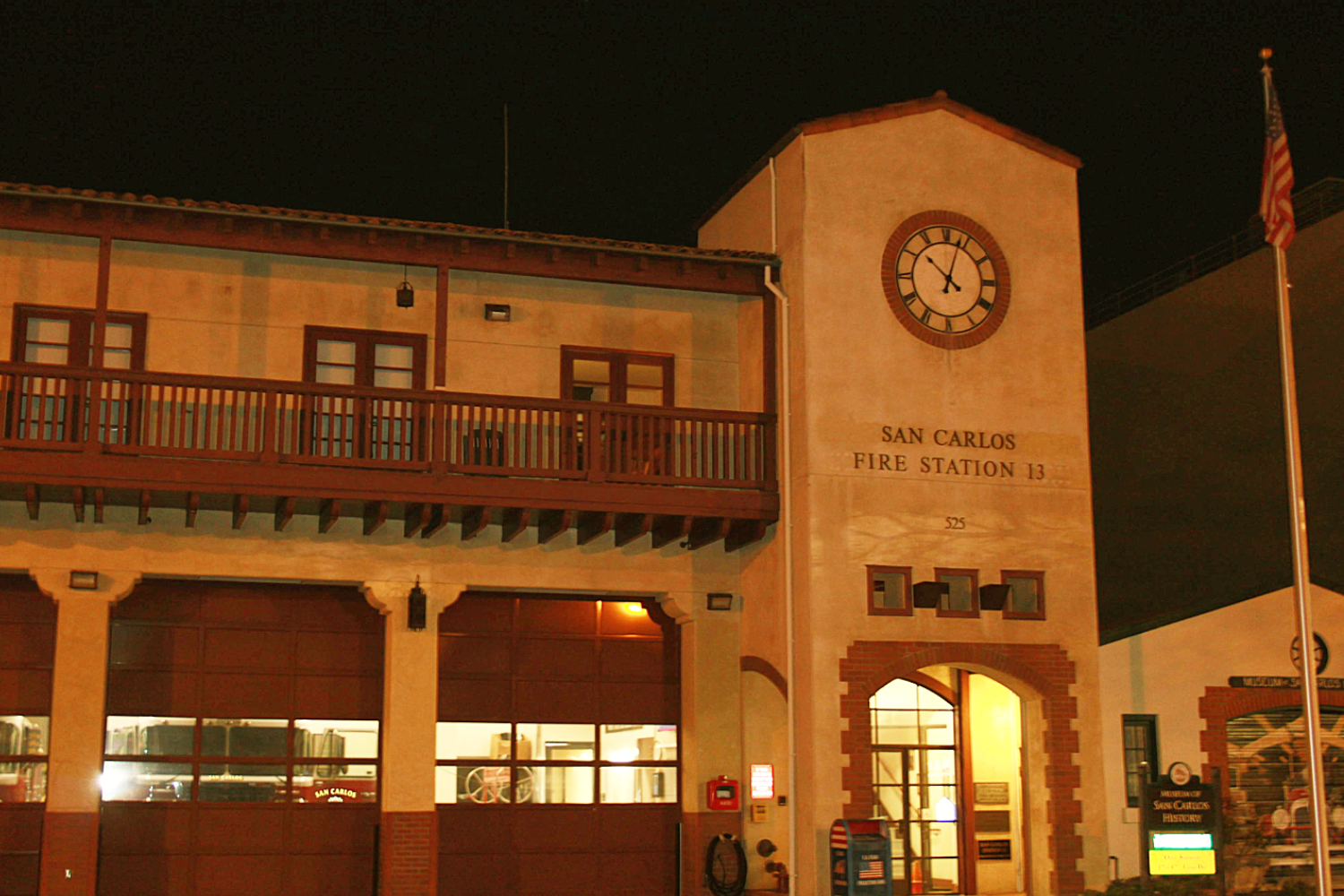
It had been a long day for Lt. Mariano Elias.
He was awake and present at the San Francisco Fire Station 4 in the San Francisco Mission District by 7 a.m. After a brief pause for coffee, it was time for the daily activities: a morning briefing, followed by a skills session and double-checking the station’s vehicles. There had been a few spontaneous calls, but nothing out of the ordinary. By 9 p.m., he was ready to climb into his bed in the shared dormitory and get a few hours of shut-eye.
Then, the fire alarm rang.
Elias is one of the approximately 11 million adults who work at night. Under the starlight, these workers keep our cities functioning and healthy. They respond to emergencies, fight fires, and care for patients.
“On average, most fire stations get one to three calls in the middle of the night. There are also places that have five, six, seven, eight calls after midnight,” Elias said.
Despite their struggles with sleep deprivation and the challenges posed to relationships, night shift employees do the thankless work while everyone else is fast asleep.
Fighting to survive
The second Elias heard the alarm, he leapt into action. Although his brain was still muggy and his eyes were fighting to stay open, he knew there was important work to be done. He and his crewmates suited up, donning pants, jackets, boots, gloves, and a helmet. It was only a matter of minutes until his team was on the fire truck.
Elias took a moment to ground himself. The ride was a short one — each fire station covers only 1.1 square miles of the city — but Elias needed to be ready for action the moment they arrived. He wiped the sleep from his eyes and rechecked the equipment. Water in the rig? Check. Air in the oxygen tanks? Check.
“We have 500 gallons in the water tank for the fire engine, so you have to make sure that’s full. Then, you need air in your self-contained breathing apparatus, which makes sure that you can go into a fire building and breathe fresh air,” Elias said.
The truck screeched to a halt beside a flaming building. Though Elias was still a few feet away, he could already feel the intensity of the fire. But that didn’t deter him; instead, Elias and the team surged forward, using the engine’s long ladder to access the second-floor window. He reached inside and pulled out two civilians, rescuing them from the fire’s growing reach.
“My friend pointed to someone in the window, and I grabbed the ladder, and I went up to get the person,” Elias said.
A success, to be sure, but the work was still not done. Elias found his way back to the outside ground floor, preparing to blast water and calm the embers. He dragged the hose forward and wrenched open the front door. It gave way easily, letting out a blast of smoke and hot air.
“As soon as I went through the door, I couldn’t see anything,” Elias said. “You can’t see anything in fires because of the smoke.”
He fumbled forward, trying to orient himself in the burning building. A lump of something appeared in his purview, and he rushed towards it, ignoring the immense heat, the sweat building on his upper lip, and the pounds of gear weighing him down. Elias’s hands reached down, and he was just able to discern a face.
Immediately, Elias grabbed the person and rushed them to safety. He scrambled out of the building and delivered the civilian to the medical officers. The individual was shaken up and suffered from smoke inhalation, but they were clearly alive thanks to Elias’s efforts.
“We lifted up the victim and dragged him out the door until other firefighters came in. We were able to hand him off to them,” Elias said. “Then, I continued to extinguish the fire.”
It was another few hours until Elias and the team finally returned to the fire station. They slowly drifted off to sleep, but knew that pretty soon another alarm would sound and another civilian would need assistance. Although the work was strenuous and demanding, they took pride in serving their communities throughout the night.
Breathing life
Emily Smith was also about to go to sleep. She had clocked into St. Mary’s Medical Center at 6 p.m., received the sign-out from her daytime coworkers, and followed up on particularly worrisome patients. The intensive care unit (ICU) was relatively uneventful, and the emergency doctor had few tasks to assign. Smith was lounging in the call room when she was paged.
She and her fellow residents rushed to the patient, checking their vitals and getting the rundown from the ambulance drivers. The case was an extreme one: the patient had vomited, inhaled the vomit, and was currently having trouble breathing.
“He came in, basically had drunk a lot, and ended up choking on something. He drank himself to a stupor,” Smith said.
Smith knew what the patient needed to survive: a bronchoscopy. It was a technical procedure that involved inserting a tube down the trachea and into the lungs.
However, the pulmonologist, a professional required to operate the machine, was nowhere to be found. It was nighttime, and all the specialty doctors were asleep at home. They urgently called in the pulmonologist, but the patient was having more trouble breathing.
“A lot of teams are not available at night, or they’re only available for a call,” Smith said. “Most of the night shift is just stabilizing people to get them to the daytime and then having the daytime team take over.”
Smith and the residents began to fear the patient may not make it through the night. Finally, the pulmonologist arrived, and the bronchoscopy was carried out smoothly. The patient, only 20 years old, lived to see another day.
“We did a bronchoscopy and pulled out a bunch of gross food. I thought he was going to code and die, but people showed up at the right time, and he ended up being okay,” Smith said.
The payoff
Both Elias and Smith are glad they can help their communities, but they are also acutely aware of the negative impacts of night shifts. The first is sleep, which often goes neglected when working long hours. Smith frequently gets only four hours of sleep on days when she works the night shift. According to UCLA Health, this can cause harm to concentration, memory, mood, and attention.
“It has a really broad spectrum of health effects that have to do with the disruption of the circadian rhythm when you’re working at night and trying to sleep during the day,” said Maaike van der Rhee, a Ph.D. candidate.
Elias and Smith also saw negative implications for their physical health. Many firefighters on the night shift experience weight gain from unhealthy or inconsistent eating patterns. Moreover, the National Library of Medicine finds that night shift healthcare workers are 46.6% and 27.7% more likely not to eat for four hours and eight hours, respectively, when compared to their day shift counterparts. Smith also fell ill more frequently due to lack of sleep and improper nutrition.
“When you work night shifts, there is an increased risk for obesity, type 2 diabetes, and new research suggests there may also be increased risk of breast cancer and prostate cancer,” van der Rhee said.
Night workers also face negative implications for their relationships and social lives. It is often challenging to balance a demanding job with a personal life, which may include caretaking responsibilities and other household tasks. The National Library of Medicine reports that night shift employees are more likely to experience relationship conflicts.
“Working the night shift can be really hard on the body,” said Chelsea Hetherington, who holds a Ph.D. in developmental psychology. “When we’re physically having a hard time, or our bodies are discombobulated, it can make it harder to connect to our loved ones in ways that are kind, empathetic, and caring.”
Despite these implications, Elias and Smith have found ways to mitigate the adverse effects. Elias enjoys taking his dog for a walk and spending time in nature. As for Smith, she prefers taking a nap immediately after work.
Researchers from the Centers for Disease Control and Prevention suggest additional strategies, including eating nutritious foods and following a regular eating schedule while on shift.
“Instead of shifting your whole dietary pattern, try to stick to eating when it’s light outside and minimize how much you eat when it’s dark outside, when your body is not as good at digesting,” van der Rhee said.
To alleviate the pressure on relationships, experts recommend clear communication and maintaining a fair division of labor.
“Being on the same page is so important,” Hetherington said. “Be clear on expectations and stay connected on the emotional level of expressing care for one another.”
