

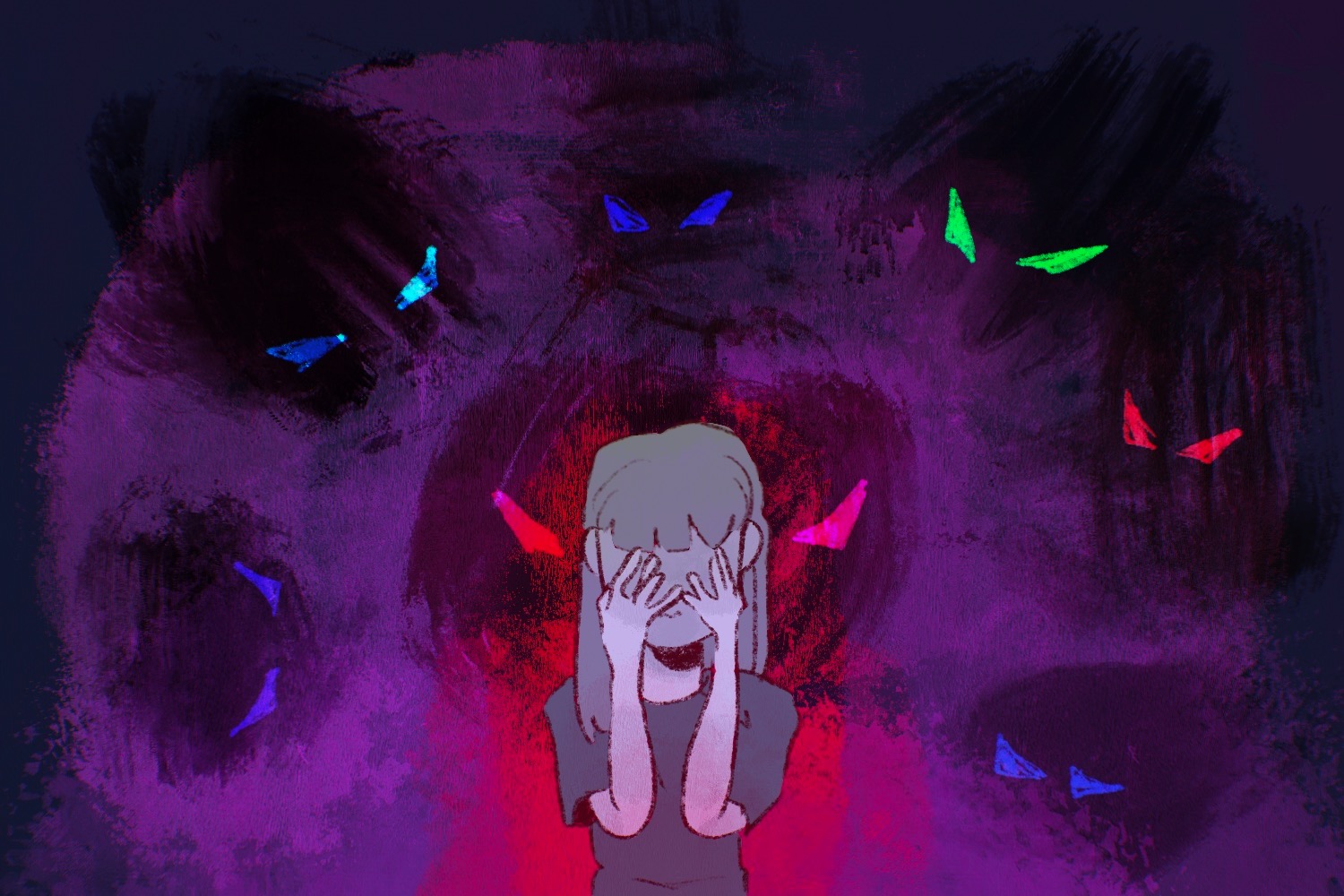
High school is a pressure cooker. From chasing perfect grades to chasing perfect friendships, students often fall into habits that can have negative impacts on their overall well-being. This leads to the seven deadly sins, not in the biblical sense, but in the quiet and modern ways that shape teenage life at Carlmont High School.
Pride: Social media
Fitting in involves the idea of being like others. This creates an obsession with image and comparison, often seen through apps such as Snapchat, TikTok, and Instagram. The chase for more likes, more comments, and more attention becomes yet another task that teenagers take upon themselves, often resulting in a deteriorating school performance.
“Kids are getting so caught up in the things that they’re looking at from Instagram to TikTok, and it can become an addiction for some, bleeding into other areas of their life,” said Shelley Bustamante, Carlmont’s mental health support specialist and director of the Student Wellness Center. “Students see others having fun and doing crazy things, giving them the impression that their life sucks.”
According to Rox research firm, 66% of high school girls say that social media makes them want to change their appearance. Social media creates social hierarchies and unrealistic expectations, with some individuals becoming the center of attention, while others feel invisible. Up to 95% of youth ages 13-17 report using social media, according to the National Library of Medicine.
Lust: Cheating
On top of school workload, extracurriculars, and work, many students delve into high school relationships. These can be intense and fast-paced, but in a world where connecting with others is as simple as a direct message, loyalty isn’t always a priority in people’s minds.
“I was dating someone I truly cared about, and unfortunately, they decided to get with someone who I considered to be very close to me,” said senior James Clarkson*. “It made it hard to go back to trusting people, and it permanently damaged my relationship with both of the people involved.”
Peer pressure and overworked students often lead to breakups. However, those are simply seen as part of growing up. In cases like these, the emotional fallout sticks around, resulting in anxiety and social fallout. According to the National Library of Medicine, it is estimated that between 40-60% of adolescents are unfaithful in some way to their partner, despite 70% disapproving of infidelity, especially of a sexual nature.
Greed: Gambling
What can be simply thought of as poker and teenage games has now evolved into more complex situations. The world of teenage gambling has shifted into new ideas, such as significant sums of money being placed through online sports betting apps on all kinds of sports or events. Websites like Kalshi and Polymarket get around sports betting restrictions and allow users to “invest” in prediction markets based on the outcomes from things as common as the result of a basketball game to when Spotify will release its annual Spotify Wrapped report. Though the rules rule against it, gambling is everywhere.
“When I lose while playing poker, I start to feel pretty bad, and the next rounds become all about trying to win my money back,” said senior Jayden Lee.
According to the Connecticut Council on Problem Gambling, over 10% of teens gamble twice a week or more. About 4% of boys age 14-21 have a gambling problem. What can simply start as a small bet for a joke can evolve into repeated patterns patterns, ultimately resulting in depression, and can have lasting impacts. Teenagers are still not able to fully manage such temptations, and can impulsively veer on the wrong side of their risk management.
Sloth: Scrolling and phone addictions
Hours of scrolling often result in late bedtimes, having a chain reaction on all aspects of a student’s life. What starts as harmless procrastination has been proven to be connected with poor grades, sleep issues, and depression, sometimes costing students their lives through suicide.
“At my peak, I was spending nine hours on my phone after I came home from school,” said senior Lance Navarro. “I was distracted by Instagram and video games, and I realized that I was getting literally nothing done all day.”
A study in the International Journal of Environmental Research and Public Health showed that adolescents with the highest level of screen addiction show a significant risk of suicidal ideation. The idea of spending just five more minutes never works, and instead, the average high school student spends seven hours and 22 minutes daily on screen, with 4.8 of those hours spent on social media.
“There’s already a lot of research that indicates that all of us are spending way too much time on our phones,” Bustamante said. “It bleeds into other areas of students’ lives. It affects their sleep, focus, and the way they see themselves.”
Gluttony: Drugs and drinking
Weed, vapes, pills, and drinking are much more common than they used to be. Simple peer pressure often starts as experimentation, but overuse quickly leads to dependency, causing problems with behavior and often resulting in long-term regret.
“We are seeing trends of adolescents using cannabis at higher rates than before, likely due to decreased stigma around use and increased accessibility,” said Sarah Brislin Ph.D., a psychology professor at Rutgers Addiction Research Center.
The normalization of substance use, especially with nicotine vapes and edibles, is causing an ever-growing worry about how easy it is for students to get hooked on such products. According to American Addiction Centers, binge drinking accounts for 90% of alcohol consumption by high schoolers.
“As adolescents, the parts of your brain that are sensitive to reward and novelty are more developed than the parts of your brain that would help you consider consequences and plan long-term. This makes your brain more sensitive to the pleasure that comes from new and exciting things, so risks seem more enticing when there is the possibility of a reward,” Brislin said.
From a student’s perspective, such behaviors are often seen in others.
“I feel like the focus on smoking and drinking in upperclassmen circles is way too much,” Lee said. “There’s a culture around it, people are always looking for parties and opportunities to consume these substances.”
Wrath: Bullying
Bullying has developed into more than simple shoving in the hallways and teasing through rumors. Snapchat screenshots and group chat gossip are a few examples of bullying that have all taken precedent in the digital world. Although the verbal and physical side of bullying still exists, new forms of bullying, like cyberbullying, are much more common and widespread.
“I used to get made fun of for my height. People still make comments about it all the time, as a supposed joke, but it still affects me just the same,” said senior Simon Anderson*.
For perpetrators, it is easier to single out people and not get it traced back to them. Modern bullying can make victims become isolated, which can result in self-harm and deep anxiety. According to the Cyberbullying Research Center, 30% of teens report having been cyberbullied sometime in their life.
Envy: Academic envy
Academic envy fuels competition, not collaboration. Test scores, college acceptances, and class ranks, all constantly at the back of students’ minds. Social media doesn’t help in this dilemma. People post about internships, awards, and achievements, leading others to feel resentment and burnout.
“It shouldn’t be about what school you go to, it should be about what you do when you get there, how involved you get, and how much you are present for the experience,” Bustamante said.
According to Cross River Therapy, 61% of teenagers have reported feeling stress over producing satisfactory grades. Academic envy shows up in both friend groups and classrooms, all with the ultimate similarity of ruining motivation and relationships between individuals.
“People are dehumanized to their stats and numbers, and there’s an unhealthy obsession around it, especially among seniors,” Lee said.
While these sins don’t apply to everyone, they define a large portion of the Carlmont High School experience. The importance of this is to become aware of this hidden side of high school and have a willingness to do better. High school shouldn’t be a place where students experience harm, but rather one where they can grow.
* Student sources in this article have fake names in accordance with Carlmont Media’s Anonymous Sourcing Policy to preserve their anonymity and prevent any social and legal consequences.


