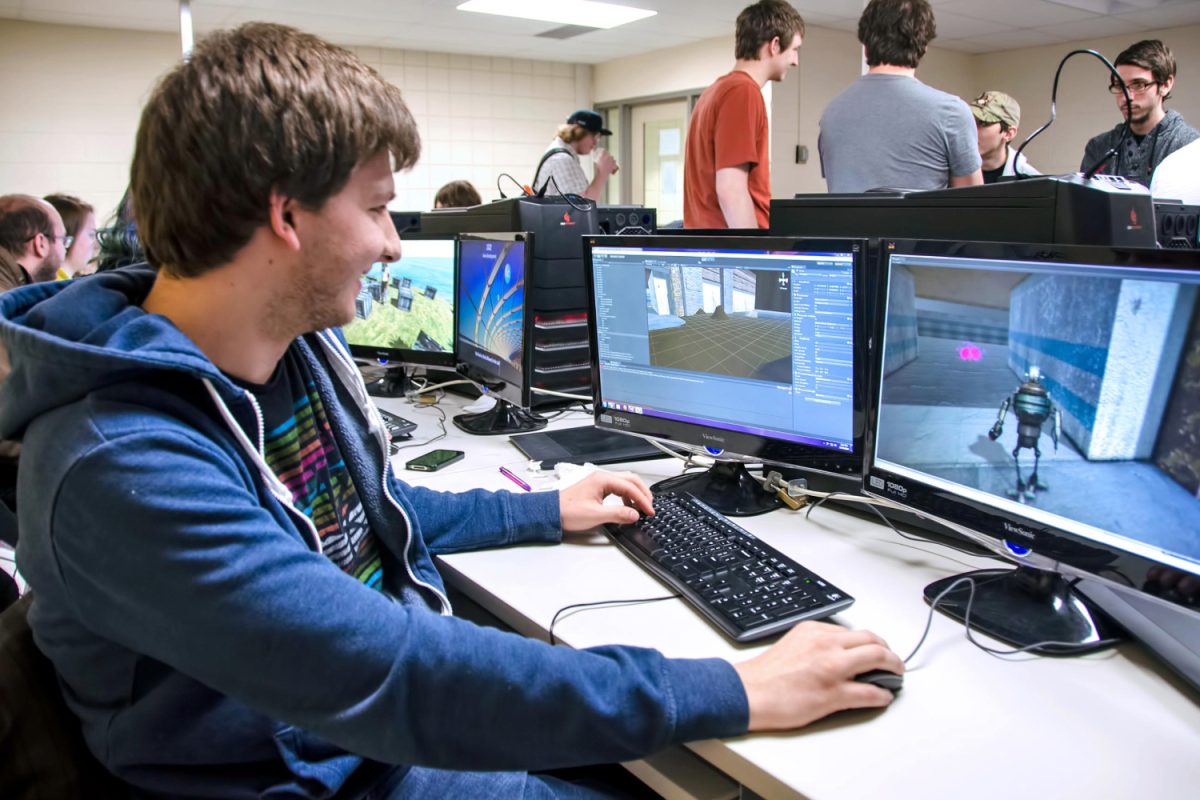
IndieCade Horizons, a platform for independent games and interactive media, recently held a student-focused session called “Beyond the Textbook,” showing how real-world game design can be applied to learning, creativity, and hands-on projects.
Indie games are getting more popular, and students aren’t just playing them. They’re using game design to tell stories, figure out problems, and express themselves. Events like IndieCade Horizons let them take that interest further and learn why game design really matters.
The session, led by University of Southern California (USC) professor and game designer Tracy Fullerton, gave participants understanding into how industry experience becomes curriculum. Fullerton is the author of “Game Design Workshop: A Playcentric Approach to Creating Innovative Games,” a widely used textbook in game programs around the world.
“I hope that students are inspired to try their hand at designing their own games, telling their own stories in interactive ways,” Fullerton said. “My book is written so that anyone, regardless of age or experience, can pick it up and follow along with the exercises to learn the foundations of game design.”
Beyond her writing, Fullerton directs the Game Innovation Lab at the USC School of Cinematic Arts, a design research center behind influential indie titles such as Cloud, Flow, Darfur is Dying, The Misadventures of P.B. Winterbottom, and The Night Journey.
Game education continues to expand alongside the global gaming industry. According to Uswitch, the global games market is projected to reach $188.8 billion in 2025, with online gaming alone estimated at nearly $29.48 billion. Major titles like Fortnite, Roblox, and Free Fire attract tens of millions of players daily, a sign of just how central interactive media has become for the next generation.
Fullerton believes this relevance is exactly why young people connect deeply with games, both as players and creators.
“I believe that games and interactive experiences are one of the most interesting forms of art that humans have yet created,” Fullerton said. “We love stories, music, images, and experiences; games meld all of these into a rich and engaging expressive art form. High school and college students find these experiences relevant because of that potential, and because, having grown up with games as part of their media landscape, they see games as equally relevant to other art forms.”
Indie developers support this perspective. Tim Dawson, the technical director of the award-winning game “Unpacking,” explained how interactive design can teach empathy and reflection through simple mechanics.
“The way ‘Unpacking’ works is you encounter an item, like when a toaster comes out, and the player has to think about what it means and where it goes,” Dawson said. “These everyday moments connect the video game world to their own experiences, and when players relate the story to their lives, it creates that emotional connection.”
Designing this way often forces creators to experiment with storytelling without relying on dialogue.
“We had committed early on to try to convey every emotion through items and the locations. This was something we weren’t sure would work, but we challenged ourselves to try. In the end, the small amount of text that does relate to the story, such as album descriptions, is only used to enhance what is conveyed through playing the level,” Dawson said.
Drawing on personal experiences also helps make games feel authentic and relatable. While “Unpacking” is fictional, its elements are inspired by real-life memories, which strengthens the connection between the player and the story.
“Sometimes this was fun to see something we used to own get recreated in pixel art, sometimes it was cathartic, but it all helped ground the story,” Dawson said.
There are many challenges in making a wordless game meant to convey feelings, but limitations in game design can also lead to more focused storytelling. When certain moments can’t be shown through objects alone, developers have to creatively rethink their solution.
“Early on, there were story moments we just couldn’t tell in a game like this. If a life event doesn’t leave behind identifiable items, there is no way to let the player know it has happened. However, in creative works, constraints often help focus the design, so we embraced those limits. When something didn’t work, we altered or removed it entirely, leaving a stronger experience,” Dawson said.
Game design also gives creators a space to reflect and emotionally grow. David Wehle, developer of the indie game “The First Tree,” said his game was inspired by a period of grief and personal hardships.
“I was 27 when I started working on ‘The First Tree,’ and my dad had passed away unexpectedly from a heart attack a couple of years prior. I also had my first child with my wife at that same time, so you can imagine there were a lot of mixed feelings during that stage of my life. I was hopeful but really sad that my dad wouldn’t meet my daughter. It got me thinking about the cycle of life and death and loss, and I put all those feelings into a game about a fox. People ask me a lot why I chose a fox, and the primary reason is that my wife’s family name is Fox, and thus, it was her favorite animal. At its core, my game is about family and all the unrelated threads that connect us as an Earth-bound family,” Wehle said.
Wehle’s game reached nearly 1 million players, with messages and artwork arriving from around the world.
“I think every artist hopes to find an audience for their work, but the reception blew me away. It was touching to hear how my little story about a fox helped me process the grief of losing a loved one. Probably the most meaningful things I’ve received are fan art letters sent to me in the mail by kids. I was a kid who did the same thing, like drawing pictures of Mario and sending them to Nintendo, so to get artwork like that really means a lot,” Wehle said.
For Nicholas Oueijan, a senior designer of “Sky: The Children of the Light” and founder of the game development company Strafe Studios, games are a way to work through tough emotions. He has faced challenges throughout his teenage years and beyond, and he finds that art, whether it’s music, movies, or games, helps him make sense of his emotions.
To Oueijan, simplicity isn’t just a style choice, but it’s an important part of how he designs. The complexity of a game’s mechanics works much like ingredients in cooking, where every choice affects the final experience.
“The level of mechanical complexity is just an ingredient in the proverbial game development kitchen. Salt can make a savory dish great, but many of the best sweet treats also use salt to accentuate their sweetness. Each ingredient has its strengths and weaknesses. I think simpler mechanics lower the barrier of entry and prevent players from being bogged down by all the ‘stuff’ they could or should do,” Oueijan said.
By carefully choosing which elements to include, designers guide the player’s experience without overwhelming them. This allows the core story and emotions of the game to come through more clearly.
“Just as you don’t need a complicated recipe to make a dish, you don’t need overly complex mechanics to get your point across. That said, creating a resonant experience, or flavorful dish, with fewer ingredients is a huge challenge that requires you to be extremely intentional about every microdecision you make in the development process,” Oueijan said.
Oueijan, who also holds a Master of Design Studies in Technology from the Harvard Graduate School of Design, said that being an indie studio allows people to take risks and approach challenges from a more open perspective.
“Most games never even make it off the ground, and of those that do, an exceptionally small number of them manage to sustain the player base that Sky has managed to sustain for so long. This is an enormous blessing and responsibility. Instead of answering to what shareholders might want us to make, most of the time we are telling stories that we feel reinforce our team’s goals or address some of the themes we have been hearing from our passionate community,” Oueijan said.
This shows how rare long-term success is for indie games. Having a dedicated player base gives teams freedom but also responsibility. It affects how they make games and plan for the future. This is very different from working at a big AAA studio, where money usually decides what gets made.
“We’re creating art that is meant to be played, and we have to walk a line between making what we want, what players say they want, and creating something that will ensure we can continue making games. Being at a big AAA studio would essentially eliminate that process, forcing us to make one highly specific experience to address a specific financial goal,” Oueijan said.
Across these developers’ experiences, one message stands out: game design skills go far beyond coding.
“The main misconception about game design is that it is primarily a technical discipline,” Fullerton said. “True, you do need technical skills, but primarily the tasks of design are about working with others, having strong communication and collaboration skills, and an ability to actively listen and synthesize feedback. The real core of game design and development is people skills.”
That mindset is exactly what IndieCade Horizons hopes to create. For students exploring game design, the event offers more than just information; it provides a community. Events like IndieCade Horizons are a great opportunity for students to engage with working designers, hear what it takes to succeed, and be exposed to innovative ideas in indie projects.
Fullerton also encouraged students to start creating immediately.
“You can design a game today — it doesn’t have to be complicated, in fact, it’s better if it is simple. The very best designs are often the simplest,” Fullerton said. “Give yourself a few rules — like I am going to make a game using only the craft supplies I have here at home. Don’t worry about making a digital game at first. You’ll be amazed at how much you can learn about the process of design by making paper games and testing them with your friends and family. So get started today, with whatever skills and materials you have handy. And see what it means to delight players with your designs!”
The next Third Thursday session will be hosted online through the IndieCade Horizons platform on Dec. 18, 2025, giving students around the world a chance to connect, learn, and begin designing their own paths into the growing world of interactive media. Students interested in attending can register through this link or on the official IndieCade website.