
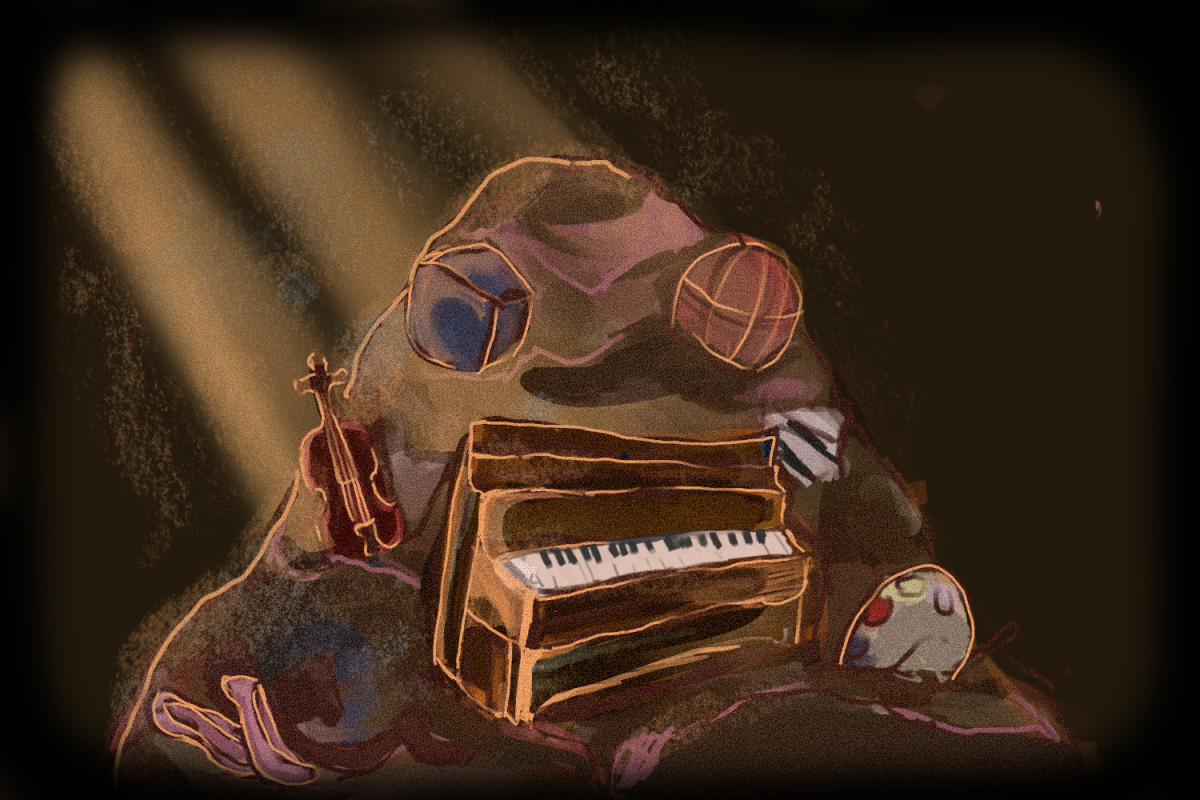
It will always sit there patiently waiting for us to return. Hidden behind the mountains of other forgotten childhood memorabilia, it continues to wait until we once again open its case to play another note, to strike another key, to finish another song.
No matter how long we yearn to give it a new breath of life, that future will never come, as it is crushed by old thoughts like, I was never good at this, why am I not improving fast enough, and maybe this isn’t meant for me.”
Especially in early childhood, many students are encouraged to pursue a variety of skills, most commonly in art, music, or sports. However, as students mature, many start to notice the lines of comparison to the point where phrases like these become common thoughts that can eventually cut off years of progress.
More than others, students suffer most from a flawed understanding of improvement because they are in a time-centered environment focused on development. Whether it’s a growth in skills, mental health, understanding, or knowledge, students commonly fail to accurately estimate it, leading to lifelong regrets.
Commonly perceived as a learning curve, we typically start strong and quickly improve what we choose to pursue. Yet, as we grow up over time, we eventually feel an impossible wall of incompetence when faced with what seems like stagnant or even a regressing skill progression.
Typically at the beginning, we don’t fully understand the complexities of our skills, leading to the perception that we are learning very quickly. However, once we start to understand the details behind our growth, that is when a regressive perception starts.
On day one, people think they are prodigies; yet over time, as they finally start acquiring skills, they quit because they only see the flaws.
According to a study published in the National Library of Medicine on students quitting music, 50% of students drop out of all musical activities by age 17, typically quitting between 15 and 17.
Especially seen in music and other skills, perception of improvement begins by fooling us into thinking confidence is competence, until true understanding clashes with passion, challenging our persistence.
On a graph relating confidence and competence, known as the Dunning-Kruger effect, this correlation is represented as the valley of despair.
According to a study published in the National Library of Medicine on the effect of confidence on choice, the two are tightly interlinked, affecting decision time and the balance between confidence and mental effort.
In a time with social anxiety as high as ever, the lack of confidence in the valley of despair sinks even lower. And as people connect perception to confidence and then confidence to choice, the valley eventually becomes the defining factor in whether students choose to quit, a blind faith they choose to follow.
While the valley may seem all-encompassing to some, people can still pursue enlightenment or sustainability, especially through passion and understanding.
According to a study published in Science Direct on the effect of passion on grit, growth mindsets, which are associated with higher levels of passion, correlated with improved measures of overall grit.
While self-comparison and our perception of growth diminish confidence and grit, passion is one of the strongest counterbalances to this effect.
It’s important to recognize that, rather than relying on our personal perception of improvement when making long-term decisions, we should instead focus on other factors, such as enjoyment and passion.
According to the Cyber Foundation’s 2023 Comparison Culture report on social media’s effect on self-comparison, 93% of respondents felt pressured to compare themselves to others online, and an additional 96% reported feeling emotionally affected.
Even though self-comparison is as high as ever, we should still disregard it because it rests on assumptions about our own competence instead of recognizing continued personal improvement, creating a false sense of disparity.
By ignoring comparison and embracing passion, we can stop feelings of anxiety and stagnation. Through this, students can continue to nurture years of hard work, dedication, and growth.
Even for those who have previously succumbed to their perceptions of growth, there will always be a dormant second chance to relearn past skills and restart past activities.
No matter how much we may push them out of our minds, no matter how many old feelings of incompetence may resurface, the instruments, sports, skills, and arts we used to learn will always wait for us. However, instead of forgetting them this time, we can return and reopen their cases not with fear but instead a passion to begin again.