
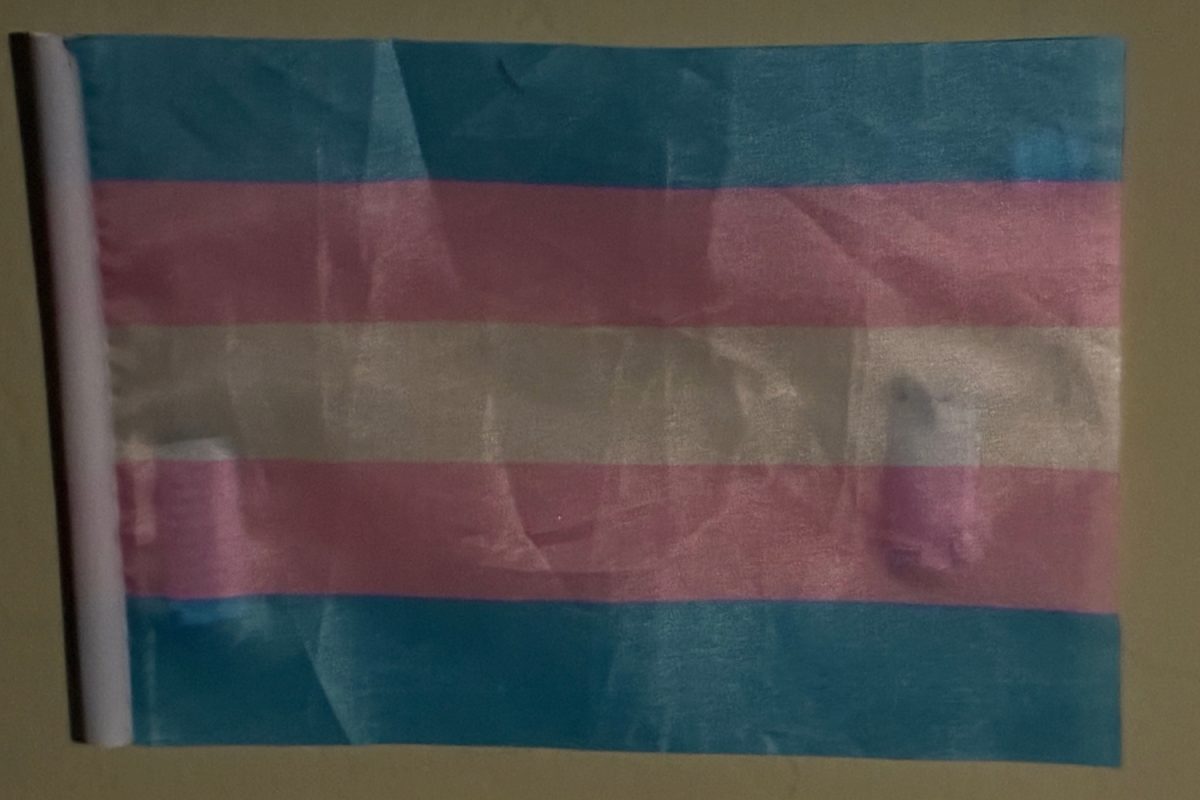
The American Civil Liberties Union indicates that over 500 anti-LGBTQ+ bills have been introduced or voted on in 2026 alone. Yet, compared to a few years ago, it is unlikely that most people are aware of many of these.
In the early 2020s, transgender people appeared more visible and accepted than ever. That’s not to say they had all the freedoms of cisgender people, or were universally welcomed, but corporate allyship, discussions of diverse pronouns, a growing distinction between gender identity and expression, and celebrity support created a sense that things were moving in the right direction.
That is undoubtedly no longer true.
You might still see a transgender flag tucked in the corner of a classroom, but that’s likely the extent of many students’ engagement with transgender advocacy. At the same time, those who oppose transgender people have become more outspoken and less concerned with social or legal backlash.
In 2017, as anti-transgender legislation began its rise, a North Carolina bill to mandate the use of bathrooms aligned with one’s sex assigned at birth received immense pushback. The loss of billions of projected dollars and thousands of jobs, as numerous companies and organizations pulled projects and events from the state, led to a partial repeal the next year. Today, there is no pushback on that scale.
According to an SRSS survey funded by the Human Rights Campaign, an LGBTQ+ advocacy group, most Americans show broad support for transgender rights. This trend was maintained across races, genders, and party lines. Even though 20.5% fewer Republicans than Democrats supported transgender equality in various survey categories, a clear majority remained in support, with percentages in the 60s, 70s, and 80s.
Somehow, laws that clearly don’t match the majority opinion have taken off.
Today, at every level of government across the country, legislation seeks to separate trans people from their true identities and from public life.
Many states are now restricting or banning changes to gender markers on legal identification documents, such as birth certificates and drivers’ licenses. Mismatches in ID and appearance can forcefully out someone, put them in danger, and make it more difficult to vote and travel. Transgender people have reported increased scrutiny and harassment because of these laws.
Similarly, states like Florida have made it so that schools won’t use preferred pronouns and will notify parents if informed of such a request.
Just this week, the Supreme Court refused to ban conversion therapy, arguing that doing so would infringe upon free speech.
And, of course, the ever-popular bathroom bans and sports bans persist.
This isn’t an exclusively American problem. India just passed its Transgender Bill, which amends the 2019 Transgender Persons Act and has been criticized for creating barriers to legal recognition for India’s diverse transgender community.
Yet backlash to these policies has mostly come without the assistance of prominent groups that were previously allies. Corporations have backed off on diversity since 2024, and individuals who aren’t directly affected seem to talk a lot less about these threats to transgender people.
Visible allyship has been so thoroughly mocked that being seen as “the friend that’s too woke” is worse than sitting back and letting real physical and legal harm be done to transgender people.
Everyday actions like including pronouns in introductions and a space to select “non-binary” on forms were never going to be massive actions necessary to revolutionize the conditions of transgender people; regardless, they aren’t insignificant. They play a crucial role in telling transgender people that they are respected and considered and allowed to exist without constant negotiation.
The pace of erasure right now seems drastic, but the worst is still yet to come. When people push whatever support we have for transgender people into the shadows, we clear the way for it to happen.
That doesn’t mean everyone has to make transgender rights their number one concern and enter political avenues to fight for them — though, of course, that would definitely help — but that everyday gestures of support are more important than people may realize.
Paying attention to the story that isn’t being broadcast anymore, of what changes in access are being implemented, and giving grace to people who might be a little “cringey” but at least are willing to show their support for each other, is what it will take to make transgender issues no longer a black sheep. To be strong, we must be informed.
Transgender rights are under attack right now. It’s not as popular to loudly support transgender people, but it’s ever more urgent to do so.