


The art of preservation: Fanmaking
*This story is the third part of a three-part feature series about the fight to preserve endangered traditional crafts, titled “The art of preservation.” Click on the hyperlinks to read Part 2 and Part 3.
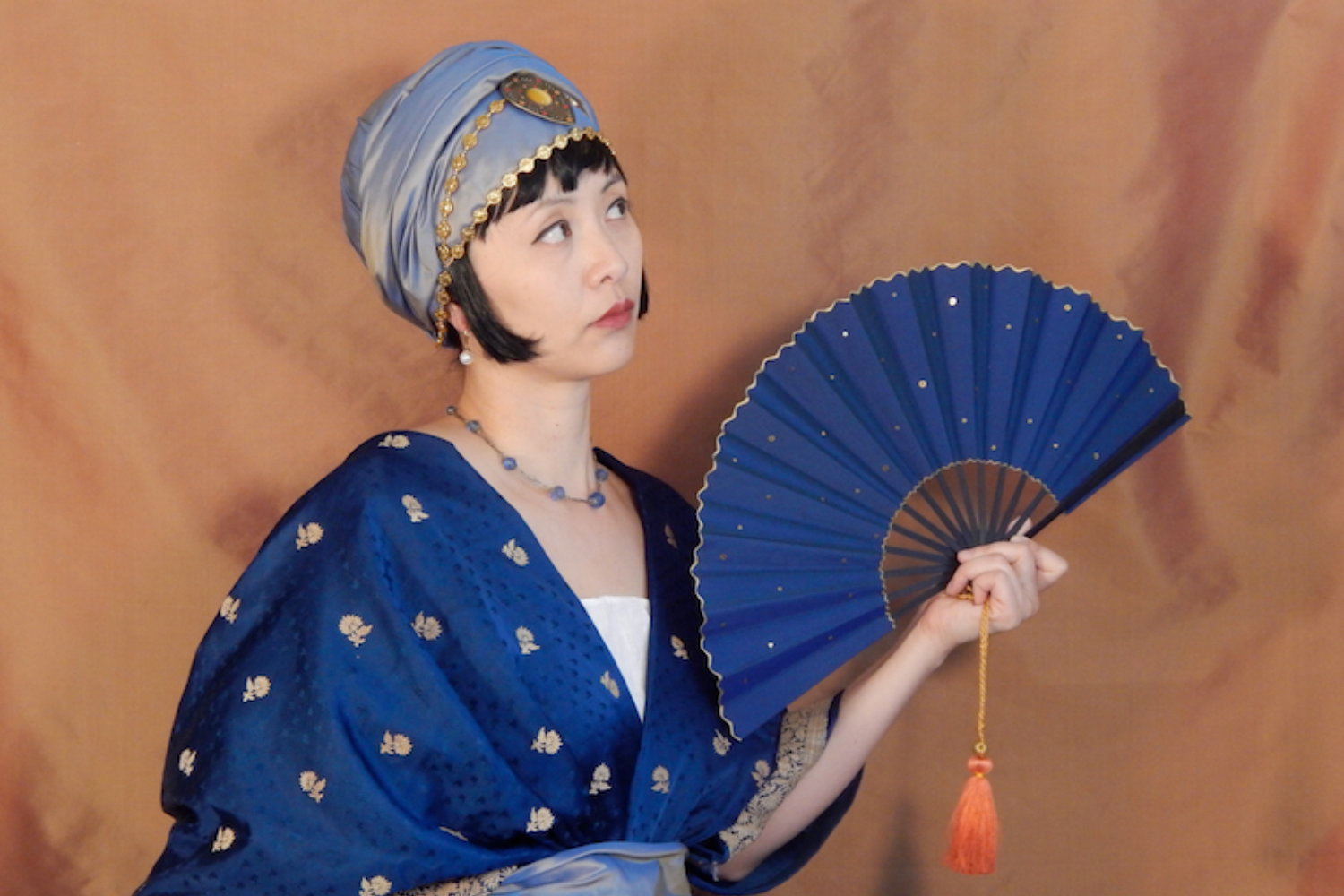
With delicate lines etched across its slender bones, the fan sprang open with delight as the first touches of color kissed its surface. It flexed with each stroke of the brush, beaming with pride in the paint that would soon become its Renaissance costume. When the final drop of paint dotted its leaf, the fan gleamed with a sort of quiet elegance, a living mosaic of lines and jewels held together by its own taut structure.
According to The Fan Museum, the fixed fan dates back to ancient Egypt, where it was first used to cool and shade court officials and dignitaries. Later on, during the classical period, it was characterized as a popular accessory, symbolic of dignity, class and status. Traditional folding fans, on the other hand, originate from Japan. They are delicate and beautiful, often embellished with gold leaf, ostrich and peacock feathers, elaborate carvings, exotic woods, precious gems and other intricate ornaments, according to the Switzerland National Museum.
“For some of the older techniques, if we don’t pass them down, they disappear. A fan oftentimes wasn’t made by one person; it was a cottage industry. The sticks might have been made by a person and carved by a different person. The leaf might have been made by one person and painted by another,” said Kathryn Hanna, the former president of the Fan Association of North America (FANA).
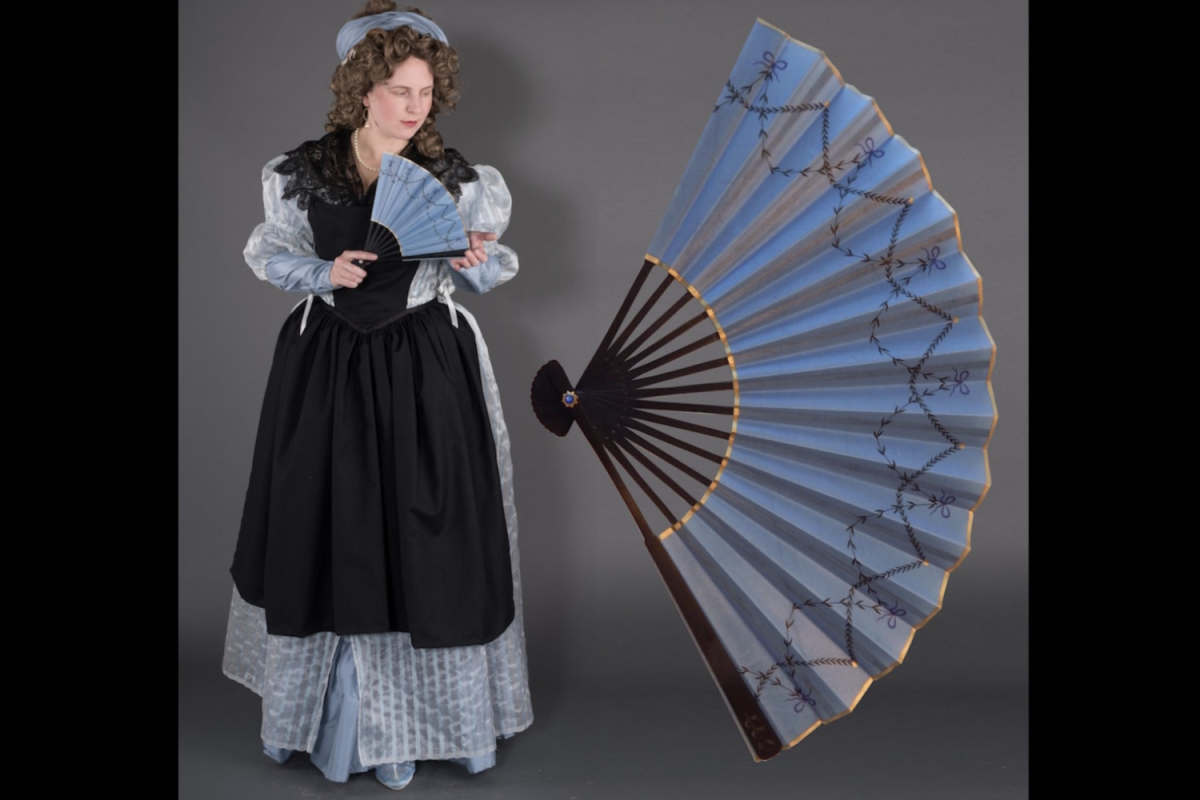
According to Rockcoco Fans, a small business that handmakes luxury hand fans, the practical need for even basic hand fans has declined due to air conditioning and electric fans, making it a difficult art form for artisans to pursue. Lynn McMasters is one of the last craftswomen keeping the art of fanmaking alive. She sells patterns for antique hats and fans, focusing on different historical periods, including the Gothic, Elizabethan, Georgian and Victorian eras.
“From an early age, my mom and my grandmother taught me how to sew, knit, and crochet, so I always did that kind of stuff,” McMasters said. “Then in the 1990s, I started making the outfits of porcelain dolls for a company. I made clothes, patterned them and sold the rights to the patterns, which got me into pattern-making.”
As for making historical costumes such as those from the Elizabethan period, McMasters joined the Renaissance Guild and the Greater Bay Area Costumers Guild (GBACG). Modern guilds are informal associations of craftspeople formed to share knowledge, information, and practice their craft together.
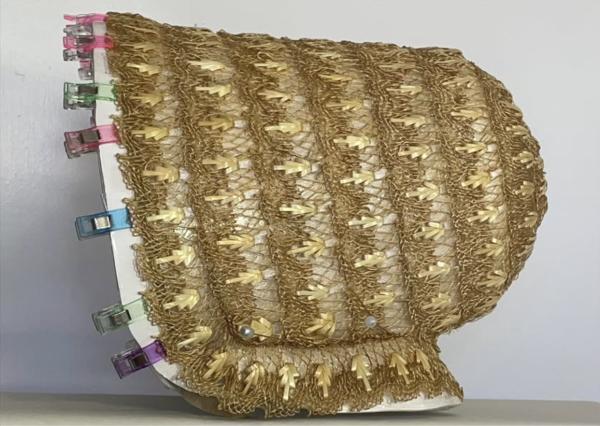
“I took a class on how to make hats that was taught by a woman who sewed hats in the garment district of New York during her working life. After that, I just kind of started doing it. I also went to the Costumes Guild conventions and learned from another woman who was making hats for a stage production that
recreated the scenes of well-known historical portraits in 3D,” McMasters said.
One of these modern productions that recreates artwork is the Pageant of the Masters in Laguna Beach, California, a 90-minute performance that brings famous works of art to life.
McMasters’ hats can take anywhere from one or two days to several weeks to make, while fans tend to take less time. For the most part, each single-sided fan takes about an hour to make, while double-sided fans take about four hours. Although McMasters has learned from a range of professionals in the art of hat-making, she is self-taught in fanmaking and learned most of the woodworking skills she needed from her father, who was a carpenter.
“I found one little article on the internet on how to make a fan pattern. From there, I drafted the pattern out and made my first fan. I just started making all kinds of fans, and I would print them onto stiffened fabric in my large-format printer. That way, they would be perfect, and they’d have all the folds on them, which I cut away after folding,” McMasters said.
After learning how to make fans, McMasters decided to start teaching classes. She has taught around three or four fan-making workshops, along with several other craft workshops, with the GBACG.
“Even though I do historical things, I work it out in the ways I know would work for my skills. I’m not necessarily trying to be super historically accurate in the methods,” McMasters said.
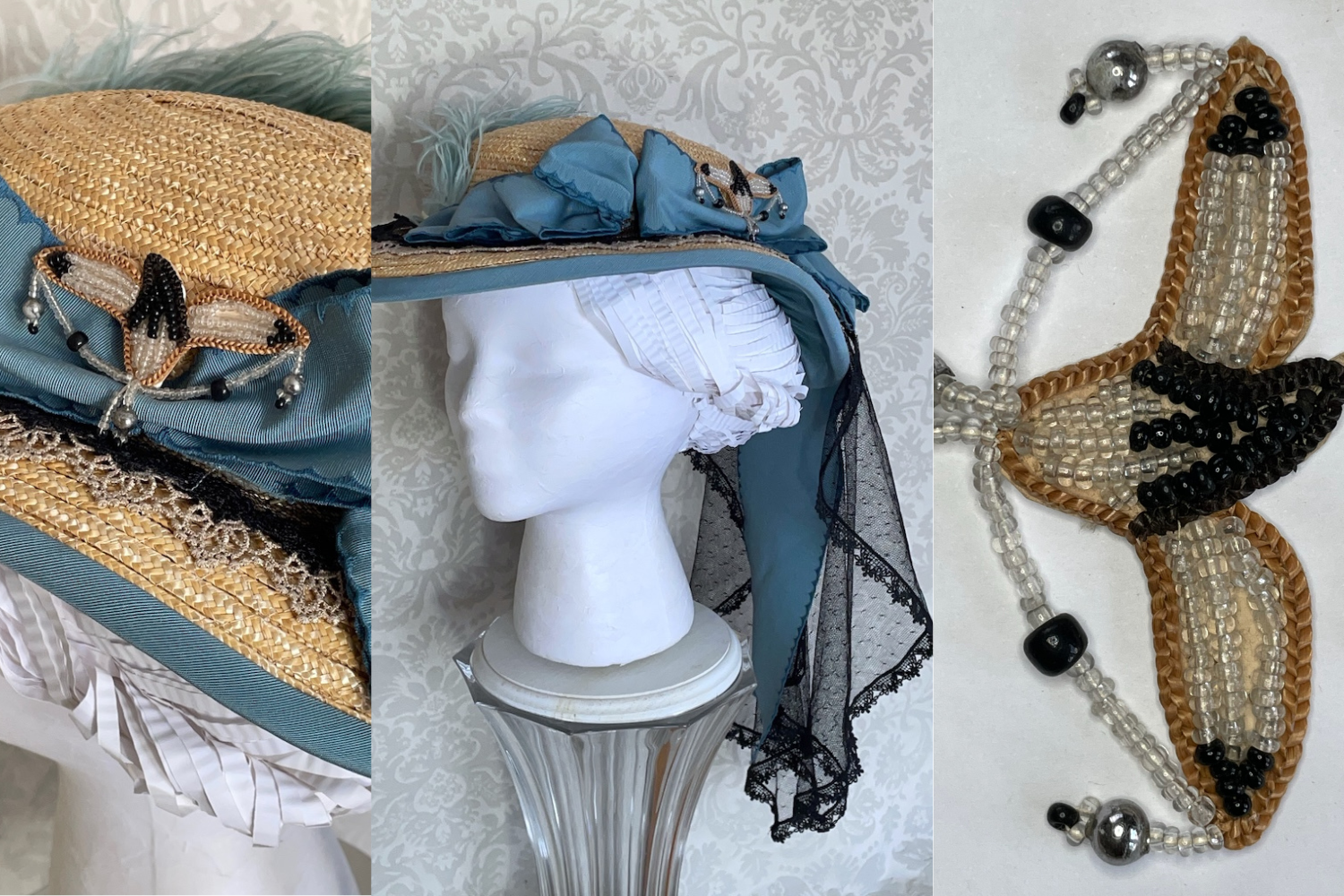
While working at Moss Landing Marine Laboratories, which is a part of San Jose State University, McMasters has honed her creative side as a graphic artist. She runs her own pattern business, …out of a portrait, which was established in 2000.
“I decided that making costumes and costume pieces is really slow, and you can never sell them for what your time is worth. So I decided to make patterns, sell the patterns, and I’ve been doing that since. I don’t think I ever could have had it be a full-time job. You’d have to do a combination of both, and you’d have to have a really good reputation to be able to sell your pieces for high-end prices,” McMasters said.
For most artists, the intensive labor that goes into making such intricate and personal pieces cannot be priced affordably. While art might not translate into economic value, it possesses a higher power that preserves human personhood from generation to generation. According to an article from Frontiers in Human Neuroscience, art offers a unique social-epistemic value: It prompts self-reflection and understanding of personal values, creates moral discussions and influences cognitive development.
“Especially in the [historical] field that I work in, historical hats and fans give you a real connection to the past, and you start to appreciate how utterly fantastic some of the items that were made hundreds of years ago are,” McMasters said. “People in the past may have done things differently, but it’s just as valuable.”
It can be difficult for artists to reproduce historical artifacts because a lot of the information and materials from the past are lost in time and translation. Approximately 97% of human history has not been recorded. According to CNN, before widespread writing systems emerged around 6,000 years ago, knowledge was primarily passed down through oral traditions.
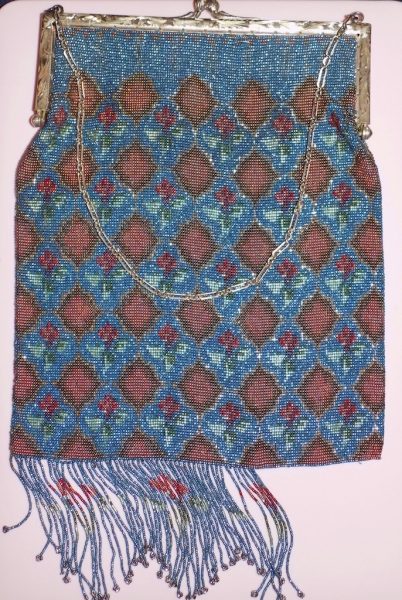
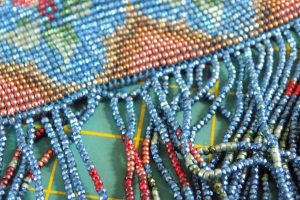
I fixed this purse that’s made of these teeny, tiny, extremely small metal beads. They were made in France, and then after the Second World War, they just stopped making these beads,” McMasters said. “I couldn’t get all of the colors I needed in metal beads. They’re vintage ones and you can get them from people who sell vintage stuff, but they’re very expensive.”
Fixing old items from decades or even centuries ago evokes a feeling of the past in McMasters, making her feel like she’s living alongside the fashion she replicates.
“I’m always in awe whenever I order something, even if it’s damaged as a study fan, to try to figure out how it was made and how meticulous and beautiful everything is,” McMasters said.
McMasters recommends that people who are looking to get started with historical fanmaking take a class, read an article or read a book. She herself publishes a lot of articles online to pass on the things that she has learned.
“You can almost always find a pattern online and try it,” McMasters said. “You’re lucky if you live in a large metropolitan area because there are maker studios where you can get access to tools that you probably don’t have in your own house.”
Oftentimes, traditional arts and crafts are much more valued in older countries, such as the United Kingdom. The United Kingdom has its own Heritage Crafts organization for the preservation of traditional crafts, which is patronized by notable sponsors, including the royal family itself.
“In the United Kingdom, they value old manufacturing techniques much more than we do. This woman, who was my first straw teacher, has the Order of the British Empire because they value her so much,” McMasters said. “Our country doesn’t value it as much, and it’s very disappointing.”
A strong craft culture does exist in the United States, but it is centered around studio crafts and fine arts. For fan-making and heritage crafts in particular, inherent industries never existed in the United States as they did in Europe and Asia.
“We have a lot of fans, but boatloads of them were imported from other places in the world,” Hanna said.
Although she doesn’t make them herself, Hanna has been an avid fan collector ever since she was a child. She received her first fan from her parents in Chinatown in San Francisco. Her uncle traveled to Asia a lot after World War II, so she also collected fans from Asian airlines. Hanna estimated that she must have at least 300 or 400 fans, so many that she has lost count over the years.
“I like interesting fans that are different and not your run-of-the-mill. Lately, I’ve been collecting fans from contemporary fanmakers because it’s a craft that, in many places, is dying out,” Hanna said.
At FANA, Hanna attends an annual meeting called the Assemblage, where she participates in fan exhibits, fan sales, auctions, and visits to local museums, always looking to build her notable fan collection.
“The thing I like about fans is that it’s a pretty universal object that is found in virtually every culture across the world,” Hanna said.
