
The latest wave of viral online trends is redefining the way self-expression looks among students, from the way they dress to the music they enjoy.
The algorithm-driven cycle of online trends has prompted students to question how much of their personality is shaped by what they see on social media. As trends quickly spread across apps like TikTok and Instagram, many wonder whether true authenticity is simply a performance.
While some say that the prominence of online trends can provide openings for creative expression, others, including Carlmont junior Chloe Ken, feel that student individuality has become limited as a result.
“I do think our generation mimics trends. I’m not surprised, though, because social media is a little bit addicting, so a lot of people see what’s online and want to try to emulate that,” Ken said.
Ken’s observation reflects a pattern that extends beyond the Carlmont campus. The same viral trends that dominate social media also shape what fills shopping carts and phone screens. According to data from the National Sporting Goods Association, brands such as Nike and Lululemon, once teen favorites, have seen their popularity decline as trends shift. Meanwhile, companies like UGG, Hollister, and Brandy Melville have recently emerged as new leaders in women’s apparel.
“I remember, in middle school, everybody wore clothes like pajama pants and flared leggings, but now, people don’t wear those as much anymore,” said sophomore Rachel Fan. “I feel like, as there are new trends, you also have to buy new clothes.”
Researchers say that this cycle of imitation and reinvention has deeper effects than just consumer habits. A 2024 study published in Adolescent Research Review found that a lack of authentic self-presentation in teens on social media can disrupt identity development, a key stage of adolescence. The urge to mimic others online can blur one’s sense of self and contribute to long-term identity distress.
Even so, students say resisting the pull of social pressure isn’t easy.
“People feel like if they’re not with the latest trends, they won’t be considered normal at school, or they’ll feel left out, or like they’re missing out on something,” Fan said.
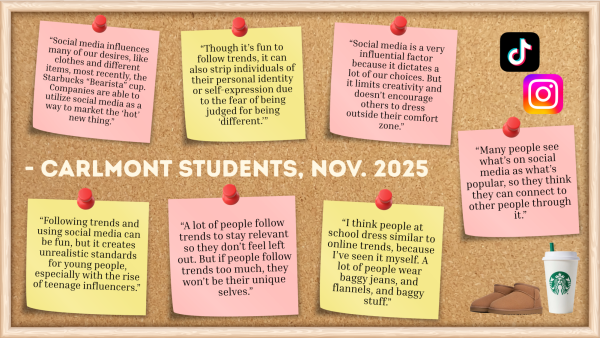
The seemingly inescapable urge to blend in with the crowd raises the question: How do teens, if ever, make an effort to be unique? When trends are too persistent, some students intentionally step away.
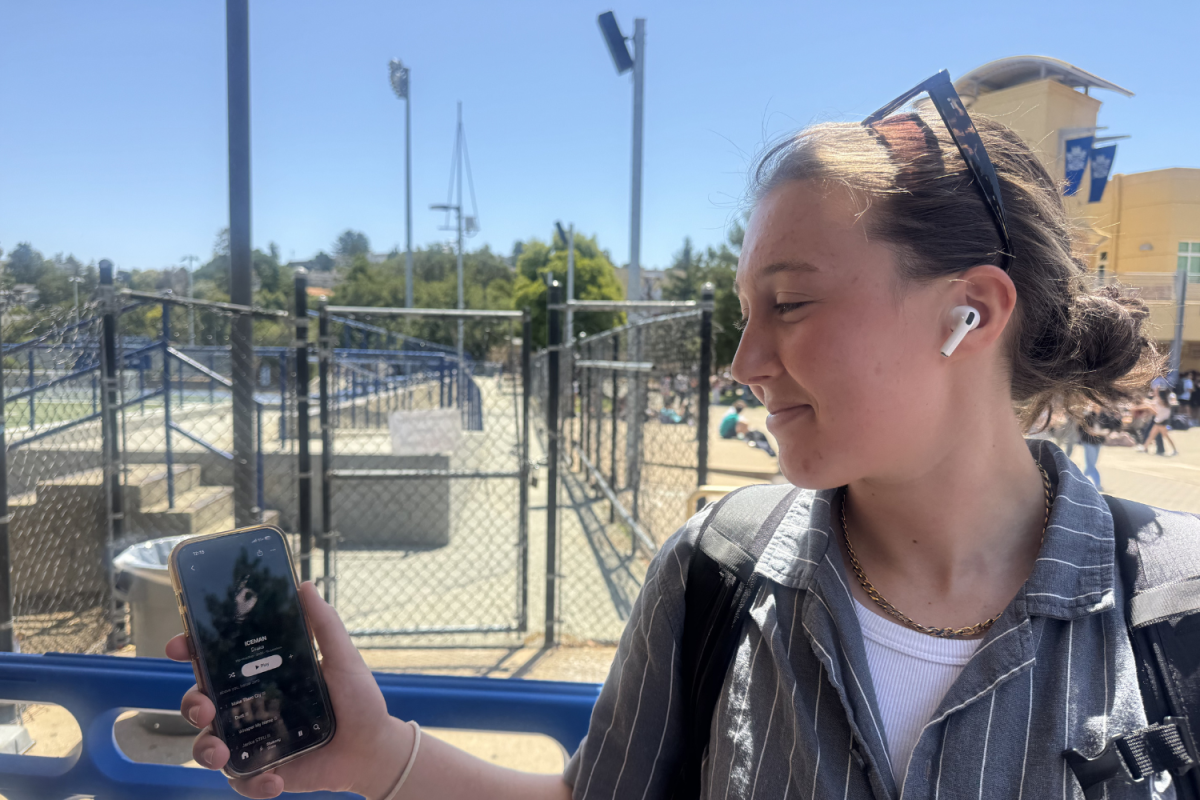
“I have definitely stopped liking a couple of songs because they got too popular online, and I’ve heard them so many times on platforms like TikTok,” said sophomore Angelina Zhang.
As teens become more aware of how online culture influences them, they’re learning to define themselves on their own terms. They’re not completely rejecting trends, but they’re choosing how much power to give them.
“Being authentic doesn’t mean that you have to ignore the trends. It just means that you shouldn’t let them control your life,” Fan said.