
Short clips from television shows now circulate across TikTok, Instagram Reels, and YouTube Shorts, breaking full episodes into seconds-long pieces that reach students long before the original shows do. Those fragments often appear on viewers’ “For You” pages without context, offering plot twists, romantic arcs, or comedic scenes in a format built for quick scrolling.
As short-form platforms dominate students’ feeds, they’ve started to reshape how TV reaches its audience. Clips can introduce a show long before a viewer ever presses play, speeding up discovery but removing context in the process. The growing use of these popular social media apps is transforming the way stories are shared and how young audiences perceive them.
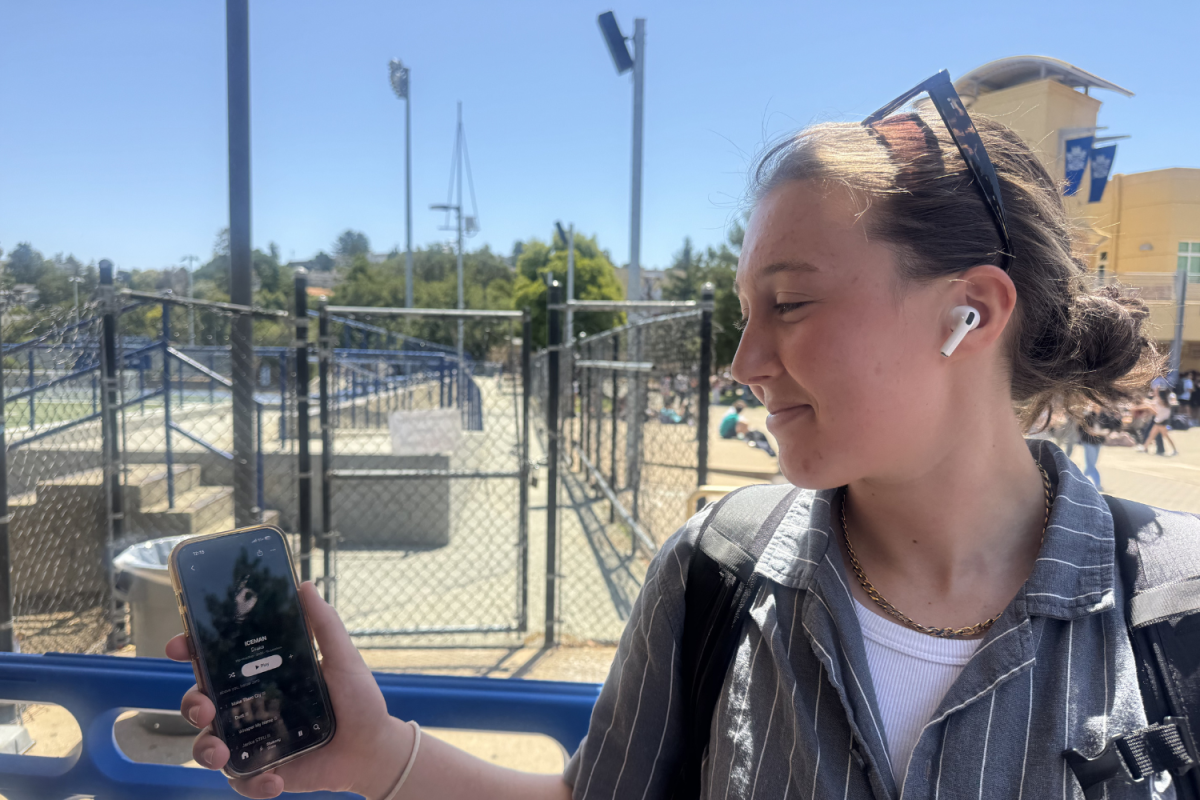
Sophomore Saaz Ghate regularly encounters clips while scrolling, alongside the full episodes she watches when she has more time.
“Sometimes if I have a lot of time, I’ll watch full episodes,” Ghate said. “But otherwise, when I’m just scrolling through, I see a lot of edits, and you know, I’ll watch shows through social media.”
A 2025 report from Kidscreen found that 63% of 13- to 24-year-olds discover new shows through short-form clips, indicating how common it has become for younger audiences to find television content through platforms rather than traditional streaming services.
“Sometimes I do have a great understanding of what’s going on,” Ghate said. “I know the general plot, but I don’t know important details that would come from watching the show.”
Some clips highlight specific moments, which can especially draw her in when the whole show takes longer to reach those scenes.
“Whenever I don’t have enough time, I like watching shows in little clips,” Ghate said. “Sometimes the story that I’m interested in is taking really long to develop in the actual show, but the edits just show me the parts that I like.”
Short-form clips can sometimes be more appealing than watching an entire episode; however, watching fragments can affect how much one can take away from a show.
“I’m not getting any of the real details that I would get if I watched the actual show or movie,” Ghate said.
Additionally, algorithms can also shape what appears in people’s feeds, potentially leading to more clips being featured.
“I think it pushes me to watch shows that are trending right now,” Ghate said. “Just to promote it and stuff.”
Many teens nationwide report similar habits. In 2024, 90% of U.S. teens used YouTube and 63% used TikTok, according to Pew Research Center.
Other students experience short-form content differently. Violet Braley, a drama student and film enthusiast, mainly watches shows through full episodes but still encounters clips on her feed.
“Sometimes they come up on my feed, and I’ll watch them because a lot of them are pretty interesting,” Braley said. “But I definitely watch TV shows on movie platforms way more.”
Many of the clips she comes across come from familiar comedies and older sitcoms.
“It’s mostly random scenes from sitcoms,” she said. “A lot of people have seen them, but they’re just the more interesting parts.”
Clips can help bring attention to certain shows, but Braley also notices the limits of that format.
“It’s hard to understand what’s happening in a scene if you don’t have any context,” Braley said. “You just don’t get the whole picture.”
A 2025 study by UCLA’s Center for Scholars & Storytellers found that 78.4% of teens watch TV or movie content through YouTube or social media at least occasionally, indicating the growing prevalence of out-of-context viewing.
“A lot of people don’t have the attention span to be able to sit down and watch a full episode,” Braley said. “I think apps like TikTok are taking these shows and making them viral, but I don’t think they’re necessarily being made to go viral.”
Clips also shape how full shows are received.
“There are benefits, like advertising for people to actually watch these shows,” Braley said.
Short-form clips have become a major part of how films spread across social media, but their circulation doesn’t concern director Frederic Du Chau.
“I don’t mind. The more people see it, the better,” Du Chau said. “I don’t own the IP behind what I do for the studios, so I have no say in what happens to my films after I deliver them.”
The rise of reposted scenes hasn’t led him to track how those clips are edited or interpreted online.
“I have no idea. I don’t check it out at all,” Du Chau said. “By the time I finish a movie, I have seen every shot probably a hundred times, so I usually don’t watch anything beyond the premieres. I am too busy creating new material to look over my shoulder.”
Even as these clips circulate widely, he sees a broader concern in how creative work is treated across digital platforms.
“It does bother me that tech companies have taken all creative work for granted because that hurts the ability for artists to make a living, which in turn is bad for society,” Du Chau said. “We need art. Made by humans. Now more than ever.”
Social media also plays a role earlier in the process, especially during marketing. While working on his upcoming film, “Bollywoof”, Du Chau was asked to consider what might catch attention online.
“That does get mentioned a lot during the marketing phase of the projects,” he said. “The studio and the producers ask me to come up with ideas for social media that have the potential to go viral, although it is hard to predict what will go viral.”
Editing remains where a film’s structure takes shape as the story tightens.
“A movie finds its own pace through the story and the characters,” Du Chau said. “It is always long at first, and then you find what the absolute essential info is that you need to keep to tell your story and not bore your audience. There is a saying: ‘kill your babies.’”
Short-form watching doesn’t replace the full experience of a movie, but Du Chau sees the two formats as fundamentally separate.
“It’s apples and oranges. Two different things,” he said. “Watching clips online is about quick, easy dopamine hits. Spending time to watch a movie is a completely different experience, best shared.”
As clips continue to dominate the feeds where teens spend their time, both students and creators are deciding what that means for storytelling. For some viewers, fragments offer quick entertainment or a shortcut to a show; for others, they fall short of the full experience that long-form episodes are built around. As short-form platforms continue to shape what students watch, the distinction between scrolling through moments and experiencing the full story is becoming increasingly clear.
“Seeing like a 15-to-60 second clip is easier for a lot of people to watch,” Braley said. “But a lot of people aren’t going in to watch these shows, and it’s kind of discrediting the actors and the people that actually make them.”