



Looking in the mirror, Rose Turner* no longer feels like herself without the mask she lives behind. One layer after another, cosmetics promise a transformation in seconds, with the cost of rising insecurities. Her foundation may be flawless, but the truth behind it isn’t.
Cosmetic products not only harm your skin but also harm your self-image and the environment. According to the FDA, “Under U.S. law, cosmetic products and ingredients do not need FDA approval before they go on the market.”
But their chemistry runs deeper — into your pores, your psyche, and even our planet’s roots.
Under the surface
Turner sets her alarm for 5:30 a.m. every morning to apply a layer of makeup, ensuring her face is perfect. She used to dread getting up in the morning and seeing her bare face in the mirror, the bathroom overflowing with products and tools.
“It started taking over my life the more I felt I needed it. The more steps I had, the longer it took me to get ready,” Turner said.
These problems have a broader impact. Dr. Keira Barr is a conventionally-trained dermatologist who has also studied stress physiology, neurobiology, and trauma healing, and has personally experienced skin problems.
“I wanted to be able to serve dermatology patients because so many skin conditions are triggered by or exacerbated by stress,” Barr said.
Your skin is closely linked to your immune and sensory systems and can change in response to emotions and seasonal variations. For many people, as stress levels rise, they break out more.
“Over time, I started wearing more makeup and covering the things I didn’t like about myself, like the acne,” Tuner said.
Vivi Posschelle is an associate scientist at Credo Beauty, a retail beauty brand, and has been with the company for approximately six years. She says that as the cosmetic industry continues to create new products, consumers become increasingly convinced they need them, thereby raising insecurities about the distinction between needs and wants.
“There are so many products and people feel like they need all of them,” Posschelle said. “There’s a product for everything now as well. So, you know, there’s always the opportunity for someone to see that and feel like they need it.”
For many women today, makeup has become just another step in their morning routine. Wake up, shower, makeup, coffee, leave.
“After a while, you realize you don’t recognize yourself without the mask,” Turner said.
Kimberly Repp is an esthetician and the founder of Outersoul, with over 25 years of experience in the field. She believes that perfectionism can influence someone’s self-perception through the use of cosmetics.
“I think the first thing is not to always promote people who are perfect to the eye. I think there are so many magazines, images, social media posts,” Repp said. “They have perfect skin, perfect hair, perfect bodies.”
The image of perfection is imagined for too many people in today’s society. According to The Daydream Palace, “perfect is just a fun fantasy.” The cosmetic industry tends to exacerbate this.
“I thought that I should look like the people in the ads I saw,” Turner said. “But a lot of the time that just wasn’t a possibility.”
We have all heard that there is always room for improvement. When it comes to cosmetics, Repp believes promoting perfection can be detrimental.
“I think a lot of people think people who have blemishes don’t have perfect skin, or if they’re not a certain weight, they’re not perfect in size. And so I think that the beauty industry could definitely get better at just promoting and also posting or sharing people that look like the normal average out there,” Repp said.
This comparison can be detrimental when it causes people to think poorly of their appearance.
“I used to feel pressured to wear makeup every time I left the house because I was afraid that someone I knew would see me and judge me,” Turner said.
Trends like the “no-makeup-makeup” styles emphasize natural beauty over flashy looks. As the focus shifts, makeup is increasingly reaching younger generations. Young kids have started believing they need more makeup and skincare.
“It shouldn’t make you feel more insecure about things others may see as flaws,” Turner said. “Nowadays, I think that young kids feel pressured to wear makeup earlier because of the people they see around them.”
Surface damage
The Berman Skin Institute warns about the potential harm of wearing makeup every day. Also, according to the FDA, “Companies and individuals who market cosmetics have a legal responsibility to ensure the safety of their products.”
Every person’s skin is unique, and no product can be perfect or safe for everyone. With no standardized ingredient list, you must visit a cosmetic brand’s website to find one, even if it is difficult.
Some ingredients, such as fragrances, are not transparent about their contents. According to Barr, fragrance is one of the most prominent factors in sensitization, allergic contact dermatitis, and irritant dermatitis, and can pose numerous challenges when labels state “fragrance.”
“We don’t get to know what’s in it, and so if people have allergies or sensitivities, that can be problematic,” Barr said.
Cosmetics pose challenges for people with all skin types. Barr reiterates that less is more when it comes to cosmetics and ingredients.
“I’ve tried so many products, most of them didn’t work. I just kept breaking out and covering them,” Turner said.
Credo has its own list of harmful ingredients, called The Dirty List, organized into groupings to illustrate the effects and types of each ingredient. They are harmful ingredients that the public should be aware of, to make the industry more transparent.
“It’s a list of over 2,700 ingredients with a range of restrictions and prohibited items,” Poschelle said. “Whether it’s endocrine disruptors, hormone disruptors, carcinogens, things of that sort. So like the common ones I think people know of really, really well are parabens.”
Repp believes in the importance of skincare over appearance, even as people tend to overlook this quality. People often choose things that make them look better rather than things that make them feel better.
“The one thing they’re going to have for the rest of their life is their skin. And I think learning to take care of it in a healthy, mindful way would be very beneficial,” Repp said.
Most teenagers experimenting with makeup and skincare products are unaware of what’s good for them or how to care for their skin properly. Some ingredients can make your skin worse, not better.
“I used to have really bad acne that just wouldn’t go away, and I was ashamed of it,” Turner said.
Taking care of your skin doesn’t have to be difficult. Barr says less is more when it comes to cosmetic product ingredients. She emphasizes the importance of using products that you like and that are suitable for you.
“I think the bottom line is to use products that you feel good about and feel good on your skin,” Barr said.
Outside the body
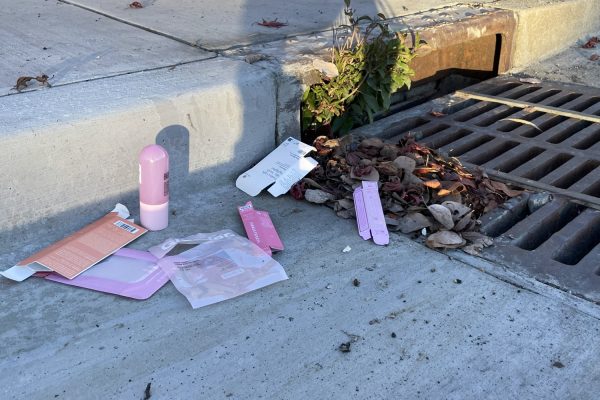
While the adverse effects of cosmetics on appearance are more pronounced, one thing people often overlook about the cosmetic industry is the amount of waste it generates.
According to Sustainable Earth, “beauty packaging amounts to 120 billion units of trash each year, including plastic, paper, glass, and metals that are improperly recycled and ultimately end up in landfills.”
When you visit a cosmetics store, such as Sephora, almost every item is packaged in a box or some form of packaging. Packaging doesn’t enhance the actual product in any way, except for its aesthetic appeal. The package will ultimately be thrown out.
Overconsumption by consumers also contributes to the amount of trash. Sephora and other resale companies, such as Ulta, offer free makeup testers. Although some are reluctant to use them due to concerns about germs and the increasing popularity of online shopping.
“I used to buy so many different products and ended up throwing a lot of them away when they didn’t work,” Turner said. “It was a waste of money and materials.”
According to Civic Science, “packaging waste is one of the biggest environmental challenges facing the cosmetics industry.”
Credo Beauty acknowledges the environmental impact of the beauty industry and has made efforts to minimize its carbon footprint. As part of their mission, they created Sustainable Packaging Guidelines that “require our brand partners to meet specific standards meant to eliminate the use of single-use items and reduce the use of virgin plastic and non-recyclable materials.”
“All plastic packaging has to be at least 50% post-consumer recycled plastic or PCR plastic,” Posschelle said.
PCR stands for Post-Consumer Recycled material and refers to a recycled or reused plastic product. In contrast, virgin plastic is a plastic product made from new materials, such as resins, and produced from natural gas and oil.
One of Credo’s main guidelines is encouraging the use of aluminum, glass, and refillable containers for any product that can be used with them. Credo tries to use recycled plastic whenever possible.
“We don’t allow virgin plastic pretty much at all in our assortment,” Posschelle said.
Garbage in landfills isn’t the only impact. Some garbage, such as microplastics, is much more difficult to dispose of.
According to the National Library of Medicine, “Currently, the generation of plastics and microplastics is one of the most serious environmental issues, particularly that associated with the cosmetic industry.”
Makeup has been around for thousands of years, with its practice dating back to approximately 4000 BCE. Some of its history was not as clean as some people might think, and has caused tremendous harm across the centuries.
Makeup affects millions of people worldwide and has multiple effects, which is why it is essential to pay attention to the health and well-being of our entire selves, rather than just the skin surface.
“Makeup should make you feel like who you want to be on the inside, not the outside,” Turner said. “It should be fun.”
*This source’s name has been changed to protect their privacy in accordance with Carlmont Media’s Scot Scoop Anonymous Sourcing Policy.
