


Amputees redefine ability
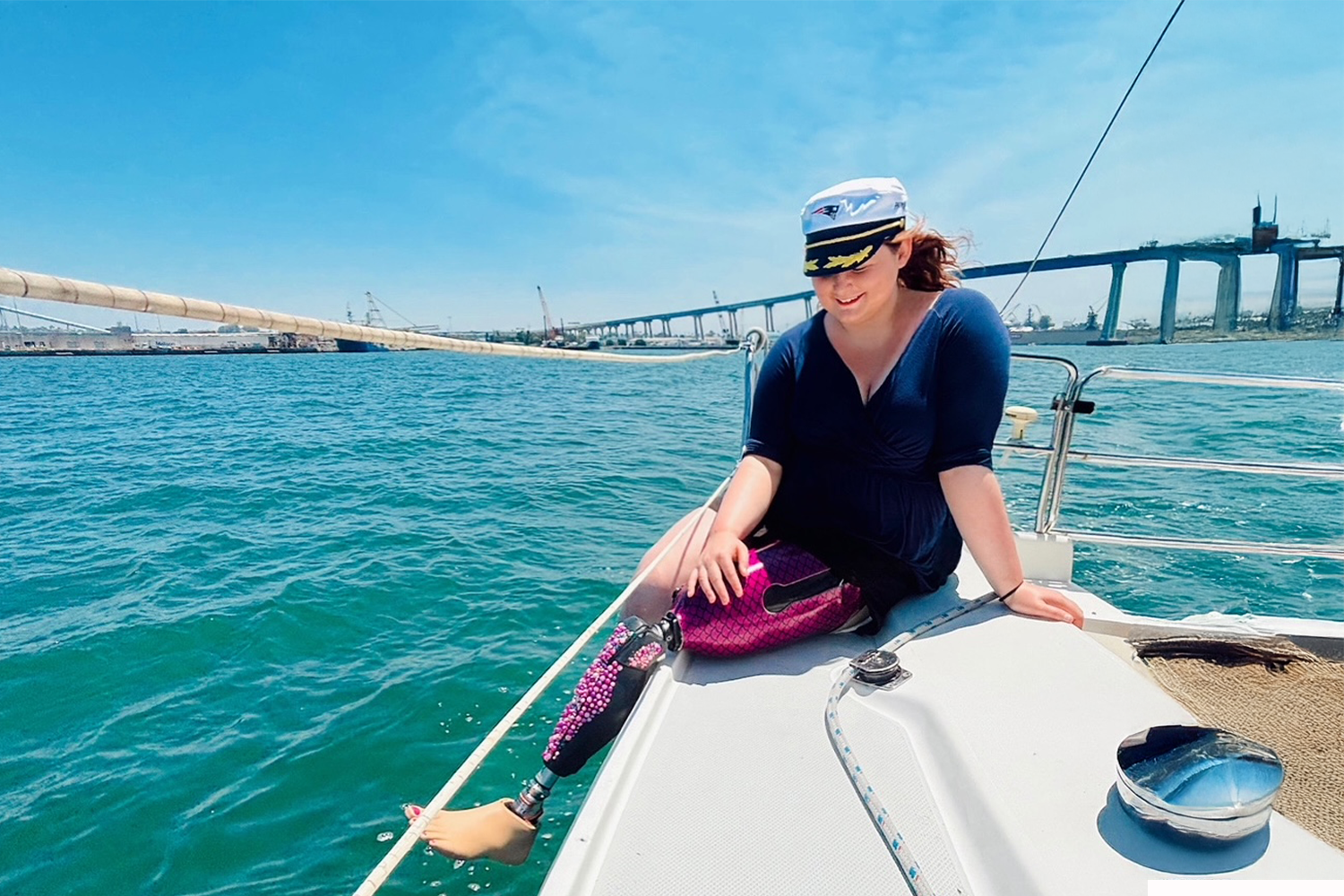
In 2024, Gary Bortolotto was skating, running, jumping — doing anything the most active 60-year-old could do. Although he was simultaneously suffering more than seven operations, spending more than 100 days in the hospital, and struggling through a hard journey of amputations and prosthetics, he found acceptance and motivation from the people around him.
Professionals, physical therapists, and patients all have a unique experience with amputations and prosthetics, playing a distinct role in helping individuals regain their ability. The profound emotional impact of these stories has changed lives, demonstrating how prosthetics are tailored to meet a person’s needs, as seen through Bortolotto’s story. The high amounts of innovation that have been developed over thousands of years bring courage, rediscovery, and possibility.
A long recovery and rebuilding strength
The tell-tale sounds of the hospital filled Bortolotto‘s ears. Softened murmurs, the shuffling of feet behind the door, the rustling of blankets, and the steady, slow beeping that seemed to echo the fragile rhythm of his life. It was a new day, the first day that he lived without his legs, after months of fighting sepsis due to diverticulitis.
Before his amputation, he spent almost half a year in the hospital, his days consumed with surgeries and recovery. Healing came slowly and painfully.
After surgery, while Bortolotto awaited the arrival of his prosthetics, he found an escape through painkillers, irresistible when faced with a change that would forever shift the trajectory of life: the simple idea of being able to walk seemed like a distant dream.
“I was active, I was playing hockey, golfing, working. Then this happened to me. It’s just a 360. I gotta learn how to walk on these prosthetics,” Bortolotto said.
Bortolotto recalls the specific moment when he woke up without his legs; the feeling of defeat and exhaustion was unbearable. The difficulty of the experiences Bortolotto went through can lead to severe depression, according to research from the National Library of Medicine, which reports that nearly one in three amputees, or 51% experience clinical depression after limb loss. The sudden change in mobility, independence, and self-image often triggers emotional distress that can last months or even years after recovery.
In the United States alone, about 185,000 people undergo amputations each year, many due to complications from vascular diseases, trauma, or infection. While physical rehabilitation helps restore strength, the emotional healing process can be far slower, relying on consistent psychological support and community connection.
According to Bortolotto’s wife, Sandra Bortolotto, he fell into a period of depression after his accident, but hope returned as he stayed resilient, gradually rebuilding his life and regaining his confidence.
“It was hard. But he stopped. He stopped taking the pills, and he put his head on his shoulders. He came back, and he tried,” Sandra Bortolotto said.
Fortunately, Gary Bortolotto is cared for by many, from family to friends, who supported him through his depression and recovery journey.
With the help of their unwavering support, Gary Bortolotto slowly began to reclaim a sense of normalcy. Each visit and each word of encouragement became a small step forward, not just toward walking again, but toward rebuilding confidence and purpose. Sydney Marshburn, also an amputee, echoes this sentiment, emphasizing the importance of community and surrounding yourself with people who have shared experiences.
“Having people around who understand what you’re going through makes all the difference,” Marshburn said. “Even just talking to someone who’s been there, or seeing how they navigate life with prosthetics, gives you hope and shows that you’re not alone in this journey.”
Marshburn is dedicated to raising awareness and providing support for the amputee community. Drawing from her own experiences adjusting to life with prosthetics, she emphasizes the mental and physical challenges of adapting to a new way of living.
“There was a moment, I usually would just kick my shoes off. But one time, before I had my prosthetic or anything, I went to kick my shoes off, and there was no foot there. That was the first time I just completely lost it,” Marshburn said.
When Gary Bortolotto came out of the hospital in a wheelchair with two new legs, he began physical therapy, relearning basic routines and rediscovering his passions such as hockey and ice skating.
“I think his being an ice skater has really helped him because he was a hockey player. So it was like, look, these are your skates. Put them on and let’s go,” Sandra Bortolotto said.
But this new change did not come without its challenges. The first set of beginner prosthetics Gary Bortolotto used was stiff and uncomfortable.
“It’s like walking with ski boots on,” Gary Bortolotto said.
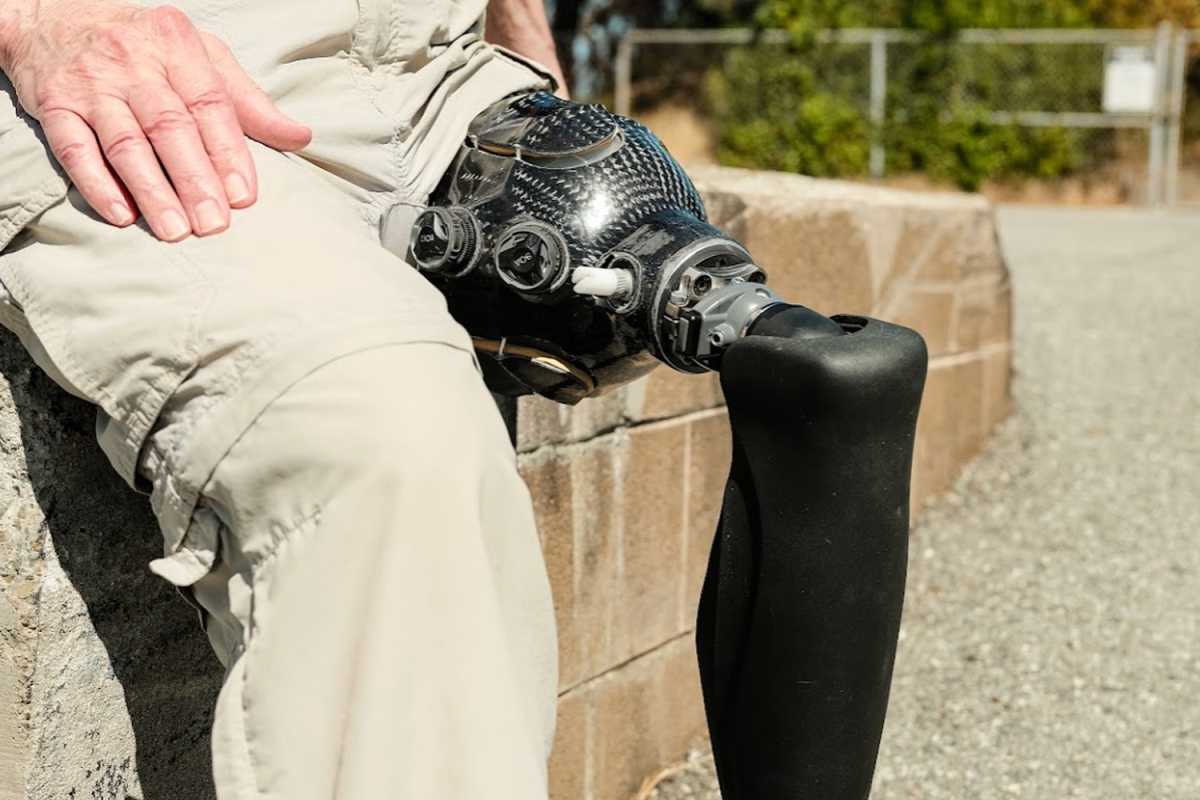
Each step felt foreign and heavy; the once-natural act of walking transformed into a deliberate and exhausting process. Gary Bortolotto‘s daily routine changed drastically: tasks that were once second nature, like getting dressed or making breakfast, became lessons in patience and adaptation. His wife took on the role of caretaker, balancing her love for him with the emotional toll of watching her husband relearn life from scratch.
Like Gary Bortolotto, Marshburn also experienced this change in her life. Her approach to her amputation was plagued with the same issues of relearning and adjusting to the limitations of prosthetics. Marshburn recalls the difficulty of simply getting up from bed or a chair; routines that came naturally to others had to be carefully planned and thought through.
“If I have to get up and pee in the middle of the night, I have to either have a wheelchair or walker placed by my bed or my prosthetic,” Marshburn said. “I feel like my brain’s gotten sharper just because of all the things that I have to think about now.”
Marshburn and Gary Bortolotto both describe the importance of prosthetics for amputees. All prosthetics are custom-made to fit the user and are professionally crafted by experienced professionals. Gary Bortolotto‘s prosthetist, Jonathan Smith, owns Applied Clinic, which has multiple locations across the San Francisco Bay Area.
Today’s devices are worlds apart, lightweight, durable, and accessible, but Smith is quick to remind people that modern innovation hasn’t made the job simple.
“Every prosthesis is custom; we’re designing something new for every patient,” Smith said. “There’s no off-the-shelf solution. It takes a whole series of steps to make sure the socket fits perfectly and performs the way it should.”
According to Smith, the stump of the amputee will constantly shift and change in the first months after surgery, requiring constant adjustments and modifications to the socket. This area allows the amputee to attach the prosthetic.
“You have to wait for your limb to shrink into a shape that will accommodate a prosthetic. A lot of the time, your surgeon will blow up your residual limb to the point where it looks like a little rectangle after surgery,” Marshburn said.
These frequent changes demand patience and precision, but for Smith, they are an essential part of truly individualized care.
“I treat every patient like they are a member of my own family. I will listen, understand, and build a device that genuinely restores their mobility and dignity,” Smith said.

Smith’s approach reflects a deep understanding that recovery is more than physical and not all of Smith’s experiences are with local patients; some have taken him far beyond his clinic, often with a bit of humor mixed into the pressure.
In 2016, he traveled to Walter Reed National Military Medical Center to fit Navy SEAL Lieutenant Commander John “Pooch” Pucillo with his company’s new, largely untested Infinite Socket. The hospital itself was a sobering reminder of the toll of modern conflict; many patients had lost limbs in Afghanistan and Iraq, and Smith found himself surrounded by service members adjusting to life-changing injuries. Walter Reed, the premier military hospital, where presidents receive care, was an intimidating setting.
“Pooch was a Navy SEAL. Two hundred sixty-five pounds of pure muscle, a total beast,” Smith said. “I was there with a device I hadn’t fully tested, and the first thing they do? Take him straight to the gym to run an obstacle course on it.”
Despite the nerves, the prosthetic held up perfectly, and weeks later, Smith learned that Pucillo had returned to active duty overseas using that very same device.
Just as Smith’s work with advanced prosthetics has reached military hospitals and elite soldiers, his impact is equally profound at home with patients like Gary Bortolotto. Smith recalls Gary Bortolotto’s case with genuine admiration; a longtime Bay Area local, athlete, and family man who lost both legs below the knee after a sudden infection. Despite the odds, Gary Bortolotto’s determination and optimism transformed his recovery into something extraordinary.
“Gary’s a badass,” Smith said. “He’s walking better than anyone expected, and he’s doing it with more motivation than I could ever give him.”
With the help of the innovative socket designs and personalized fittings, Smith and physical therapists have not only helped Gary Bortolotto walk again, but also reclaimed the active, driven spirit that defined him before his amputation.
Many people in Gary Bortolotto’s community are more than willing to help, while also seeing him as a true inspiration. His five-year-old niece was there for him throughout the entire process, visiting often during his extended hospital stay and marveling at his new prosthetics.
Her innocent excitement, he says, made the moment lighter, a reminder that even life’s toughest changes can still hold joy.
Sandra Bortolotto remembers one small, telling moment after a therapy session when two first-graders approached her husband, their eyes already full of questions.
“My youngest son told him, ‘Okay, Dad. If anyone asks you what happened, tell them a cool story. Say you got bit by a shark or stepped on a landmine,’” Sandra Bortolotto said.
Gary Bortolotto began to tell a story about going swimming, but his wife quickly cut him off as everyone burst into laughter. She joked that they needed to look something up to avoid scaring the children, turning the moment into lighthearted fun. The exchange, both playful and affectionate, reflects how humor has become the family’s way of normalizing limb loss, allowing Gary Bortolotto to take ownership of his story.
Though his prosthetics sometimes attract curious glances from strangers, Gary Bortolotto embraces the attention with humor and openness. He hopes to someday add custom designs to the black sockets, perhaps golf-themed, to spark conversations rather than stares.
“I wish people would just ask,” Gary Bortolotto said. “Then I can tell them what happened, and show them that life goes on.”
Marshburn also shares similar experiences regarding children’s curiosity and honesty. Due to her work advocating for amputees and raising awareness about limb differences, she frequently visits schools, ranging from third-grade classrooms to high schools, to give talks about her personal journey. The younger kids, she says, are always her favorite; their questions are blunt, funny, and refreshingly genuine.
“They have no filter,” Marshburn said. “They don’t mean to be funny, they’re just curious.”
But while she appreciates that honesty, Marshburn also notes how adults often hush their children or steer them away, which can make her feel isolated or like “a pariah.” She encourages parents to let kids ask questions respectfully, saying that it opens a positive dialogue and helps normalize disability.
“I’m very open about it,” Marshburn said. “The kids usually see my cool robot leg and just go, ‘I want one!’”
For Marshburn, adjusting to life as an amputee meant more than learning to use prosthetics. It meant confronting a world not built for people like her. Everyday tasks, from entering buildings to moving through public spaces, revealed persistent accessibility gaps. These challenges deepened her understanding of disability barriers and inspired her to advocate for meaningful change.
“I never really noticed before just how much the world isn’t designed with people with disabilities in mind, and then suddenly you’re thrown into that reality,” Marshburn said. “There are so many frustrating moments, places that claim to be wheelchair accessible, but once you get there, you realize the entrance is on a second floor with no elevator. Going through that makes you appreciate what is accessible even more, but it also motivates me. It ignites a passion to say, ‘this is what I want to change.’”
Through her role, Marshburn strives to bridge that gap by creating programs that connect new amputees with mentors, build awareness about accessibility issues, and ensure that no one feels isolated during their recovery journey. Her advocacy work is not just about improving policies or providing information, but also about amplifying the voices of amputees and helping others see that limb loss does not define a person’s strength or worth.
Inspiration and support from the amputee community play a significant role in the recovery journey. Both Marshburn and Gary Bortolotto emphasize that much of this encouragement now comes from online platforms such as YouTube and social media, where amputees share their stories, progress, and advice.
“I think doing social media, reaching out that way, it’s such a small community that people will write back and say, ‘okay, let’s see how you got through it,’ and vice versa,” Marshburn said.
For her, these interactions build a sense of shared resilience and belonging in an otherwise niche community. Gary Bortolotto finds similar motivation in videos, which document others living full, independent lives with prosthetics.
“I’ve seen some videos where they have double amputees driving with their prosthetics on,” Gary Bortolotto said. “Right now, I can’t bend anything, so I don’t drive, but when I get the new ones, and they bend and all that, maybe I can drive without getting it hooked up by hand. So we’ll see what happens. I believe that driving will come back to me.”
Gary Bortolotto and Marshburn both emphasize the crucial role modern prosthetic technology plays in regaining mobility and independence. They use prosthetic legs equipped with functional ankle joints, which help replicate the natural movement of walking, making daily activities and physical therapy far more manageable.
“When I get my new ones, I’ll be more independent. With the new ones, I just have to picture my legs and get used to walking again. It’s a whole new life, and I’m ready to hit it harder,” Gary Bortolotto said.
Advancements such as 3D printing and modeling have revolutionized prosthetic design, enabling faster production, greater customization, and more precise fits. These innovations not only improve comfort and functionality but also give amputees like Gary Bortolotto and Marshburn the confidence to push their physical limits and reclaim their lives.
At Applied Clinic, professionals custom-build devices for each client using molds of the patient’s leg or arm, and wards use the mold to make a socket. According to Smith, making a prosthetic is more than just fitting the socket; it also involves analyzing how the patient’s amputation evolves and heals.
To treat a patient, the doctors must observe the patient’s growth and adaptation over time. Smith mentions that new technologies, such as scanners, have aided this process; however, he emphasizes that each clinic has a significant difference in how they create a prosthetic.
“We go through multiple fittings,” Smith said. “Once the volume of their leg stabilizes, we transition them from a test socket to their final carbon fiber socket.”
Beyond the fit itself, Smith highlights the importance of proper alignment for human locomotion, adjusting the foot and socket to guide weight distribution to replicate natural walking. This blend of craftsmanship, technology, and biomechanics ensures that each prosthetic supports both comfort and mobility.
Technology plays a critical role throughout: new materials enable handmade prosthetics to have improved durability and precision, while computer-aided design and 3D printing facilitate a deeper analysis of the patient’s condition. Still, the human element remains essential, as it involves listening to patients, understanding their goals, and making refinements based on real-world feedback. Smith emphasizes that this is one of the most motivating and inspiring parts of his career.
“It’s a super rewarding responsibility to help people walk and help people live a more normal life. Everybody takes their mobility for granted, and once it’s gone or hindered, oh man, it’s such a pain in the butt,” Smith said.
For both Gary Bortolotto and Marshburn, life after amputation is a journey of adaptation, resilience, and rediscovery. They describe a reality that is simultaneously challenging and rewarding, one in which independence is regained step by step, and each small accomplishment carries profound meaning.
“Life is short,” Sandra Bortolotto said. “You have to live every day and enjoy it because you never know what will happen. I never thought something like this would happen to me, losing him, becoming a caretaker at fifty-six. We were going to travel and enjoy life. However, we encountered a detour. A brief gap, a minor bump on the road that we need to address. Once we get past this, we’ll start back up again.”
Gary Bortolotto reflects on the daily determination required to reclaim it. For him, moving forward isn’t just about accepting circumstances; it’s about actively pushing through the discomfort, frustration, and setbacks that come with rehabilitation. His approach emphasizes the resilience required to regain independence and confidence, even when the path seems overwhelming.
“In rehab, there are a lot of people who are just giving up. They’re so sore, or they’re in pain, or they just don’t want to do it. And they’re angry. They’re angry at life, and they’re angry at their situation. And they give up. But don’t do that. You just gotta go do it. Don’t think about anything else,” Gary Bortolotto said.
Despite the challenges they’ve faced, the Bortolottos are looking forward to new experiences and reclaiming parts of life that once felt out of reach. Excitement builds as they plan a trip to Hawaii, their first since Gary Bortolotto’s amputation. For them, it’s not just a vacation, but a symbol of resilience, independence, and the joy of sharing life’s adventures.
A step, a creak. A step, a creak. For Gary Bortolotto and Marshburn, relearning to walk was never a simple act. Their prosthetic legs initially felt foreign, heavy, and unyielding, a constant reminder of what had been lost. Yet with each careful movement, guided by the encouragement of family, friends, and skilled prosthetists such as Smith, those tentative steps became milestones of resilience. One step at a time, they reclaimed independence, confidence, and the joys of everyday life. Their journeys are proof that progress is rarely instant, but with patience, support, and the right technology, each step forward is also a triumph, both in body and spirit.
