


Capturing relevance in time: Photographers give permanence to their visions
Twenty point two photos. That’s the number of photos the average U.S. citizen takes daily, according to a research study conducted by Photutorial. Whether it be a selfie with friends, taking a screenshot, or even passing through an advertisement on the side of the road, all people interact with photos in some way.
To hobbyists and professional photographers, however, capturing still moments in time means much more than taking a picture. It is an art form, and as of now, its future is ambiguous.
Exposing the Changes
According to a research study by Data USA, there were approximately 116,500 photographers in the U.S. workforce in 2023. Yet behind that number lies an industry constantly adapting to shifting technologies, media consumption patterns, and widening disparities.
For instance, Instagram was initially designed to be a photo-sharing app among phone users. Since the app integrated reels back in August 2020, viewership has focused more on consuming shorter form content, with some photographers trying to post other forms of content to receive engagement on their posts when they share their work.
“I definitely noticed that there is a bit more marketing and advertising involved,” said Hailey North, a professional photographer based in the Bay Area and New York City. “I’m now always posting reels on Instagram that may come across as cringey, but it’s something that can get you more viewership and exposure. You never really know what’s gonna go well and what’s not, so I try to be consistent.”
The photography industry is also seeing a change in the services photographers offer. In the State of the Photography Industry Report of 2024, 21.4% of photographers identified as both photographers and videographers, a rise from 17.4% in 2023.
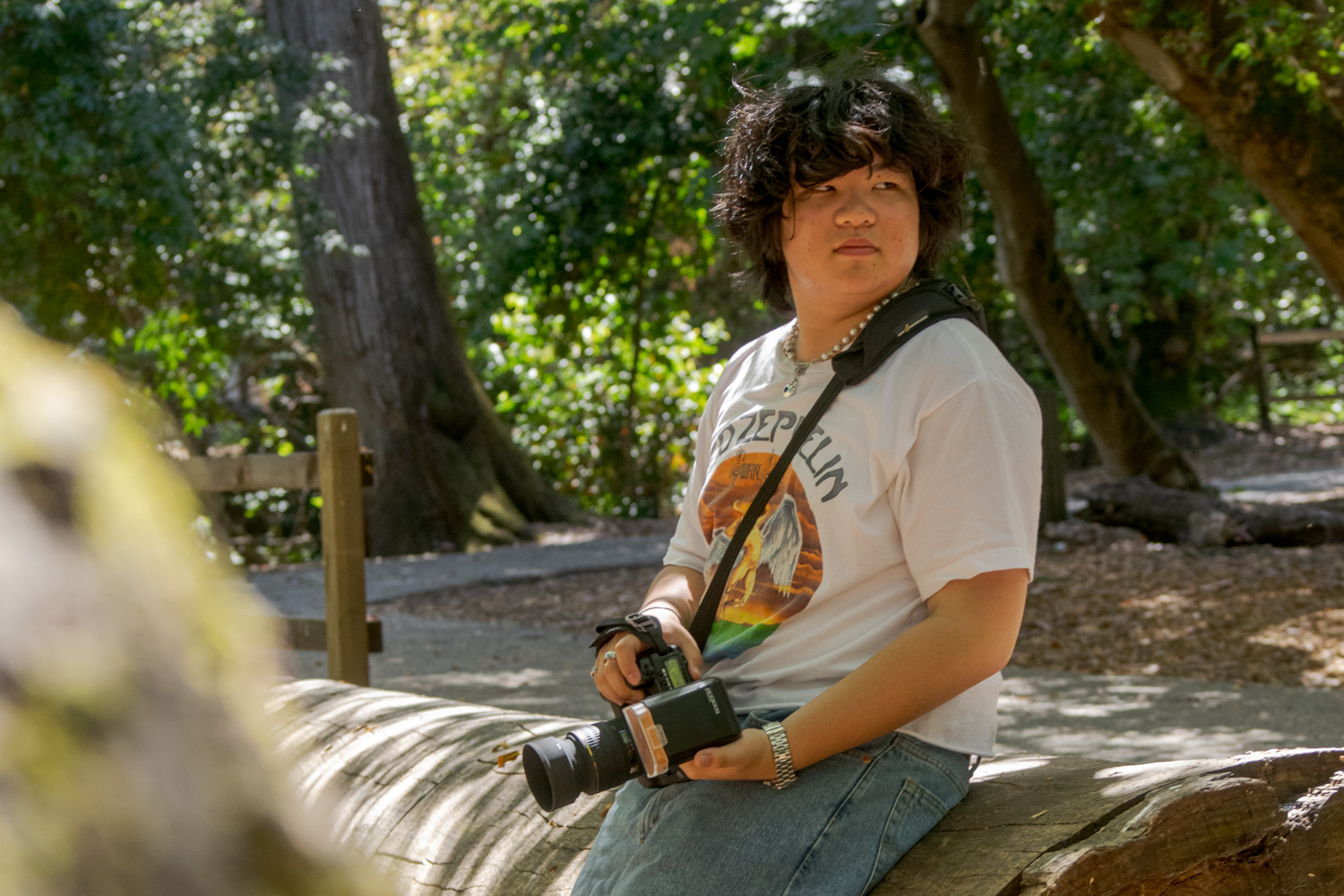
“If we want to talk about broad strokes, video in the past 20 years has become increasingly popular and relevant,” said Carlmont senior Kylan Wang, a hobbyist photographer who predominantly shoots street photography. “I see a lot of photographers moving to providing video content to better keep up with the demands of the current content sphere.”
Alongside the transition of a more video-focused landscape today, technology has rapidly evolved within the photography industry. For one, industry-standard photo editing apps such as Photoshop and Lightroom have used generative artificial intelligence (AI) technology to allow photographers to edit their photos heavily.
For some photographers, these new AI capabilities help make their photo editing process more convenient and can aid in creating more aesthetically pleasing photos.
“I’m not much of a hater for it,” North said. “If it’s like removing a person from the background, or adding a tile that fell off in a building, it makes the photo look more cohesive. As long as you’re not using it for bad, I think it’s a great tool.”
On the other hand, some photographers disagree with the increase in AI usage in photos.
“I think it’s done some deal of good, but what I think is not good is the generative AI that takes bits and pieces from other people’s work, even if it’s just adjusting little parts of your photos,” Wang said.
The State of Art Photography Industry Report of 2024 also revealed that of the 7,646 photographers surveyed across the world for the study, 27.9% of them held a positive perspective on AI, 9.3% held a negative one, and 53% of the participants had both negative and positive thoughts on AI.
In addition to AI being integrated into photo editing software, it is also being used to generate photos from scratch. With a short and simple typed prompt, some AI engines, such as DeepAI and Google Gemini, can create multiple images that display what the user wants to see within minutes.
“I like doing little edits to emphasize a photo, but I do worry that with how good AI is getting, people will find ways to take the creativity out of photography, the beauty of nature, and all of these gorgeous places that we have in the world,” North said.
Establishing Permanence
Despite the photography industry experiencing many changes to its landscape, photographers are still finding ways to establish and maintain the artistic integrity of their craft.
Many photographers, especially younger ones, are reverting to older forms of photography such as film.
“We do get a lot of younger people who are just trying it out,” said Rhonda Smith, the head of the shipping department at Photoworks, a photo lab dedicated to processing and printing film for photographers. “A lot of people are interested in the vintage aspect and trying something different, because many people who try it now grew up with only digital cameras.”
Despite the increase of technological advances in camera capabilities and editing, some photographers decide to shoot with film due to its physical aspect, making it feel more authentic.
“There’s a big backlash with this movement towards AI. A lot of people don’t like it, and they want something that feels more real,” Smith said. “With digital it’s all nebulous, but with film you take a photo and have something physical that you can hold on to with the negatives and reuse later.”
Photo labs like Photoworks also work actively in strengthening the community of film photographers, often sharing their clients’ works or featuring them in any independent projects. For instance, with Photoworks, they publish their magazine titled “PW Zine,” showing layouts of their clients’ photographs that they have designed for them.
“We’re almost finished with our third issue, with us doing our final checks before we send it to print,” Smith said. “We also put customers’ photos on the wall in our store and repost a lot of customer work on Instagram from themed shows or as store samples.”
North assures that there will always be people looking for photo services, no matter how accessible technology makes photography to other people, or what trends appear in the industry.
“There will always be the people who appreciate a classic post photo; clean light, smile at the camera, straight on pose will always be something that is in,” North said. “Sometimes a classic style is better than a trend, because a trend gets really popular, everyone really likes it for a bit, and then it declines and it dies. Overall, it’s the classic items that go steadily and are better in my opinion.”
It’s also important to note that photographers are well practiced in techniques, both in shooting and editing, that subtly enhance certain parts of the photo or subject. This differentiates them from the normal everyday photographers.
“I would rather have someone who understands photography and lighting and posing cover my wedding with an iPhone than someone who has no idea how to shoot given the best camera,” North said. “I think it really is about knowledge of lighting, posing, being able to have that connection with people, and having that experience to adapt through an event or session.”
Despite the multiple areas that photographers work within the photography industry, each of them has a different way of keeping it special for them.
For photographers such as Wang, it is a way to form a connection with his personal experiences.
“Photography for me is an intensely personal practice and art, and at the end of the day it’s really more for me than other people,” Wang said. “Each photo has a little story behind it, and I think the best way my photography is presented is when people see the photo, but I’m also there to talk about it.”
With client-based photographers such as North, photography allows them to help others document and be a part of a special time in many people’s lives.
“I do think weddings or elopements are probably my favorite, just because I’ve always had that love for weddings, and it really is just really fun being a part of someone’s special day,” North said.
Photography, for some, is also much about rediscovering moments as it is capturing them.
“The work of developing film is fun for me as the element of surprise is a big thing,” Smith said. “When shooting with film, you have to wait till you get them back from your scans or prints, making people surprised when they see them.”
As the photography industry continues to evolve and adapt to the changes thrown at it, photographers, whether for themselves or clients, continue to use their work in a variety of ways to document the important moments that are often overlooked.
