

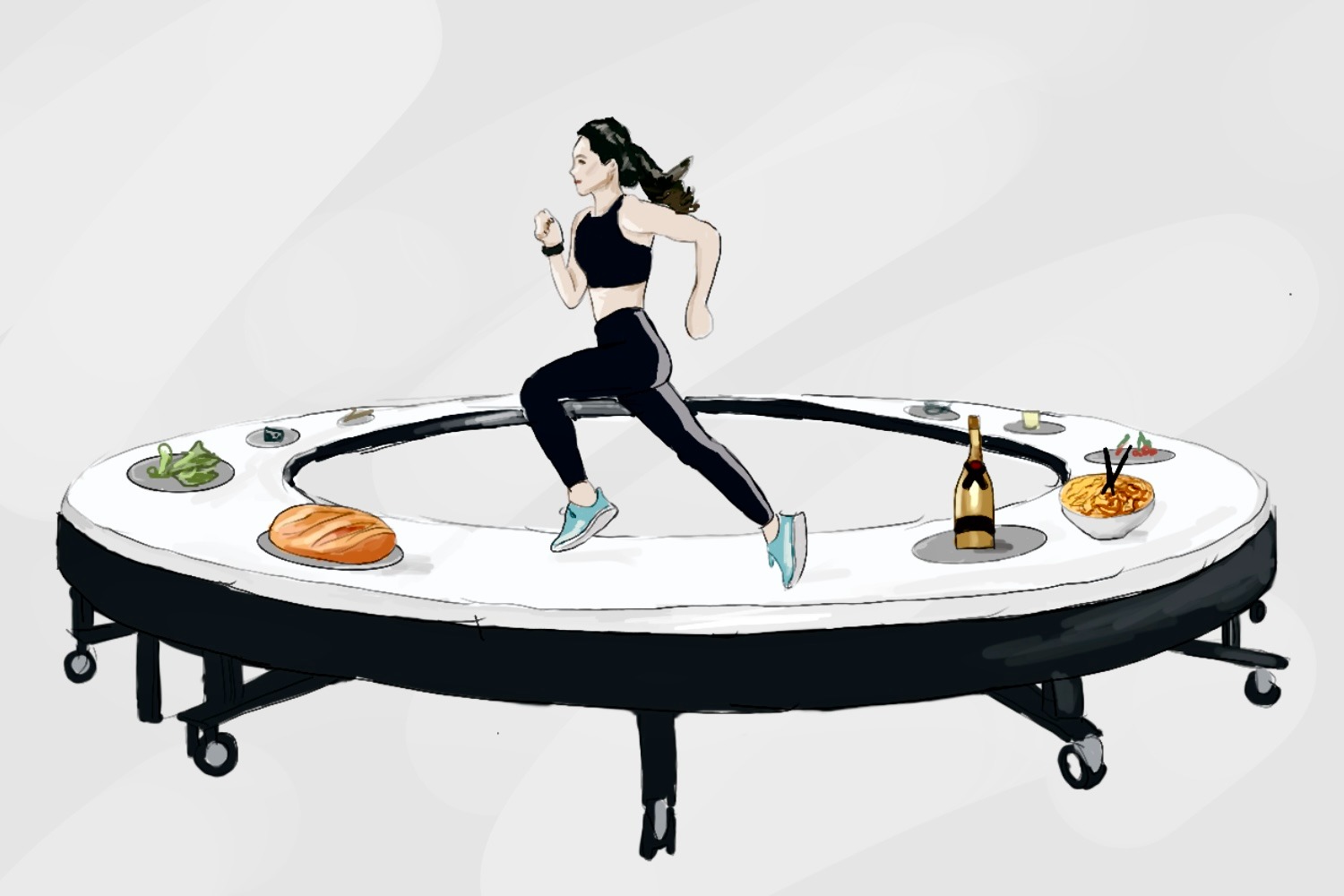
For most of human history, eating was primarily about survival. Now, in the modern world, food is a source of enjoyment and community.
But for the estimated one in 167 Americans living with celiac disease, that relationship is broken. For them, every meal is a risk with an industrial food system where the smallest trace of gluten can trigger symptoms. This is the constant reality for people like Janet Gahagen.
The bowl of salad was back on the table, the waiter smiling apologetically. Gahagen, a lifelong marathon runner accustomed to careful planning, had sent her plate back after spotting the croutons in a salad. Now, they were gone.
But later that evening, the agonizing stomach bloating and diarrhea began. The residue of gluten left behind on the leaves was enough to poison her for nearly two weeks.
Gahagen’s internal battle, which once left her intestines so damaged that a radiologist described them as atrophic villi, is tragically familiar to doctors across the country. Her diagnosis in 1991, when celiac disease was still considered a medical rarity, serves as a chronological marker for a crisis that has since exploded.
“Having a diagnosis depends entirely on whether or not your healthcare provider thinks about the disease and decides to run the blood test to check for it. If they don’t think about it, it could take a long time to get diagnosed,” said Patrika Tsai, a pediatric gastroenterologist at UCSF.
The rapid increase in autoimmune food reactions is not due to individuals with immune systems that struggle to adapt, but is a sign of altered foods, primarily ultra-processed foods. Research by Monteiro et al. in The Lancet shows that the revolution in modern agriculture and food processing has suddenly changed the chemical composition of staple ingredients, transforming wheat from its original form into a highly refined product.
This evolution has simply outpaced the human immune system’s ability to adapt, turning the once-rare celiac disease into a prominent public health issue and signaling that the rising food production is creating a health crisis in the modern gut.
The diagnosis
The road to Gahagen’s diagnosis began in 1991, when she was just 27 and she had felt acutely ill for weeks after completing the 1991 California International Marathon.
When the stomach aches, bloating, and diarrhea she attributed to the flu persisted for several weeks, Gahagen finally started going to a gastroenterologist.
For three frustrating months, she sought answers. Finally, a specialist tested her for celiac disease.
This condition was still medically uncommon at the time, with a PedMed study reporting an incidence rate of just 3.3 per 100,000 people in the 1990s. Today, however, diagnoses like Gahagen’s are rapidly increasing.
A small intestinal biopsy confirmed the severity: the tiny, vital, finger-like projections in her small intestines, known as villi, were completely flat.
This meant she was unable to absorb the nutrients her body desperately needed because the chronic immune responses triggered by gluten were actively destroying the intestinal lining.
“The antibodies triggered by gluten attack the villi and cause them to be more flat,” Tsai said. “Normally, the small intestine under a microscope will look kind of like a ‘grassy lawn’ or a ‘shag carpet,’ but in someone with celiac disease, the villi are severely shortened and damaged.”
This long-term deprivation of nutrients had terrifying consequences as it went far beyond digestive discomfort.
“My teeth were just breaking, and my hair was also falling out,” Gahagen said.
This was due to the physical breakdown that stemmed from her body attacking itself because of gluten. The constant, unchecked inflammation in the gut can activate the immune system throughout the body, leading to symptoms that extend far beyond the digestive tract, according to Alessio Fasano’s influential 2012 review, Leaky Gut and Autoimmune Diseases.
“The immune system doesn’t only react to the bowel, it is activated in all areas of your body. So then you get effects outside of the intestines. We call them extra-intestinal manifestations of celiac disease,” said Roberto Gugig, director of the Endoscopy Unit and a professor of pediatrics at Stanford Children’s Hospital.
The discovery
This initial diagnosis and strict avoidance of bread were not the immediate fix Gahagen had expected. Even after the first doctor’s instructions, she still felt sick for several months. She soon learned that the problem was not just bread, but hidden sources of gluten in almost everything, especially processed foods.
Thus, Gahagen contacted celiac disease organizations to understand more about what it meant to have celiac disease. After a while, she was only able to discover that she couldn’t have any gluten, not just bread. She discovered traces of gluten were everywhere: from licking an envelope to flour dusted onto corn tortilla conveyor belts.
The medical pursuit of hidden exposures often requires intense detective work.
“If patients are not doing fine or their blood titers aren’t coming down, then you need to start being like Sherlock Holmes and try to find out what’s going on,” Gugig said.
Gahagen’s discovery of hidden sources of gluten reflects the effects of the modern food supply on human health.
“The manufacture of food is becoming higher and higher,” said Vince Caguin, the director of strategy and innovation at the Center for Eco Literacy.
This reliance on processing makes it harder for everyone, not just those with celiac disease, extending far beyond flour cross-contamination. Epidemiological and laboratory studies have implicated numerous common food additives, such as dietary emulsifiers, in diseases associated with intestinal inflammation.
Research from PubMed on the direct impact of commonly used dietary emulsifiers on human gut microbiota used a human gut model to demonstrate that these emulsifying agents, such as carboxymethylcellulose, polysorbate 80, carrageenan, and gums, can detrimentally alter gut microbiota composition, promoting the expression of pro-inflammatory molecules. This evidence strongly suggests that these additive ingredients used in processing directly disrupt the intestine.
The cost of convenience
After the diagnosis, Gahagen realized the battle against gluten extended far beyond simply avoiding a slice of bread. This problem, compounding her physical recovery, was at a life-altering cost of convenience.
The constant threat of contamination means Gahagen must often sacrifice shared events central to community and connection, and it often struggles to find gluten-free food.
“Some people don’t have the enzyme in the digestive system to know how to process it,” Caguin said.
She often found herself unable to participate fully in social gatherings, often facing the challenges of finding any safe gluten-free food at all, or worse, having to leave celebrations early to protect her health.
While patients like Gahagen often describe their reactions as being “poisoned,” doctors categorize the issue as a severe sensitivity where the body’s immune system mistakenly attacks the small intestine lining.
Gahagen’s personal struggle reflects the failure of a food system built on commodity volume, where every stage of processing introduces risk. Because food processing and preparation are so complex, even when dining out, the risk remains critically high.
“To call a food gluten-free, they have to have below a certain threshold of parts per million of gluten particles. It’s not necessarily zero,” Gugig said.
Even when ordering gluten-free items from menus, Gahagen emphasizes the danger of staff error.
“It takes one person using the same spoon of something that had gluten in it, and then they put it in the non-gluten food, and that’s enough to get me sick,” Gahagen said.
The resulting inconvenience dominates Gahagen’s life. Her daily meal preparation of home cooking and traveling became a series of challenges to ensure safe eating. This continuous need for caution requires her to commit to a diet of a morning protein shake, cottage cheese, and almonds for lunch, and spaghetti squash for dinner.
For an athlete used to lots of planning, her entire racing and social life became a series of high-risk calculations. The smallest oversight could lead to agonizing illness, as when the restaurant served her the salad after merely picking off the croutons, resulting in 12 days of sickness.
Running towards the sunrise
This verdict for Gahagen, and every person diagnosed with celiac disease, is an unyielding, strict, lifelong gluten-free diet. This healing allowed Gahagen to keep persisting.
Years after the crisis had peaked, she returned to the races she loved. She continued to run marathons, completing 28 over the years, and even took on six half-Ironman triathlons. However, her condition was a constant companion, especially in races built around convenient, wheat-based fuel.
At the Boston Marathon, seven years after her diagnosis, her hobby of running collided directly with the reality of her disease. The race’s late start meant that she would have to burn through the calories from the small portions of rice bread she had eaten that morning.
“The only food they had was like bagels, which of course would make me really sick,” Gahagen said. Unable to fuel properly, she missed her goal time by two minutes.
“Because people with celiac disease are not able to absorb as many nutrients when they are having a celiac disease flare, their body may have less iron to make red blood cells, and then people can become anemic,” Tsai said. “If they don’t have enough red blood cells, then they’re not carrying as much oxygen to other parts of the body, and so then they may feel tired.”
Yet, this failure informed her later triumphs. She realized that any racing environment required her to be relentless. When she raced half-Ironman triathlons, she carried all her food on the bike, ensuring she could properly fuel during the six-hour race. Her ability to finish these races and the preparation for them serve as powerful testimony.
Today, her health is stable, and the initial shock of the diagnosis has faded, replaced by pragmatic acceptance.
“I was so anxious to feel better,” Gahagen said. “When I finally got the diagnosis, I thought, ‘Oh, good, I can handle this.’”

