

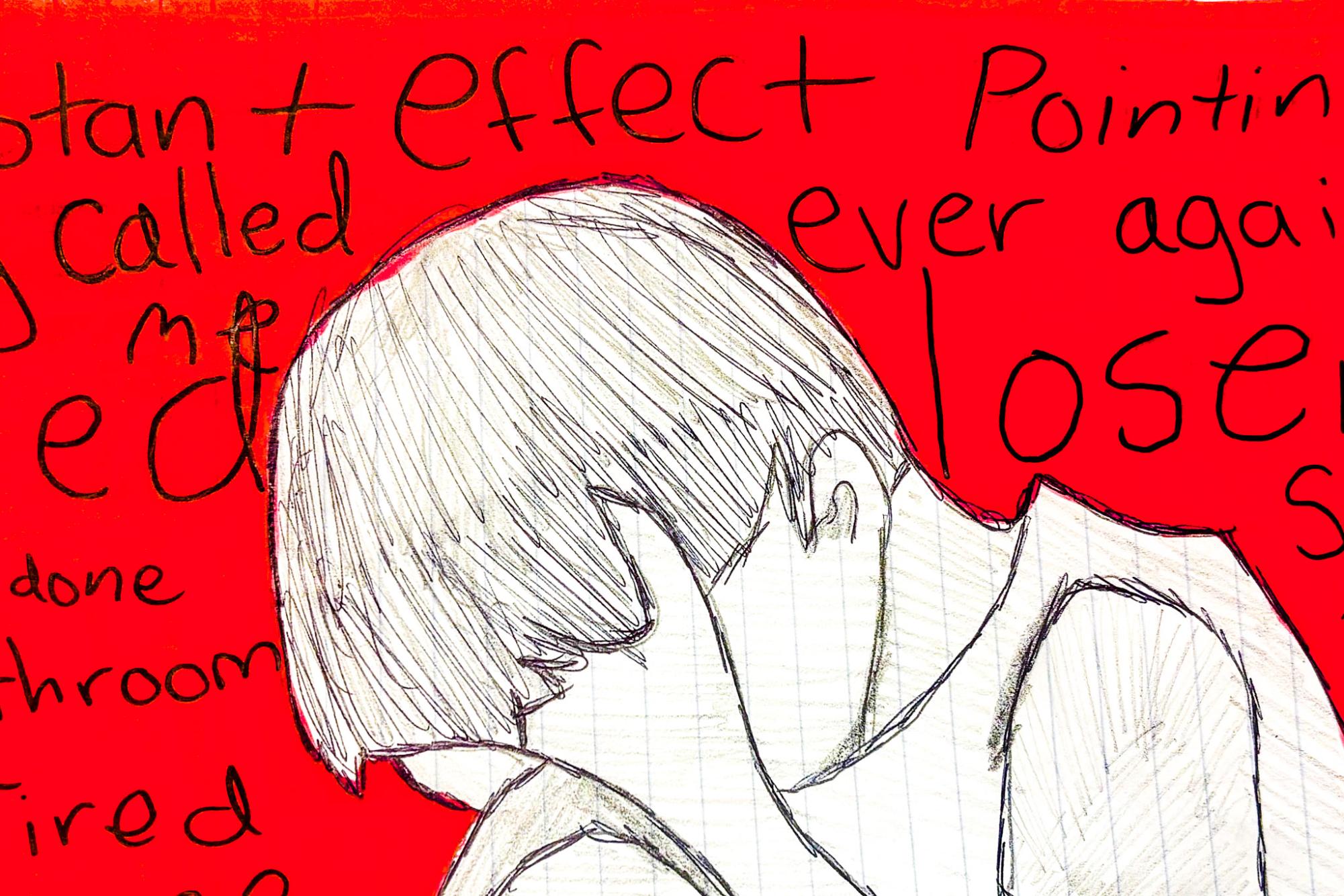
Each morning began with the same routine: a deep breath, a forced smile, and a hope that today would be better. By afternoon, the weight of the whispers and jokes had settled in again — heavy enough for everyone to feel.
When someone is bullied, the pain isn’t left at school — it follows them home, straining family relationships, routines, and the overall well-being of the child. Nationwide, constant verbal, social, physical, and cyberbullying affects school-aged children.
According to the Institute of Education Sciences, 19.2% of students aged 12-18 in grades sixth through 12th reported being bullied with a drastic amount of repetition and imbalance of power. Bullying has long-lasting effects on victims, their families, and bystanders.
Even though we are most familiar with bullying in our own community, it is a global problem. The Philippines is often called the “bullying capital of the world,” according to GMA News Online, with around 63% of grade five students reporting being bullied at least once a month. These students reported being harassed, mocked, or even physically harmed. However, the Philippines is not the only country facing this issue.
Shirley Cano is a former elementary school teacher who now works as a child and family therapist. In both of these roles, she has witnessed how common bullying is in children’s lives.
“As a teacher, I was able to collaborate with parents and other school providers to address some bullying instances and create a safety school plan to make sure the student had accommodations while at school. Now, as a therapist, I am not the first one to hear about bullying, but I provide mental health services to those students who struggle with the effects of bullying,” Cano said.
Bullying can affect far more than a student’s day-to-day mood-it can shape their long-term self-esteem, coping methods, and academic engagement, according to Yaara Crawford, a psychology student at San Diego State University who has studied adolescent development and behavior.
Social-ecological psychology shows that bullying isn’t just a passing problem — it can stick with students, shaping how they see themselves and those around them.
Both short-term and long-term effects can spring from bullying among peers. Some short-term effects of bullying include reciprocal aggression, low self-esteem, isolation, academic struggles, and more. Despite these sounding harmful, long-term effects are far more damaging.
These effects include depression, post-traumatic stress disorder (PTSD), anxiety, possible agoraphobia, suicidal ideation, and death by suicide.
“A long history of bullying in childhood can cause long-lasting emotional and relational impacts that can continue in adulthood. Adults who were bullied growing up often question their worth and likability. Unresolved trauma can contribute to anxiety and depression if feelings of rejection or sadness persist,” Cano said.
Carlmont senior Carter Hendrix has experienced bullying first-hand throughout his time at both Junipero Serra High School and Carlmont High School.
“I kind of thought like, ‘Oh, it’s high school, I’m just starting out, I’m going to be in the same boat as everyone else,’ but I wasn’t,” Hendrix said.
During his time at Serra, Hendrix began to perceive signs that it wasn’t the right place for him.
“I noticed I was very isolated, especially at Serra. It’s a very sports-centered environment, and I enjoy working out, but I’m not an athletic kid, so I didn’t really fit in,” Hendrix said.
During his one year at Serra, Hendrix often faced harsh verbal taunts and even some physical bullying from classmates. Individuals in these situations often develop a feeling of isolation, regardless of the school they attend. Some students choose to transfer schools for a fresh start, which is what Hendrix did before his sophomore year.
Students who find themselves bullied at school often feel trapped and pressured to stay there to continue with academics or extracurriculars, despite continued mistreatment. Hendrix transferred to Carlmont High School, where the mistreatment continued; however, he found comfort through various activities.
“Oftentimes, clients have shared their experience in the past and were brushed off, or their feelings were minimized,” Cano said.
Finding a safe space is essential for anyone facing bullying, offering a moment of relief from the constant stress it causes. A safe space might be a trusted teacher’s classroom or even a quiet corner surrounded by supportive friends. What matters most is choosing a place where a person feels safe, protected, and free from mistreatment. Reaching out to an adult can help identify these places and create a plan for moments when it’s necessary to step away from harmful situations. Having such a place provides reassurance that no one is alone and that there are people and environments ready to support overall well-being.
“I learned to just find my space and a lot of that was Students Offering Support (SOS) and choir,” Hendrix said.
SOS is a program at Carlmont High School where students can freely receive support from other students who have previously experienced a similar situation. In a way, it functions as student-led counseling.
Led by Shelley Bustamante, a panel of students presents to Carlmont freshmen every Tuesday at the beginning of the year during their life skills course. These presentations usually discuss substance abuse, bullying, and relationships. Every week, members of the student panel share personal narratives related to the topic at hand, fostering greater awareness and comprehension among the student audience.
The program wrapped Hendrix in a sense of community he’d spent years searching for, one that Serra had always kept out of reach.
During Hendrix’s sophomore year, he often felt singled out and picked on in English class, leaving him with a feeling of isolation. But when he finally spoke up to his teacher about what was happening, he discovered a sense of understanding from her that he wasn’t expecting. Her support gave Hendrix the confidence to navigate the classroom with ease and reminded him that reaching out makes a huge difference in what someone is going through.
“Communicating really improved my relationship with the teacher because she really just thought I was skipping class, and I was, but I didn’t want to be in the class because I was getting bullied,” Hendrix said.
As Hendrix’s experience shines through, it reinforces Cano’s point that victims need support to heal.
“People that suffered from bullying cannot heal in isolation. Finding a good amount of emotional support from people they feel safe from including a trusting therapist decreases shame and guilt,” Cano said.
Intervention and Healing
Early intervention is key to stopping bullying before it harms students’ well-being. Instead of relying mainly on punishment, effective intervention focuses on creating a supportive environment where students feel safe reporting their problems. When teachers respond quickly, involve families, and encourage peers to step up safely, schools can reduce bullying and build a stronger, welcoming, and safer community for all.
“Bullying prevention requires consistent adult action, emotionally safe environments, clear accountability, skill-building, meaningful relationships, and a culture where disrespect is never normalized” Cano said.
A student who witnesses bullying but doesn’t intervene falls into a psychological concept known as the bystander effect, according to Crawford. This could lead to feelings of guilt and shame, or worse, they could start engaging in bullying behaviors themselves. That is why it is essential to take action immediately when you witness someone being relentlessly bullied.
Students who are bystanders to bullying aren’t powerless — simple actions can make a difference. They can alert a trusted adult, break the tension, confront the bully, or support the targeted student and help them get to safety. When students act together, they create a culture where bullying has no place to grow.
Some students find that not allowing bullying to shape their self-image is helpful. Choosing not to engage with harmful actions or comments may serve as a way to maintain emotional well-being.
“It is important to build confidence through little steps while building coping skills that help while you navigate an increase of overwhelming feelings,” Cano said.
The impact of bullying can get deeper when it goes unresolved. Reaching out for support can help individuals begin to regain a sense of stability.
“It is cliché, but it does get better. There is always someone who can help you, no matter how alone you feel. You just have to be willing to look for that person,” Hendrix said.
