

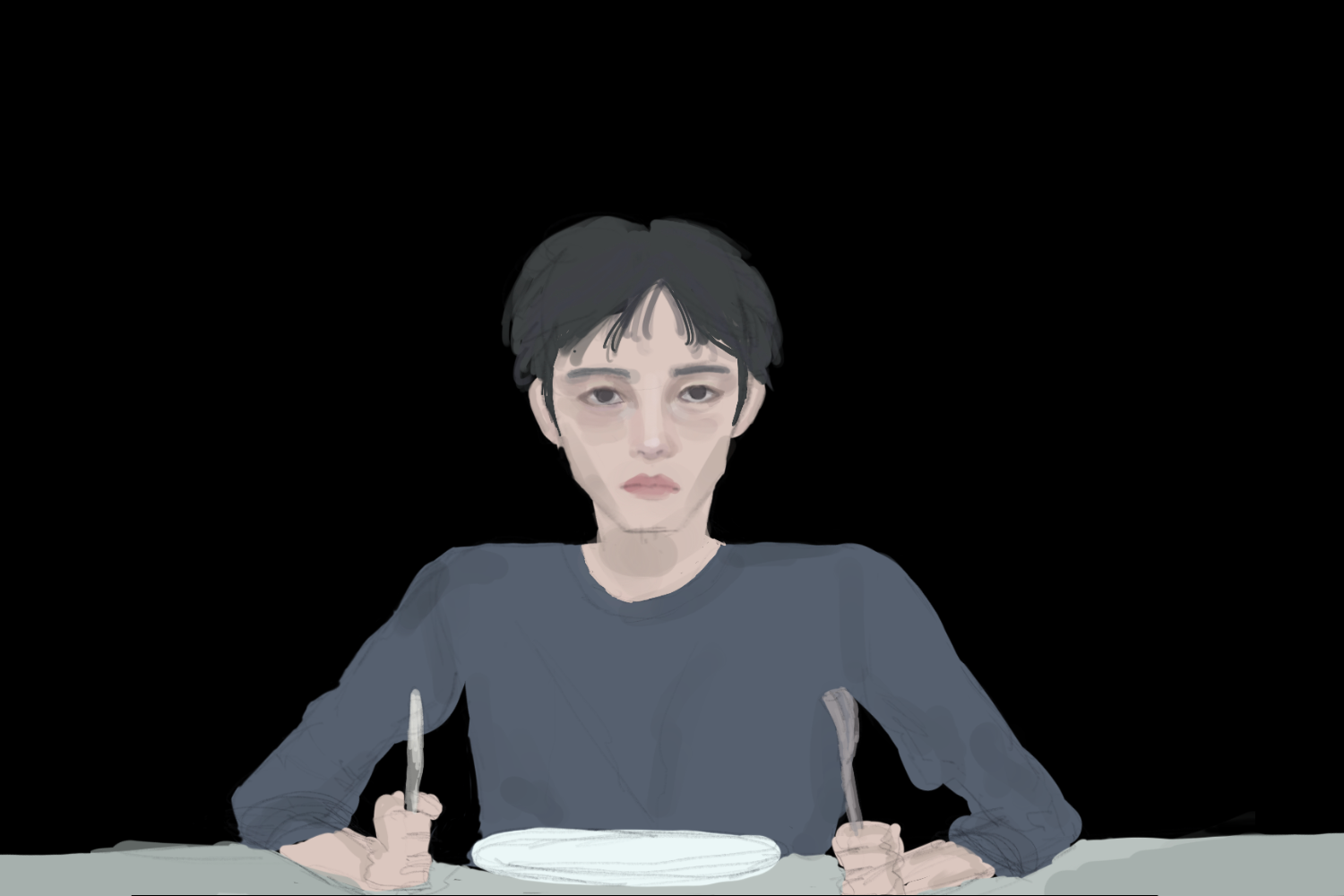
Wake up, go to the bathroom and step on the scale. Come home, eat a snack, and open MyFitnessPal to see how many calories you have left after it.
To some, these behaviors may seem strange and unsettling. To others, this is reality.
“Food is fuel” — a popular phrase implying that food is a normal and uncomplicated part of daily life. After all, human bodies have built-in mechanisms to signal feelings of hunger to the brain. Therefore, the basic action of eating should not elicit any difficulty.
But what happens when food starts to become more than just fuel for the body?
“During my eating disorder, I just felt a constant feeling of disgust when I didn’t do disordered things. It was this feeling of compulsion,” said Raina Reed*, a teenager who struggled with anorexia nervosa.
For some, food intake dictates more than just how much energy one has on a particular day. Food can become a source of regret, a basis of control, or a dictator of one’s mood.
According to the National Institute of Mental Health (NIMH), eating disorders can be described as illnesses marked by considerable disturbances in one’s behavior towards food. These disorders can manifest themselves in many ways.
Types of eating disorders
Eating disorders are an inherently mental struggle, making it difficult to characterize them into groups. Additionally, someone may exhibit disordered eating but not necessarily have an eating disorder. Despite these constraints, eating disorders can be roughly characterized into a few types.
According to the National Health Service (NHS), anorexia nervosa, often shortened to just “anorexia,” is an eating disorder characterized by restriction and an obsession with a low weight on the scale. It may be associated with meticulous calorie counting, severe food restriction, and appetite suppression.
Bulimia involves two behaviors, referred to as “binging” and “purging.” According to the Center for Discovery, an organization treating eating disorders, the act of binging, or eating a large quantity of food in a short amount of time, is then followed by purging, or throwing up the consumed food. The act of purging may manifest in other ways, such as exercising excessively to rid the body of calories consumed or using laxatives outside of their intended medical purpose.
Binging is the act of consuming a large amount of food in a short period of time. According to the National Institutes of Health (NIH), during a binge, individuals may feel out of control or feel they must consume the food in front of them. Binge eating disorder may also be associated with a variety of other thoughts related to dieting, such as “I’ll start tomorrow” or “eating the food now will reduce temptation later.”
According to the Eating Recovery Center, orthorexia is an obsession with only eating foods one may deem “clean” or “pure.” People with orthorexia may skip events to avoid certain foods and may also avoid certain food groups entirely, and as a result, could miss out on vital nutrients. Like anorexia, orthorexia can be heavily related to the restriction of food intake as well.
These are not all the possible kinds of eating disorders. Individuals may struggle with their relationship with food in various ways, beyond those defined above.
The brain and eating disorders
Eating disorders have primarily physical effects, but the disorders themselves begin within the brain. The psychological symptoms of eating disorders are often misunderstood.
“Part of having an eating disorder is the desire to say sick and not wanting to recover,” Reed said.
According to Mayo Clinic, the desire to stay disordered can stem from a variety of reasons, with one primary cause for this mentality being to avoid changes to one’s body.
Thoughts associated with eating disorders also include control.
“One factor that plays a role in disordered thoughts is control, because when people feel like they can’t control aspects of their lives, they turn to something they do have control over: their food intake,” said Jason Wood, a volunteer for the National Association of Anorexia Nervosa and Associated Disorders (ANAD) who previously struggled with an eating disorder.
Eating disorders can develop in a variety of ways outside of the desire for control. Often, outside influences play a large role.
“Some of my friends didn’t have the healthiest eating habits either, and I think that’s something that contributed to me developing anorexia,” Reed said.
According to the NIH, many eating disorders are perpetuated by outside influences, such as social media or friends.
“Some common thoughts that I have noticed among teens struggling with, for example, anorexia, is the feeling of never being enough,” said Shelley Bustamante, Carlmont High School’s mental health specialist.
Additionally, constant thoughts about food are a common occurrence when it comes to eating disorders.
“With almost all eating disorders, the thought of food, or ‘food noise,’ is common,” Bustamante said. “What that means is that with restrictive eating disorders, an affected individual may constantly think about the calorie or fat content in food or how they can restrict their intake. With other eating disorders, one may be thinking about how they can burn off the calories they consumed.”
Physical impacts of eating disorders
Eating disorders have a variety of physical effects associated with them. Prolonged periods of restriction, binging, or limiting nutrient intake by only consuming particular foods can lead to adverse effects on the body.
According to the NHS, the physical effects of restricting food intake include, but are not limited to, hair loss, low heart rate and blood pressure, loss of bone density, cessation of the menstrual cycle, infertility, and death.
“When I had anorexia, I felt tired all the time,” Reed said. “That should have been one of the warning signs that something was wrong.”
Similarly, the effects of bingeing and purging are highly damaging to the body. Effects such as weight gain and severely impaired hunger cues may result from these behaviors. Vomiting as a form of purging could result in the heart stopping, leading to fatality.
The “disordered look”: Perpetuating the problem
The “heroin chic” look from the 1990s. The supermodel body from the 2000s.
While one may associate these looks with eating disorders, the truth is that there is no such thing as “the disordered look.”
According to the National Alliance for Eating Disorders, one primary factor in the development of eating disorders is the desire to attain a specific physical look, typically one associated with a lower weight or body fat percentage.
As a result, many people struggling with eating disorders may believe that they do not look “sick enough,” leading to further perpetuation of the disorder. Stereotypes like “looking sick” only develop the stigma associated with eating disorders. Such stereotypes also perpetuate the mental struggles that come with eating disorders.
“The truth is, there’s no one look that people with eating disorders have. Eating disorders manifest themselves in different ways in everyone,” Wood said.
Inpatient treatment: Health or harm?
Inpatient treatment is the treatment that individuals with eating disorders often undergo to aid in their recovery. It often includes patients being in a hospital or medical setting and undergoing therapy.
According to the National Alliance for Eating Disorders, while undergoing inpatient treatment, patients receive care around the clock with high levels of supervision. Nutritional intake is provided to people in treatment, including both food and electrolytes. Inpatient treatment is often offered as an option for individuals who are experiencing acute eating disorder symptoms, such as low blood pressure or heart rate.
While this option aids patients with life-threatening symptoms, various physical and psychological effects may also occur during inpatient treatment.
Due to supervised nutrition intake, one physical effect of inpatient treatment is weight gain.
For individuals affected with anorexia, rapid weight gain during inpatient treatment could result in a greater desire to restrict food intake after being discharged. This could lead to adverse effects on a patient’s mental and physical health.
According to a study by Hopkins Medicine, rapid weight gain “works” for individuals with eating disorders undergoing treatment plans. The metric for success in this study is the rate at which patients achieve specific weight gain goals. Due to the mental nature of eating disorders, however, weight gain does not necessarily mean recovery.
“There is no one treatment for all eating disorders. We need to start looking at patients as individuals and not generalize them when figuring out treatment plans,” Wood said. “For example, looking ahead, we hope to see more research done on how eating disorders affect minorities differently.”
Steps to recovery
While eating disorders are a difficult mental struggle, there is always hope for impacted individuals to recover.
“An eating disorder rewires the natural way the brain understands hunger and fullness. The most successful way to treat an eating disorder is to break and rebuild habits that surround eating,” Bustamante said.
If you are struggling with an eating disorder, understand that you can decide to recover. You do not have to stay disordered forever. Deciding to become healthy again is a challenging journey, but it is always possible.
*This source’s name has been changed to protect them from legal harm. For more information on Carlmont Media’s anonymous sourcing, take a look at Scot Scoop’s Anonymous Sourcing Policy.
