

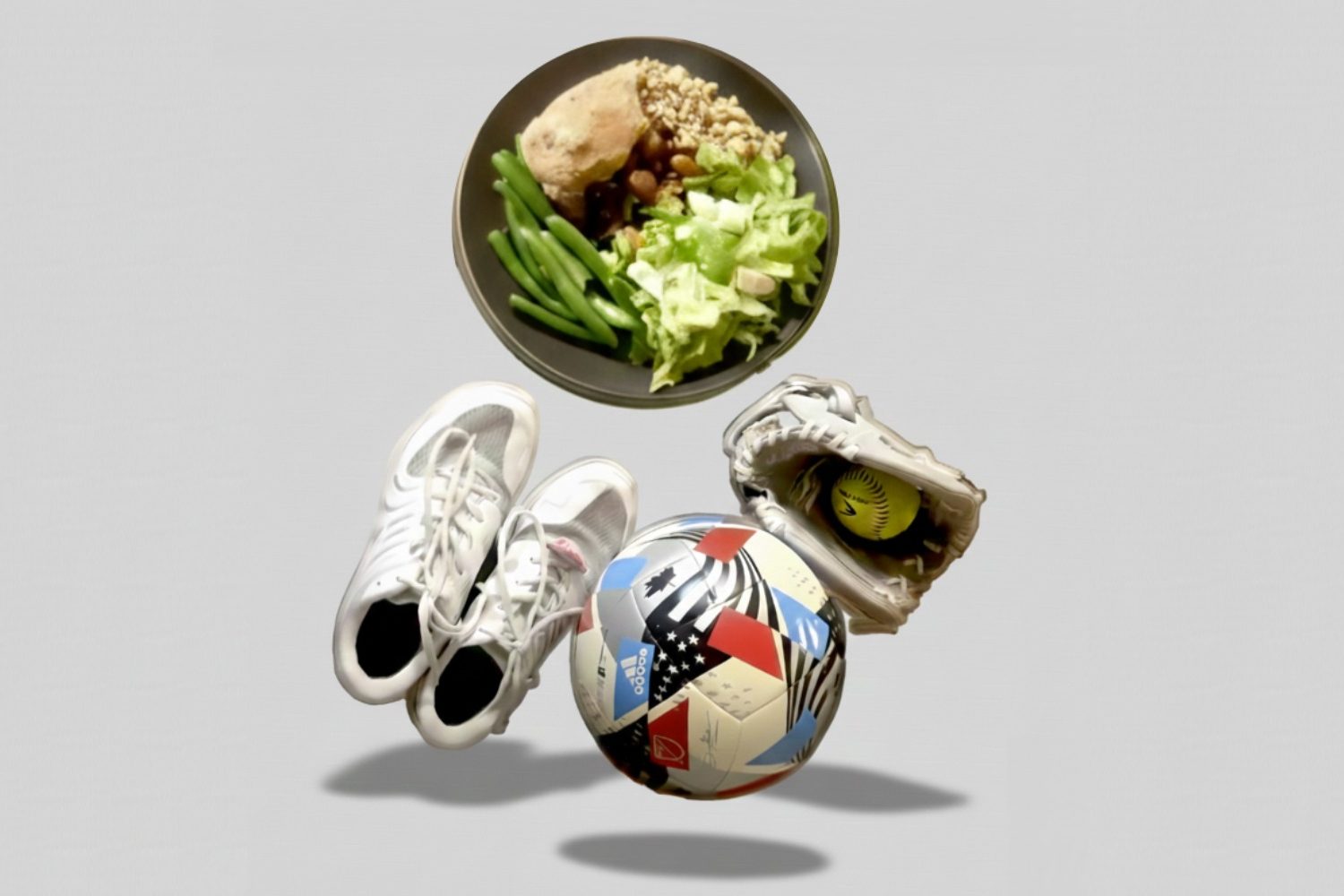
Young Kelly Green wiped away the beads of sweat from her forehead as she finished another tough workout. Looking in the mirror, she saw the arms of a softball player, the legs of a volleyball player, and the abdomen of a cheerleader.
As an athlete juggling three sports, she didn’t notice her strong triceps, quads, or core; she saw a body that needed fixing.
She obsessed over workouts as a way to balance exercise and health, and it took years for her to realize her understanding of balance was inaccurate.
“When I was younger, I worked out so I could burn off whatever I ate, almost as a punishment to exercise and fitness,” Green said.
Green is now a cheer coach, fitness instructor, body positivity facilitator, and an Eating Disorder Intuitive Therapy (EDIT) recovery coach. She leverages her experience to help young athletes redefine what true health encompasses — not just physically, but also mentally and emotionally.
According to the National Center for Health Statistics, approximately 54% of Americans participate in sports during their youth. Just like Green, many young athletes are told that their bodies are their greatest tools, but few truly understand what it means to take care of them.
Another study by the center demonstrated that many struggle to prioritize nutrition as much as they do their sport. It was stated that 75% of high school students did not eat breakfast daily, 47% did not eat fruit or vegetables daily, and 20-35% felt that their current diets did not meet their nutritional needs.
“As an athlete, you need to make up for all the extra exercise you are doing,” said Dr. Lisa Nadiv, a pediatrician at Kaiser with specialty training in nutrition and a former collegiate swimmer.
In many cases, young athletes simply aren’t provided with enough information about their specific nutritional requirements or about how to maintain a healthy balance between food intake and athletic training.
“For a lot of teens and young adults, if they are not educated, they are probably going to look at all these different diets and products and people that are on social media,” Green said.
Green also highlighted that such gaps in understanding can affect both the external influences to which they respond and their own self-evaluation.
Other times, the importance of nutrition is overlooked, often caught between hectic schedules, social pressures, and mixed messages about what it means to be “fit” or “disciplined.” This cycle not only reduces their immediate abilities but also opens the door for negative effects on growth, confidence, and long-term health.
“I see that teenagers in general, athletes included, will skip breakfast, which is important,” Nadiv said.
According to a Frontiers review article, energy availability is defined as the difference between dietary energy and the energy expended through exercise. Essentially, if you burn off more than you eat, you put yourself at risk of Low Energy Availability (LEA). LEA can affect important bodily functions, impairing systems such as the endocrine, immune, metabolic, and reproductive systems.
Much more goes into consideration as the ratios of proteins, carbohydrates, and other nutrients are discussed. Overall, many athletes struggle to meet their energy needs and nutritional expectations, especially those with very high training volumes.
Physically, poor nutrition slows recovery, increases injury risk, and can even lead to long-term health risks. But the emotional toll is just as real: low energy can cloud focus, tank academic performance, and lead to burnout.
“Sometimes, athleticism takes more importance than school; even though you’re a student athlete, I feel like sometimes you’d be an athlete-student,” said Gabriel Osorio, a wrestler at Carlmont High School.
Still, the challenge goes deeper. Sometimes a nutritional imbalance can be identified as an eating disorder, which is very difficult, both physically and emotionally.
“I felt like I needed to eat better for wrestling, and to maintain a certain way. So I had to cut out a lot of junky food,” Osorio said.
Although Osorio was able to maintain his nutritional health during his fitness journey, Green recalls putting immense pressure on herself in her youth.
“Just my own expectations of myself. I started in fitness when I was a teenager, and I was just starting college. I didn’t feel it from anybody else but me, but it was because I had a specific body type to be in fitness,” Green said.
While Green was individually hard on herself about her nutrition balance, other people’s perspectives on nutrition can vary. There are three main factors that influence the prioritization of nutrition among most young athletes: their coaches, their parents, and themselves. Each of these influences can shape not only what athletes believe about food, but also how confident they feel in making daily nutrition choices. Coaches often set expectations regarding performance and body composition, while parents control much of the food environment at home. Additionally, athletes’ own beliefs determine how closely they adhere to guidance or internal pressures.
“I would say to push yourself until your body gives, and then make sure you have a good recovery plan. I think it builds character,” Osorio said.
This perspective is reinforced by Green, who emphasizes the need to balance hard training with giving oneself permission to recover.
“One of the most important things is to know that it’s a process and it’s a journey. So have a plan B, be flexible with yourself. Taking care of yourself is really important in the whole thing,” Green said.
Finding a healthy balance between nutrition and wellness is more important than ever, especially in a world where social media and peer pressures constantly tell people what to do. This research on the side effects of poor nutrition highlights the profound impact of daily habits on long-term health, underscoring the importance of developing routines that genuinely support well-being.
As Green notes, today’s trends often push people toward strict, one-size-fits-all regimens rather than encouraging them to understand their own needs and create sustainable habits. By recognizing the consequences of imbalance — not only physically but also mentally, as overwork and unrealistic expectations build — it is evident that it is essential to step back, question these pressures, and cultivate a healthier, more personalized approach to nutrition among young athletes.
“I work a lot with body image and eating disorders in teenagers and adults. It’s really important to remember that we are not a number on the scale, nor a specific body type. Everybody brings their own worth to a team or sport,” Green said.
