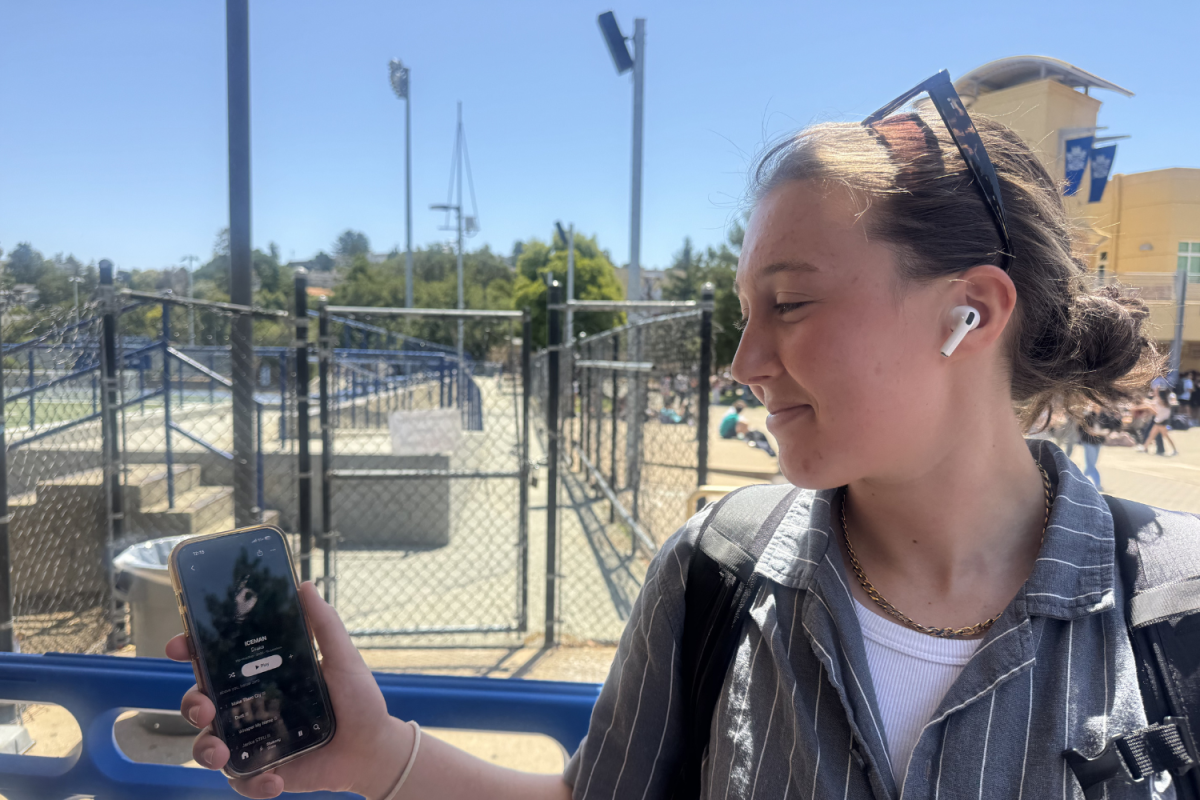

Rio Imawaka is a Japanese student who came to the U.S. when she was 11.
Andrea Negrete is a junior at Carlmont High School who came to the U.S. from Mexico.
Ethan Alvarez is a pagan and a sophomore at Sequoia High School.
Despite their differences, one thing that they share is that they all celebrate Halloween. According to the Collage Group, 71% of all Americans, despite their differences, also celebrate this holiday.
The spooky season creeps upon those all around the world as the leaves change color, texture, and shape, making their way down from trees to create the perfect fall weather. With this comes a change, from the way people act and carry themselves to how they treat each other.
“I feel like people act more accepting if you dress more differently from other people,” Alvarez said. “I think people also will usually gravitate towards darker things than they usually would outside of Halloween.”
Despite this obvious toll on the community that this celebration has, most people enjoy it without knowing what it represents and the long and complicated history behind it.
“I think a lot of people who celebrate Halloween aren’t aware of its history,” Alvarez said. “If they do, I don’t think they’re gonna assume it came from a pagan holiday. If anything, they’d think it’d be like a Christian holiday originally.”
The seed of Halloween was planted long, long ago with the pagan celebration of Samhain. This ancient celebration represents the shift from the light half of the year, or summer, to the dark half, or winter. It is also believed that during this time, the veil between our realm and the spiritual realm is at its weakest, making it possible for spirits of the dead to roam among the living.
Samhain is technically celebrated from Oct. 31 to Nov. 1, but traditions for the holiday start before that.
Alvarez celebrates Samhain, Day of the Dead, and Halloween. He goes through a detailed process in order to set up for the holiday.
“Probably like, a week before Halloween, we’ll set up altars to specific family members who have passed on. And we will put candles, because candles are important regarding Samhain. We’ll put out a picture or some kind of memorabilia from that ancestor on the altar, we’ll put food they like, and sometimes we’ll add a crystal or something like that. And we’ll add incense,” Alvarez said.
Due to a lack of written history, it’s hard to tell exactly how people celebrated this holiday in the past, so what people do today to celebrate is more of a reinterpretation, according to Alvarez.
“We don’t pray, but we offer energy to them essentially, because we don’t believe that people just are gone when they die. We believe people’s energy kind of stays in the Earth, in this world. So we try to connect with the energy that’s still here,” Alvarez said.
Samhain was originally celebrated by the Celts, who were a group of Indo-European peoples in Europe and Anatolia. They spread the celebration to the United States, thus influencing celebrations near it, like Day of the Dead, All Souls Day, and All Saints Day.
Considering how long this tradition has been around, one might wonder how it has managed to last. Imawaka thinks it’s due to parents communicating it to their kids.
“I feel it’s a tradition that parents tell about to their children, and they want to celebrate. And it just goes on because it’s fun for younger people,” Imawaka said.
Despite being celebrated for one day, Halloween is something that affects people a lot, especially in consideration to the history behind it. No matter how people spend the day, whether respecting the dead or trick-or-treating, there’s a common theme all across the board; Halloween brings the community together.
“Halloween can really bring people together, because it’s something that a lot of people like and enjoy, so they can connect because they like the same thing,” Negrete said. “Maybe they’re gonna do a group costume, or do a couples costume, or just be together, getting candy and having fun. I think it can be really important to bringing people together.”