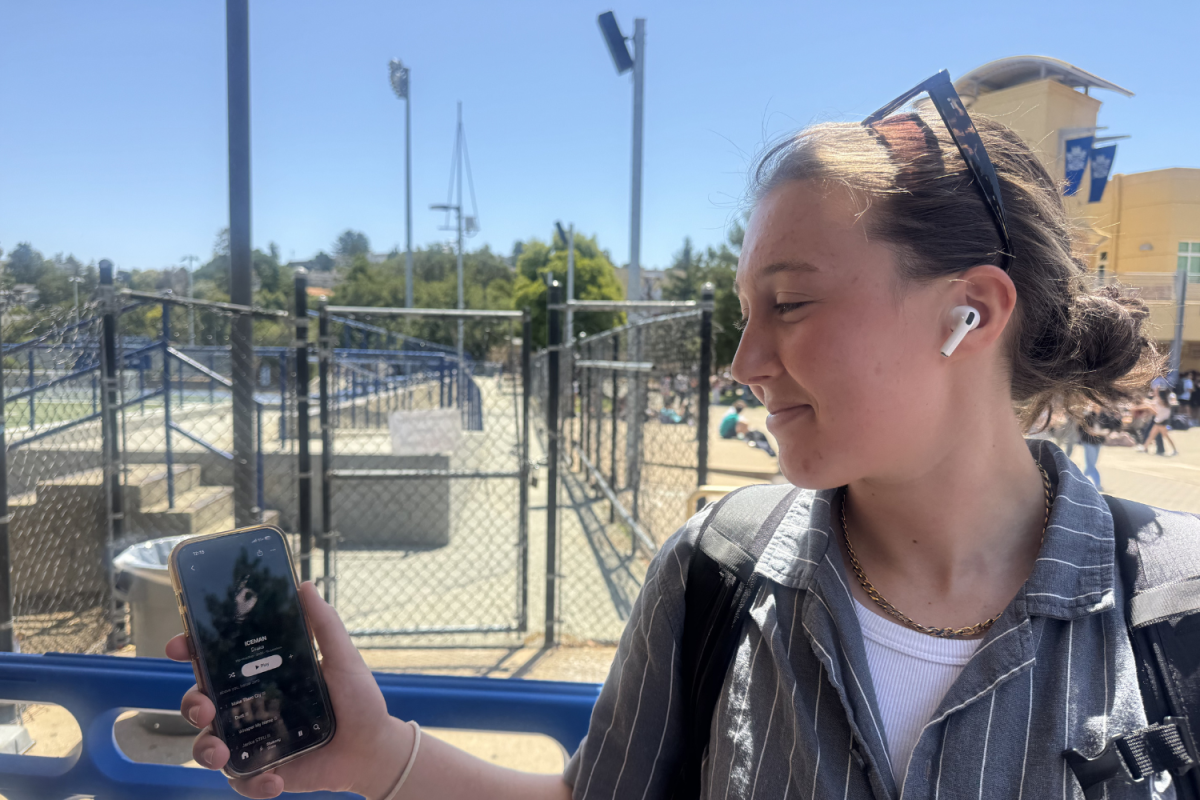
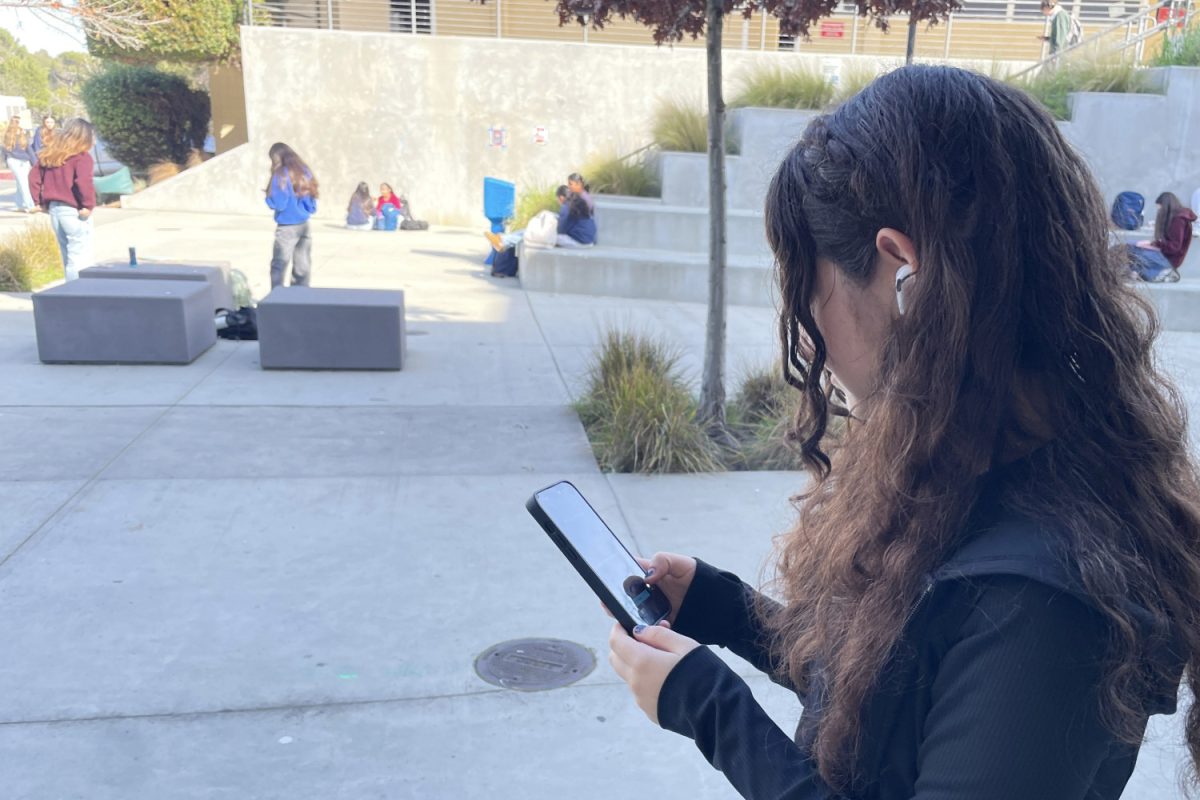
Headphones often reflect unapproachability when worn in public. A blog posted on Vocal says, “Small talk with strangers, chance encounters, and unplanned conversations have long been essential components of human social life.” Headphones can potentially decrease the amount of social interaction a person has.
Since their 2017 release, AirPods and earbuds have remained a popular commodity in everyday life. Whether it’s at the gym, on the bus, at a coffee shop, or at school, someone will likely be wearing headphones.
Daniel Ricci is a freshman at Northern Valley Regional High School at Demarest in New Jersey. He frequently uses his AirPods.
“I usually have them in between periods, in class, if they let you, and if I’m going somewhere, like on a walk. So pretty much all the time,” Ricci said.
In some settings, headphones can be seen as a distraction. While headphones in the classroom are generally frowned upon by teachers, Kathy Rodriguez, an art teacher at Carlmont High School, takes a different view.
“I allow students to wear headphones after instruction,” Rodriguez said. “Music can help with focus.”
The increased popularity of headphones isn’t always positive. Headphones are now a symbol of disinterest in others and unsociability.
“Social interactions have become more elective because of how easy it now is to show a disinclination for speaking,” said Lucas Clavel, a sophomore at Carlmont High School. “They are a definite sign to someone that you don’t want to talk.”
According to VegOut, “Wearing headphones is architectural boundary-setting — designing out the need for difficult conversations.”
The normalization of headphone use today may have desensitized teenagers and younger generations to their outward appearance. When it comes to most things, body language matters.
“I feel the headphones to me don’t really change anything that much. I feel like it’s overall how their stance changes,” Ricci said.
According to In Ear Headphones, “Earphone-wearers aren’t expected to comment, critique or laugh — they aren’t asked for directions, their opinion of the day’s weather, or about last night’s big game. Might something as simple as a bound colored wire extending down from the head tell the world, ‘Go away?’”
People have many different opinions, and their own perceptions can also have influence. According to Rodriguez, headphones don’t change the way someone is perceived.
“I really don’t think it when I see someone wearing headphones in public,” Rodriguez said.
Headphones are not inherently bad; it ultimately depends on their function. According to Ricci, headphones can make someone appear more normal in a public setting.
“I think if it’s in the middle of the open, I might be like, ‘Oh, why are they just sitting?’ But if they have the headphones on, you might think like, ‘Oh, maybe they’re having a conversation or something,'” Ricci said.
In the past, and sometimes even now, people would approach someone on the street to ask questions, like for directions. How approachable someone seems has lowered the how often people encounter this.
“When someone wears AirPods in public, they seem more distant in a busy or difficult-to-approach way,” Clavel said. “AirPods make someone seem less approachable, because it shows that they are actively doing something in which they don’t want to be bothered.”
Someone’s approachability can change depending on age and setting. Some may see no difference between a place like a school setting and just walking around.
“Even if I have my AirPods in, I take one or both of them out,” Ricci said. “I don’t really feel like headphones really impede that much on a conversation.”
The commonality of social interactions differs for people who have experienced it more often before the rise in popularity of headphones.
“It’s all over,” Rodriguez said. “Your phone is like an appendage. People do everything on their phones, like shopping or talking with people they know.”
According to Vocal, “Headphones have become more than just a tool for listening to music; they are a barrier, a refuge, and a statement.”
Headphones, in a way, can become a social crutch. If someone doesn’t want to talk, they could simply put on their headphones.
“Headphones are positive because they can help people who don’t want to speak or are uncomfortable,” Clavel said.
Ultimately, perceptions of headphones vary. As Rodriguez said, it’s a “double-edged sword.” Society portrays headphones differently among younger users.
“It can be positive, can be a negative, depends on how they’re used,” Ricci said.