
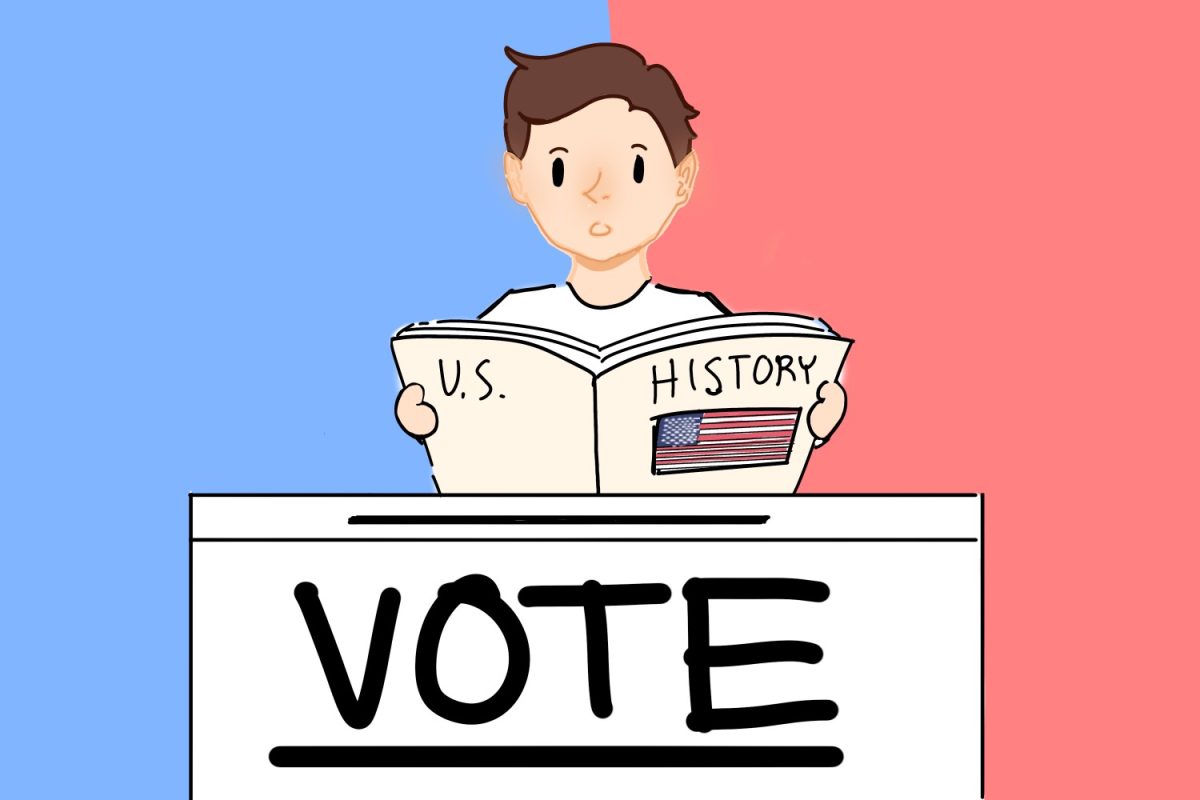
In 2024, the U.S. Chamber of Commerce Foundation reported that 70% of Americans were unable to answer questions about their government’s structure in a civic literacy test. Not only does this indicate a lack of historical understanding, but it also suggests that voters may be unprepared to make informed decisions, particularly when it comes to voting.
According to the U.S. Chamber of Commerce, only 25% of Americans reported being “very confident” in explaining how the U.S. government system works. Understanding government structure is crucial to comprehending politics; moreover, history provides context for why past laws were enacted and why we have the rights we currently enjoy. Without understanding the roles of politicians in government or how laws are made, executed, and interpreted, voters can misunderstand what they have voted for.
Historical knowledge can help people understand different cultures, recognize current issues, and make sense of today’s world, according to The Chicago Council on Science and Technology. For example, understanding the first and second waves of immigration in the 20th century can help people comprehend modern immigration policies and their current economic impact. History enables voters to recognize injustice and issues in the present. After identifying them from the past, it can be easier for voters to advocate for and push for laws and policies that benefit them.
Additionally, according to the Pew Research Center, 36% of adults reported seeing inaccurate election news about the 2024 presidential election somewhat often. Reinforcing false information ultimately spreads more inaccuracies, and claims are made without evidence.
When people vote without knowing the historical context of a policy or an event, they are more susceptible to misinformation, propaganda, and emotional voting, according to a study by the California Learning Resource Network. Support for false claims can encourage less fact-checking and a decrease in analytical skills. With less fact-checking comes increased division, polarization, and persistent disagreement.
According to The University of Texas at Austin (UT Austin), emotions can influence a voter more than logic and facts when electing a leader, demonstrating how easily people can be swayed when they lack historical context and do not entirely understand what candidates stand for.
Additionally, the way a candidate makes voters feel, specifically anger, fear, hope, or pride, is driven by how the media portrays a candidate. For example, in 2016, President Donald Trump made voters direct their anger at others to stay in the lead in Republican primaries during the presidential election, according to UT Austin.
While a knowledge test is not required, and everyone is entitled to their opinion when making significant decisions that contribute to society, becoming more educated and understanding how past events shape our government and society today can strengthen democracy.
A stronger emphasis on history, both inside and outside the classroom, is needed to encourage voters to think critically about politics and not be lazy when it comes to researching. Historical background knowledge can benefit individuals by enabling informed decision-making and fostering a willingness to remain open-minded. The key to democracy is that people participate and understand what they are advocating for.