My interest in journalism began in elementary school. I remember my dad giving me an article about migrant children in detention from The New York Times to read. As I looked through the article, I remember a sense of shock passing over me. I couldn’t understand why kids my age were in a detention center. That moment pushed me to pay attention to stories beyond the headlines.
A couple of years later, I was riveted as the screen of my iPad showed a video of the crisis in Afghanistan being broadcast. Kabul had fallen. The Taliban were advancing, and the people of Afghanistan were fleeing.
But as I tried to keep up with what was happening over time, coverage of Afghanistan slipped in and out of the headlines. It made me realize that in times of crisis, a global issue could receive intense attention, but less sustained coverage over time. Yet the problems the people of Afghanistan face remain. For example, according to the United Nations Educational, Scientific, and Cultural Organization (UNESCO), 2.2 million girls are banned from school, highlighting education disparities and discrimination.
It was around that time that I wanted to become a journalist.
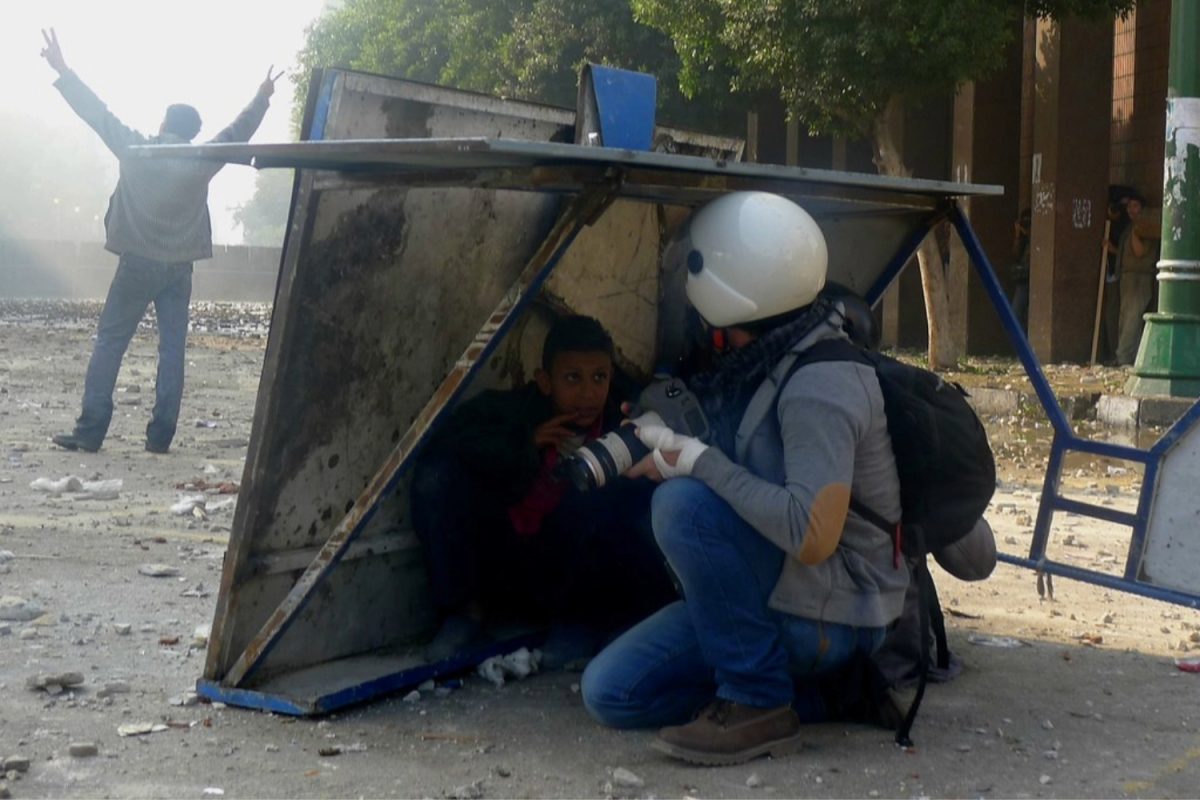
To my dismay, however, I quickly realized that the world was not fond of journalists. According to the Committee to Protect Journalists, 102 journalists and media workers were killed in 2023 due to dangerous assignments, crossfire, or murder.
Furthermore, journalism is one of the most regretted majors, with 87% of graduates regretting their choice of degree. Job prospects are slim, and many journalists make below the national average salary.
Beyond these professional and safety concerns, public perception of journalism has also declined. According to the Pew Research Center, fewer than half of Americans have confidence in the media. Around 67% of those polled who lack confidence in the media attributed it to bias, spin, and agendas.
Additionally, in the digital age, misinformation spreads easily. For example, Meta, which scaled back fact-checking across its platforms in 2025, highlights the role social media can play in spreading fake news. Misinformation caused public health issues during the coronavirus pandemic, often perpetuated by social media.
Furthermore, there have been attacks on the media, notably from President Donald Trump. Trump accused the press of being the “enemy of the American people” before assuming office in 2017, and signed a 2025 executive order aimed at cutting funding for National Public Radio (NPR) and the Public Broadcasting Service (PBS). The White House also barred the Associated Press (AP) from accessing the White House.
This is why journalism remains essential. In a time of misinformation, polarization, and global instability, it is still important to continue reporting. Journalists have played significant roles throughout history, such as when two Washington Post reporters investigated the infamous Watergate scandal, revealing an illegal campaign of political espionage.
Some will argue that journalism is unimportant and harmful to society. They will advocate for the control of public media and punish dissidents.
Yet a free press is essential for a healthy democracy. There is a reason why, under authoritarian leaders such as Joseph Stalin and Mao Zedong, freedom of speech across all aspects of society, including the press, was limited.
It is reasonable to infer that when the government knows its actions will upset people, it will go after those with the power to inform others. There is a reason why “Democracy Dies in Darkness” is the Washington Post’s slogan.
Much of what I write is critical of federal actions. A friend joked that I might get attacked in the parking lot after school because of this. I laughed, but then realized that this is the grim reality we live in. A world so polarized that even the rights guaranteed by the First Amendment are restrained by fear.
I may end up being a part of the 87% who regret majoring in journalism, or I may choose a different path entirely. But for now, I want to keep writing and telling stories that highlight important issues. Because it was the reporting of journalists who opened my eyes to the world around me and made me aware of the injustices people from all backgrounds suffer daily.