
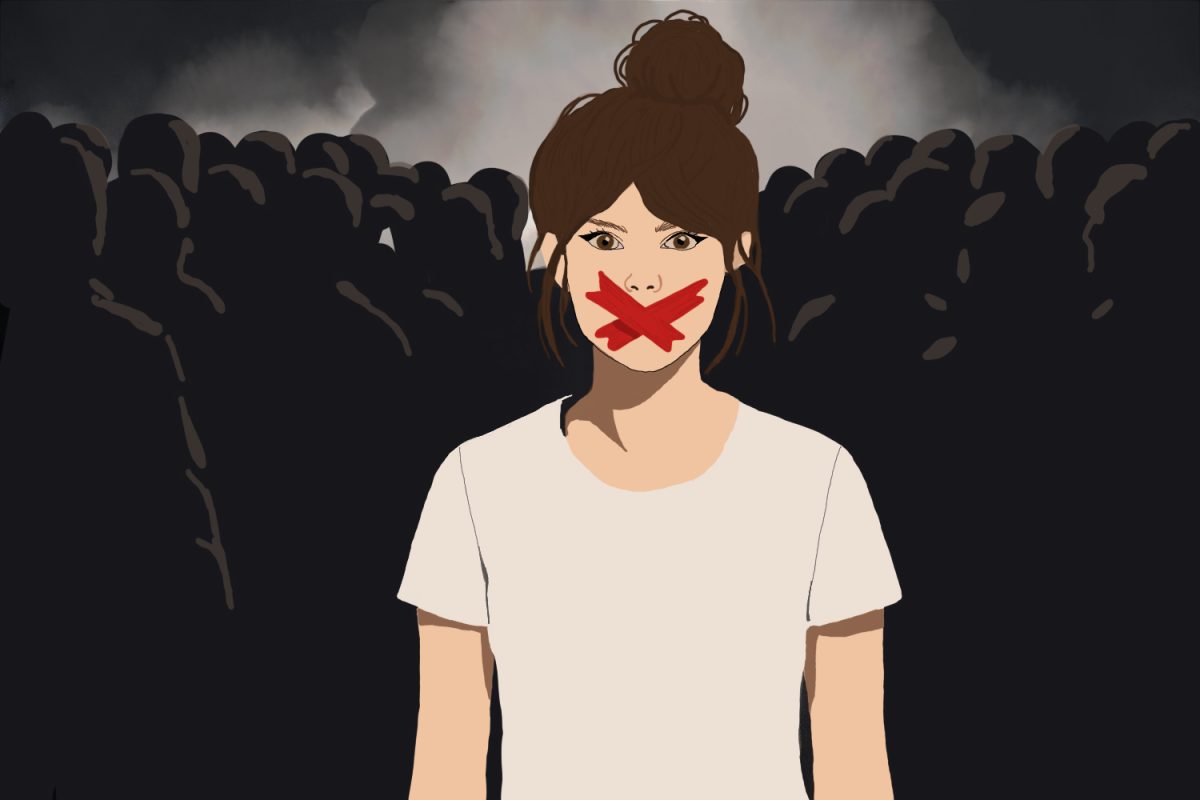
People often tell me that I’m too opinionated or that I participate too much in my class discussions. I hear it when I raise my hand several times in one period, or when I keep a discussion going longer than expected. But sitting in class, I’ve started to notice something else: Not that one person talks too much, but that most people don’t talk at all.
I’ve watched teachers ask questions and wait through long pauses before calling on someone at random. Students glance at each other and whisper ideas, but refuse to say them out loud.
Over time, I’ve seen a silence that goes beyond hesitation — it becomes passivity. Somewhere along the way, speaking up and sharing opinions stopped feeling natural and started feeling risky.
Raising your hand makes you visible, and visibility creates the possibility of being wrong or judged. When the perceived risk feels greater than the reward of participation, choosing silence becomes the easier habit.
For teenagers, that possibility can feel significant enough to stay quiet even when they know the material. I’ve experienced that hesitation too. Before answering, I sometimes wonder whether my point is obvious or unnecessary.
Research helps explain why that hesitation is common. A study from the National Library of Medicine found that fear of negative evaluation activates threat-related brain responses. Silence, then, isn’t always a sign of disengagement but rather a response to perceived social pressure.
This connects to the spiral of silence theory, proposed by German political scientist Elisabeth Noelle-Neumann, which argues that people often withhold opinions they believe are in the minority to avoid social isolation. As more and more students remain quiet, participation appears less typical, reinforcing the idea that speaking up is unusual.
Because of this, students who contribute frequently, like me, can be labeled as overly opinionated when they may simply be filling a gap.
Recognizing this doesn’t mean that everyone must speak constantly. However, it suggests that participation should be viewed less as a personality trait and more as an academic practice that develops over time.
When I raise my hand, it isn’t because I always feel confident. Often, it’s because I’ve noticed how easy it is for a room full of people with ideas to stay silent, and how different the conversation becomes when someone chooses not to.
So maybe I’m not too loud. Maybe I’m just unafraid of being judged.