
The day after Donald Trump was elected to his second term, my classmate and I were discussing his presidency. My classmate mourned the loss of democracy, stating that once Trump was sworn in, he would slowly strip Congress and the U.S. Supreme Court of power until he was the only one left with the authority to make decisions.
For a while, my classmate seemed correct. Many institutions, such as the Brennan Center for Justice, warned that Trump was overstepping the bounds of presidential power. But when the Supreme Court ruled that Trump used excessive power to impose his tariffs, I knew something had changed.
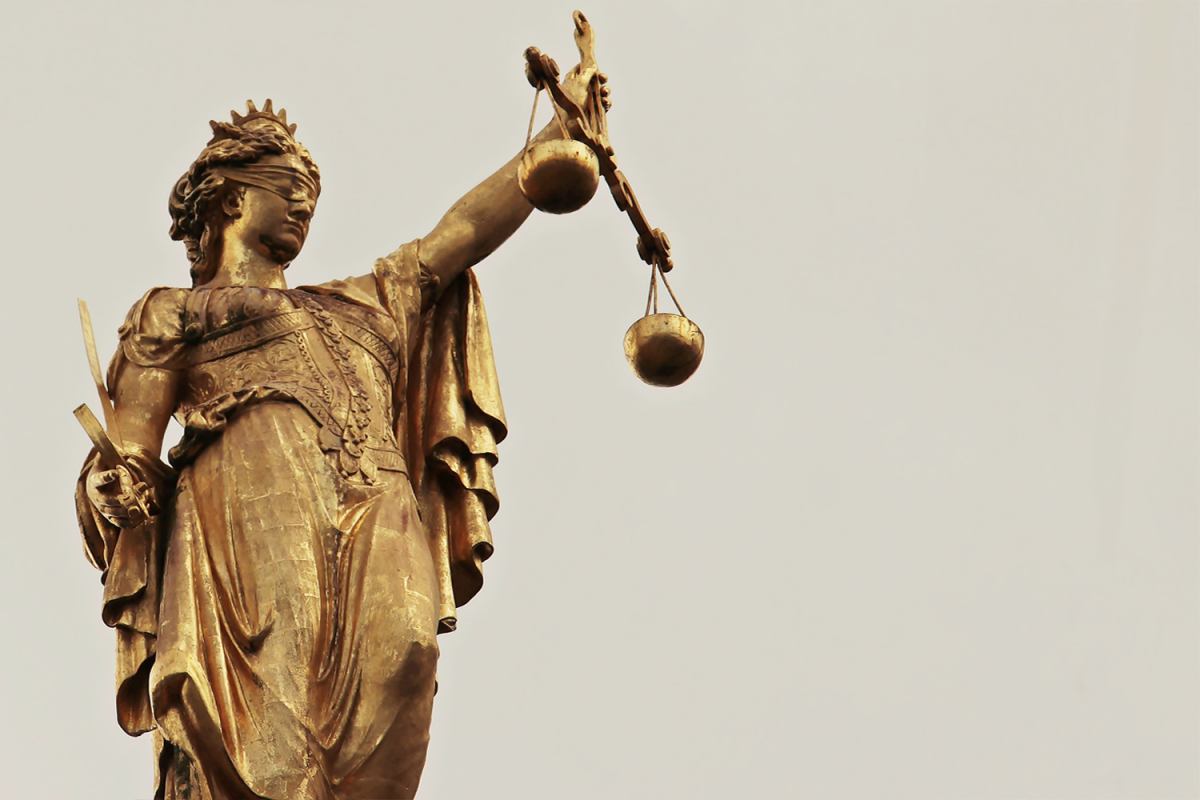
I grew up learning about the three branches of government. The executive branch includes the president and the Cabinet. The legislative branch is composed of Congress, and its purpose includes drafting laws and overseeing the budget. Finally, the judicial branch, including the Supreme Court, interprets the law and decides whether it is constitutional. Over and over again, the idea that each branch of government held the others in check was ingrained in my mind. If one branch grew too powerful, the others could hold it down.
This system of checks and balances is not perfect, nor are our government institutions. Public opinion of the Supreme Court is low, with half of Americans holding an unfavorable view, according to the Pew Research Center.
My classmate’s pessimism was understandable, given Trump’s strong winning streak at the Supreme Court. In recent years, conservative groups have also found victory in the Supreme Court, as seen in the overturning of Roe v. Wade, which effectively restricted abortion access. Between 2021 and 2022, 74% of cases resulted in conservative rulings, further underscoring conservative power over the judicial system.
As these victories accumulated, I also became skeptical of the integrity of our judicial system. Were the justices truly making fair, unbiased rulings? Could the fact that the Supreme Court’s 6-3 conservative majority have played a role in these victories? During his presidency, Trump appointed three justices to the Supreme Court. Were these appointees more loyal to Trump than to upholding decisions that would benefit all Americans?
In February, the Supreme Court struck down many of Trump’s sweeping tariffs. Seeing the news on my phone, I felt my faith in the Supreme Court being restored. Several conservative justices did not vote together, including Trump appointee Amy Coney Barrett.
A key idea in the U.S. Constitution is the separation of powers. This idea has its roots in the Enlightenment thinker Charles-Louis de Secondat, better known as Montesquieu. This balance will undoubtedly continue to be tested by all three branches of government in the future. But this new ruling has given me hope that it will be enough to prevent any branch from gaining too much power.
The Supreme Court’s ruling is not a victory for those who oppose Trump’s tariffs, nor is it much of a defeat for those who support them. Rather, it is proof that our judicial system is not swayed by personal ties. Whether the Supreme Court’s decision will prove beneficial to the American people remains to be seen, but I’m sure my classmate can rest assured that Trump does not have a complete hold on our government.