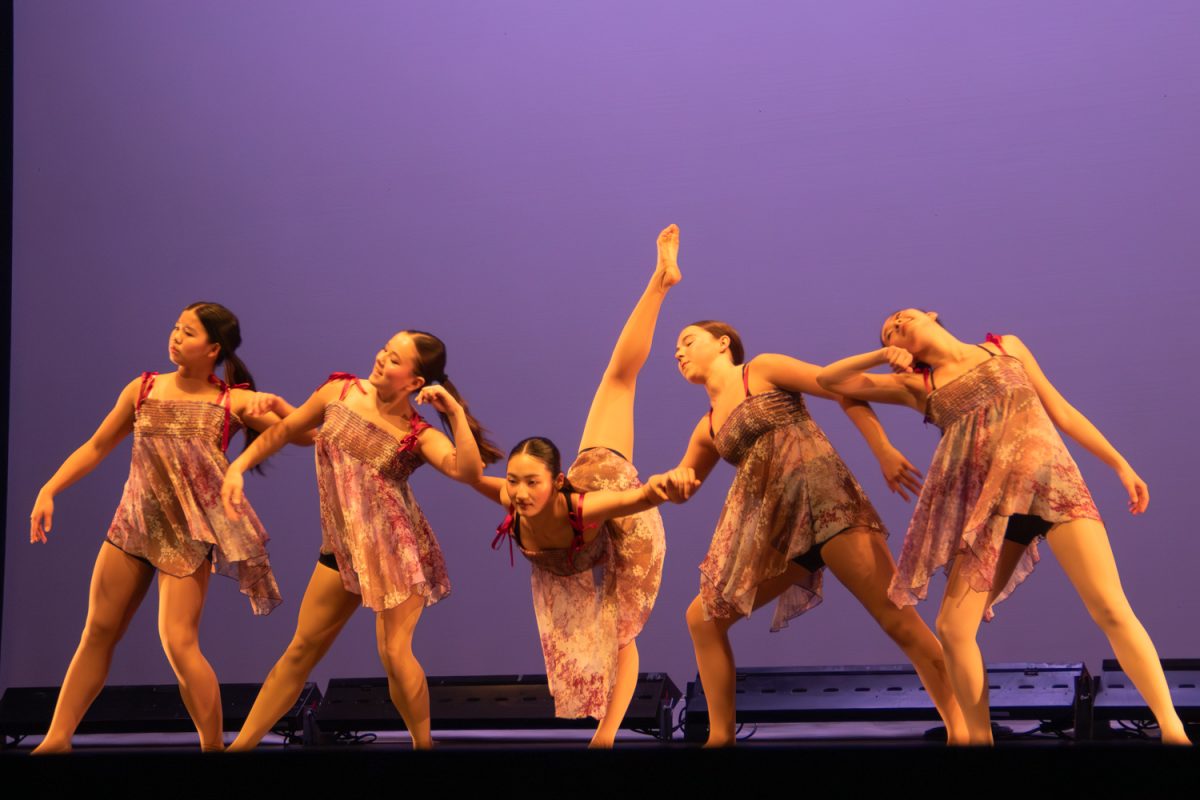

Throughout her time at Carlmont High School, senior Sofie Budman has delved into a variety of STEM pursuits, ranging from coding to math to biology.
However, Budman’s love for science, technology, engineering, and math started long before high school.
“When I was in elementary school, I started coding with scratch. And then also, my dad’s work is in STEM. So, it’s kind of like definitely something that I’ve been familiar with since I was little,” Budman said. “I started doing more coding stuff in third grade through Scratch, and then I learned HTML and JavaScript in middle school.”
Although Budman never took extracurricular math classes, she enjoyed the subject and solving problems with her parents. Once she reached Carlmont, she began taking more advanced classes, as well as studying for competitions such as the American Mathematics Competitions.
On campus, Budman is involved with several clubs and organizations.
“I do programming with Java on the school robotics team. I am also part of the Math Enthusiast Club where I go to competitions like Berkeley Math Tournament and Stanford Math Tournament. And then, I was involved with the school Genesis Club, which I did junior year. We entered the BioEngineering High School Competition at University of California (UC), Berkeley,” Budman said.
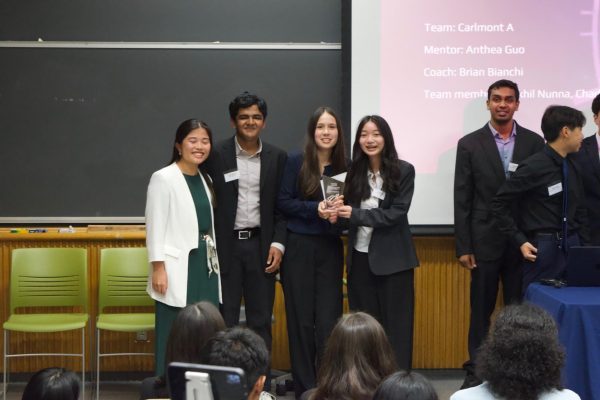
Due to her involvement in math and science, Budman won the Rensselaer Medal her junior year, an award given to one junior every single year.
“She’s involved. She’s involved in our math team that travels to Stanford and UC Berkeley for different competitions. She’s been in science competitions. She just stood out amongst all the amazing students that we have,” said math teacher Robert Tsuchiyama, who taught Budman in Precalculus Honors.
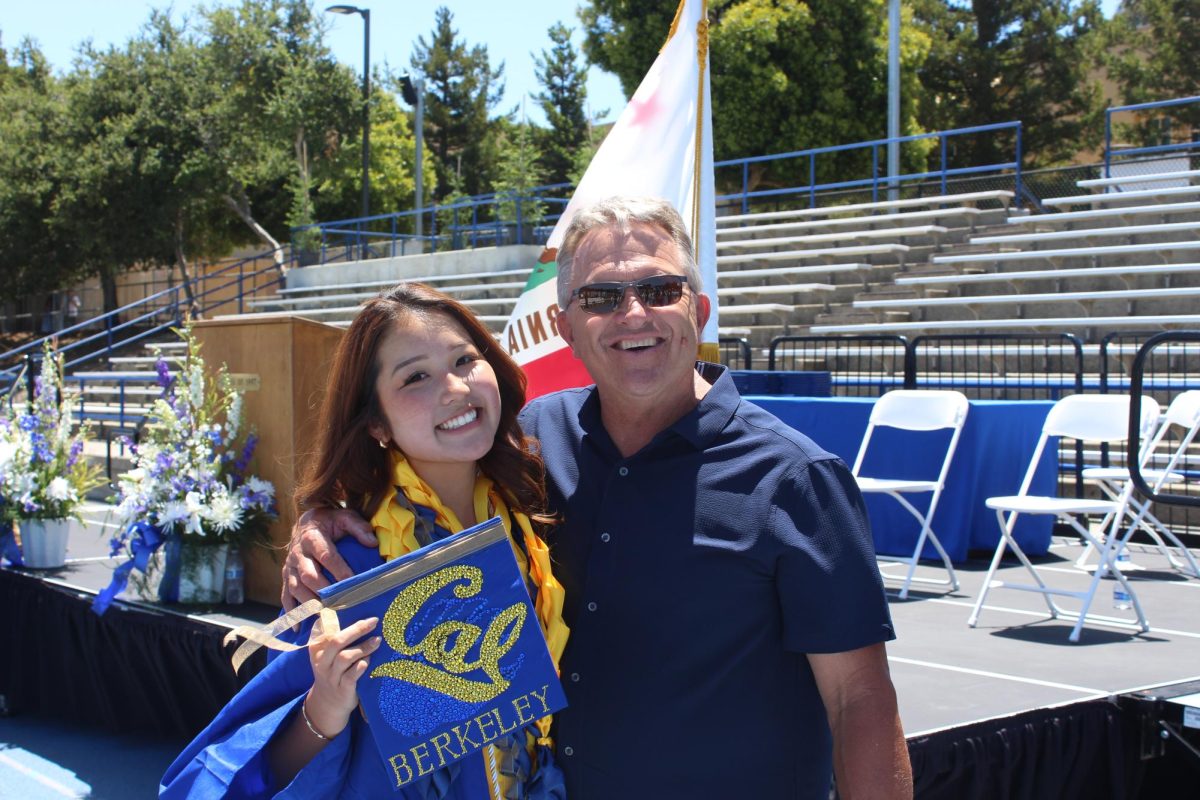
Budman, who will be attending Stanford this upcoming fall, plans to major in biomedical computation. The major combines computer science, biology, and medicine.
“At first, I was interested in biology, but there’s so much data available with biological data sets and it’s becoming more computational and engineering-driven. So, it’s like exploring the combination of those,” Budman said.
In addition, Budman is also interested in applying artificial intelligence to healthcare problems such as disease detection, and using bioengineering and novel approaches. This past summer, she worked on a research project exploring dysarthria at MIT.
“We did this thing called signal processing, in which you take an audio-based sample of what a patient is saying. Based on that, we computed a machine learning model that could predict whether someone had a sign or early diagnosis of certain neurological disorders,” Budman said.
According to Budman, the project also helped make what patients said more understandable.
“We made it an assistive technology project, which is something I’ve always been interested in. We created this framework for taking in someone who has this neurological disorder and they have slurred speech. We created a pipeline to help them be more understood, which helped with the accessibility aspect of the condition,” Budman said.
One of Budman’s favorite competitions was the BioEngineering High School Competition. According to Budman, the team created and presented a bioengineering-related project proposal.
“We developed a proposal for a regenerative contact lens that helps people’s cornea heal after corneal surgery. So, it involved electrical stimulation to promote regrowth and also hydrogels for targeted drug delivery,” Budman said.
Charlene Xu, Genesis Club’s cofounder, first met Sofie when they began working together on the bioengineering competition.
“Sofie specifically worked on editing for a video, which was one of our requirements for this competition. She put a lot of effort into adding subtitles, making sure we met the time limit, and putting clips together,” Xu said.
According to Xu, the team had a variety of skills and worked together on various aspects of the project.
“Her part in video editing probably helped us the most in winning first place for the video category,” Xu said.
Throughout her involvement in these activities, Budman has met and worked with a variety of students.
“When you have a really good team, it makes it even more enjoyable. It’s like getting to know people through that that I like. I’ve gotten to know people through math club, maybe that I wouldn’t typically interact with. Getting to know people of different grades has definitely been really fun as well,” Budman said.
Through team-based STEM competitions and projects, Budman has become better at collaborating with people in general.
“I’ve definitely learned how to kind of establish that sort of collaborative, friendly environment before going to a group project to help make sure that we’re more successful. It’s also shaped me because it’s definitely exposed me to different areas of science,” Budman said. “For example, intersections of science and engineering or like biology and engineering or medicine and AI, that I wouldn’t have learned before. That kind of influenced what I was doing when I was thinking about what I want to study in college.”
Budman’s ability to establish a collaborative environment also extends inside the classroom, according to Tsuchiyama.
“Sofie in class is a student that drives to class, that really enhances the learning because she asks amazing questions and she has great insights. A lot of her questions go beyond what we’re covering on the surface,” Tsuschiyama said.
For Budman, the collaboration in her pursuits remains one of her favorite aspects.
“I’ve really enjoyed the collaborative aspect, especially for team research and team competitions, because I just think it’s really rewarding and fun when you’re like doing something you enjoy and everyone around you is very driven and passionate about it too,” Budman said.