


The art of preservation: Arrowsmithing

*This story is the first part of a three-part feature series about the fight to preserve endangered traditional crafts, titled “The art of preservation.” Click on the hyperlinks to read Part 2 and Part 3.
Currently, Ian Moran is one of the last arrowsmiths alive. Moran started arrowsmithing around 20 years ago to craft his own bows and arrows for archery.
“I was in a standard archery club, the sort of one that uses synthetic bows. They had a show-and-tell day where they brought in different types of bows. There was a recurve bow, a compound bow, and someone brought a traditional English longbow. I tried that and just fell in love with it straight away,” Moran said.
As Moran gradually shifted from standard target archery to traditional archery, he began to craft his own arrows and shafts, fletching them with delicate feathers. However, it was difficult to find traditionally-made arrowheads that weren’t, as Moran calls them, “fiercely expensive.” In fact, a standard mass-produced arrow costs around $4 a piece from archery equipment suppliers like HuntingDoor, while a traditional handmade arrow on Etsy can cost up to $40.
“I saw an advertisement for a one-day arrowsmithing course, run by a gentleman called Hector Cole, who is a master arrowsmith. He makes a lot of period-precise and period-correct pieces that are displayed in museums. So I did that course with him, and the bug bit me,” Moran said.
Hector Cole is one of the two master arrowsmiths remaining in the United Kingdom, according to Heritage Crafts. After taking the course with Cole, Moran fell in love with the skill, setting up a primitive, little charcoal forge in his back garden. From there, he started tinkering.
“I made some things that theoretically, you could have put on the end of an arrow, and it just grew from there. When I have an ink, I tinker and practice. As the saying goes, a man who is self-taught has a fool for a teacher,” Moran said. “I just kept experimenting and using the University of YouTube to get ideas, gradually built up my knowledge, read books, and practiced and practiced until I was making things that I found acceptable.”
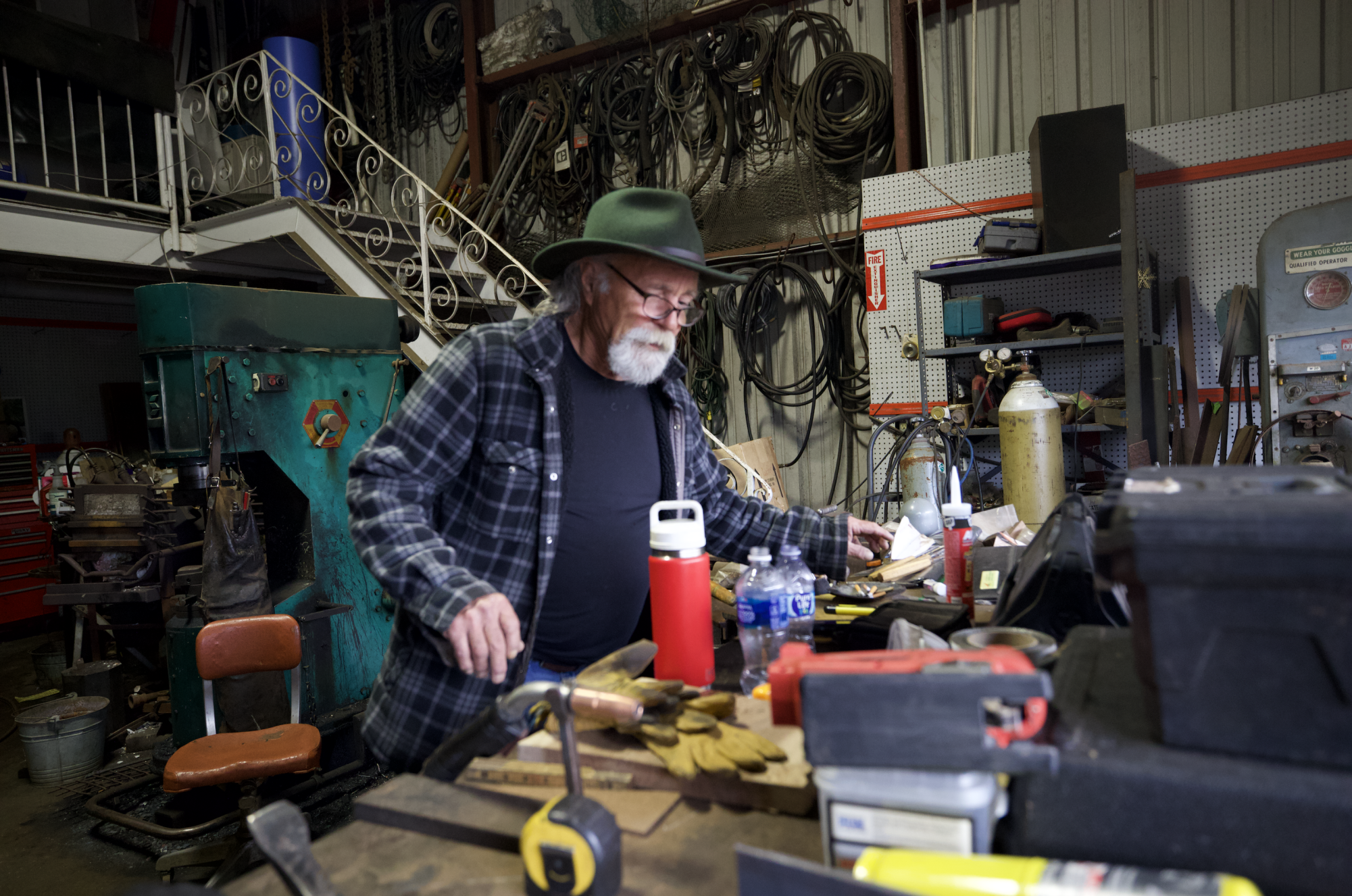
Moran has also tried his hand at forging iron wear, campfire irons and knives. For the most part, though, he sticks to arrowsmithing. While Moran stands almost entirely alone now, there were once vast communities of arrowsmiths speckled across the globe.
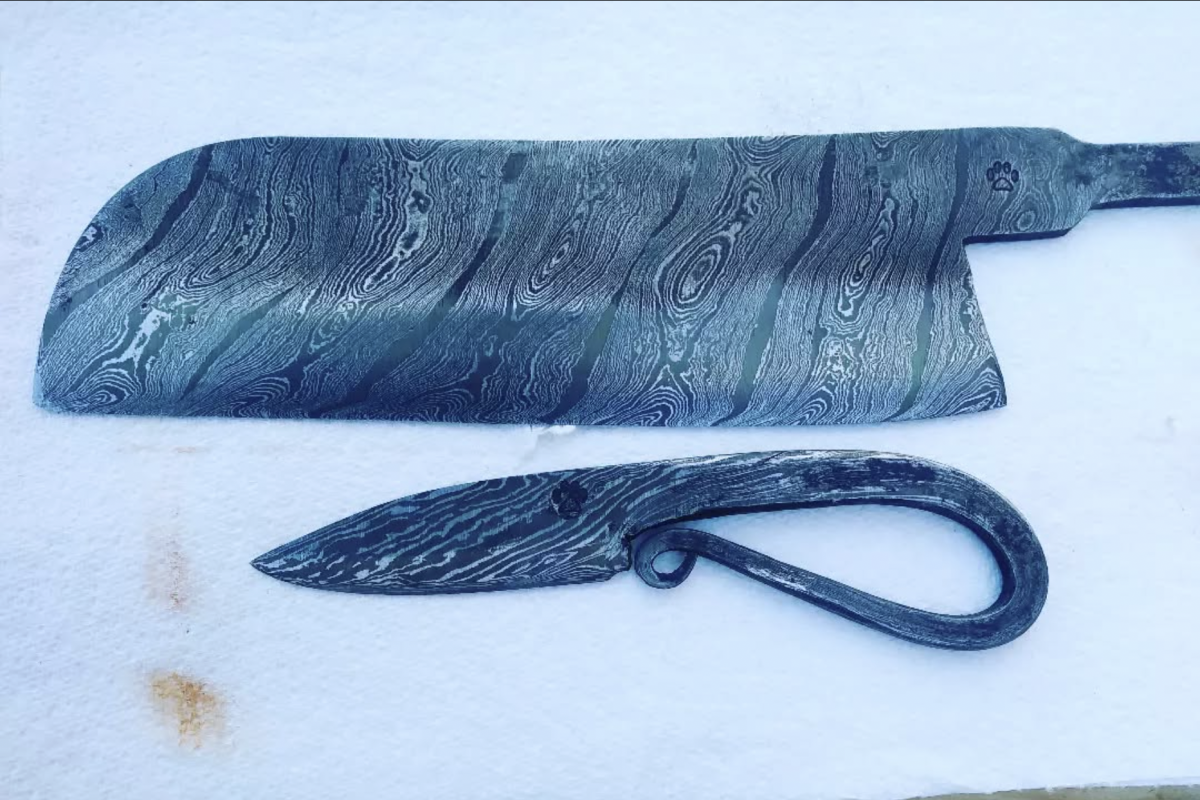
For centuries, arrowsmiths fed iron to the fire, bruising the malleable metal to craft a carefully-shaped weapon of precision: the sharp and sturdy arrowhead. According to the U.K.’s Heritage Crafts organization, arrowsmithing peaked during the Medieval period. Archeological records from Bow International suggest that in the year 1360 alone, half a million arrows were sent to the royal armouries in the Tower of London, who wielded them in the Hundred Years’ War. Now, arrowsmithing, having run its course and served its time well, has been outpaced by modern production.
“When I took my first blacksmithing class, it was like a light bulb went on. It was so different from anything else I had ever done because it was very physical. You are using fire, and the ability to change the form of one thing into something else was really exciting,” said Becky Schimpff, the Education Chair of the Artist-Blacksmith’s Association of North America (ABANA).
At this critical time, where new technologies and artificial intelligence developments are at the turning point of society, people sometimes forget to stop and make time for the slow and authentic presence of arts and crafts. Whether that be the slow strokes of an oil painting or the delicate placements of a vivid mosaic frame, all kinds of arts and crafts can provide unique natural benefits.
“Craft has a really long history of boosting local economies, creating an opportunity for creative entrepreneurship within marginalized communities and fostering tourism. It preserves cultural heritage and supports traditions that have been passed down through generations. Without craft, a lot of that knowledge would be lost,” said Katie Johnson, the Director of Programs and Events of the American Craft Council (ACC).
Moran recommends those interested in arrowsmithing to start with the foundations of blacksmithing and metalworking.
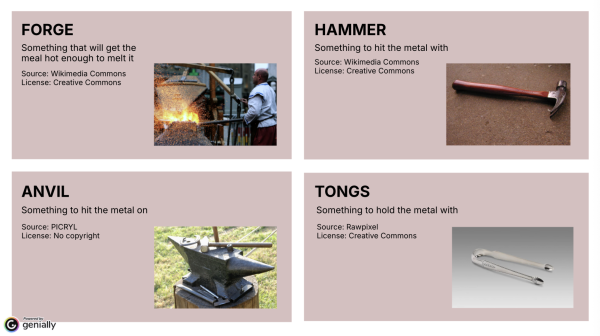
“Don’t jump into arrowsmithing straight off. Learn basic metalworking because it will make everything else easier thereafter. It’s like if you’re learning to drive a car, you don’t jump into a Ferrari on your first ride,” Moran said.
According to Moran, arrowsmiths only need four core instruments: something that will get the metal hot enough to melt it, something to hit it with, something to hit it on and something to hold it with.
“Don’t be discouraged because the first few that you make will look horrible. I’ve still kept the first one I made on my own, purely to remind myself of how far I’ve come,” Moran said. “You have to understand the materials you’re working with, how the metal moves at certain temperatures and the efficiency of being a blacksmith.”
Beyond technical skill, Moran emphasizes that efficiency and intention are just as important in the forge.
“Anybody who works with their hands has to be ‘intelligently lazy.’ You have to use just enough effort to achieve what you want to do,” Moran said.
Like Moran, most artists do not have the privilege of pursuing art as their full-time profession. Traditional arrowsmiths like Moran are never able to craft a handmade arrowhead for the same price as mass-produced arrowheads, which can now be stamped out to mimic the look of a traditional arrowhead.
“The issue with handcrafted anything, whether it be metalwork, woodwork or fabrics, is that it takes time. I can produce 60 arrowheads in a day. I then factor in the cost of materials, the cost of fuel, and all the other bits and pieces. I then have to price my product,” Moran said.
In his book “Why Are Artists Poor? The Exceptional Economy of the Arts,” visual artist and economist Hans Abbist asserts that most artists are unable to secure a stable living because art functions in an “exceptional economy,” where art is valued as noble and authentic rather than commercial.
There is an inherent belief that exists in which the price of pursuing one’s artistic passion is the willingness to give up materialistic desires. People prefer to donate to artists instead of assigning a price to their artwork, which allows a few prominent artists to profit, while the vast majority of creatives fill the shoes of the “suffering artist.”
“Unless someone is really seeking authenticity, which is a very small market, it’s difficult to make sufficient money to make [arrowsmithing] a viable profession. Most people are going to go for the cheapest option, so either you have to be really good or you do it as a sideline to bring in extra money,” Moran said.
Even though it is almost impossible for something as subjective as art to be commodified, art economist Magnus Resch finds that 85% of full-time contemporary artists earn less than $25,000 a year. On the other hand, a software engineer earns around $133,000 a year, more than five times as much, according to the U.S. Bureau of Labor Statistics.
The striking contrast in how much society values STEM fields compared to the arts means that artists are often forced to pursue other professions to make a living, unable to chase their true passions. This has put some of the most valuable traditional crafts at risk of extinction — crafts that are the backbone of the very thing America is known for, its diversity and ethnic landscape.
“The U.K. Heritage Crafts and other international organizations tend to focus more on preserving heritage since they are older, such as cathedrals, masonry or plasterwork. The United States is younger than a lot of other countries, but a lot of those skills and traditions were brought over by immigrants. There’s appreciation for the new styles that were made here, such as the studio craft movement,” Johnson said.
Heritage Crafts created a Red List of endangered, critically endangered, and extinct heritage crafts in the United Kingdom, modeled after the same list used to identify endangered animals. Currently, there are 71 critically endangered crafts, from metalworking, such as arrowsmithing, bellfounding, and tinsmithing; to weaving, such as silver spinning, damask weaving, and straw hat making; to crafting musical instruments, such as bow making and flute making.
Moran asserts that the reason artisans are unable to make a living in the modern age is that the disposable society has devalued handmade goods, functioning as a product of industrialization and modern consumerism. Growing up in the 1970s, Moran’s generation wasn’t yet accustomed to disposable goods.
“You bought things and expected them to last, and if they broke, you fixed them. There would be a television repair shop in the neighborhood, a white goods repair shop, a shop that specialized in fixing washing machines, tumble dryers, TVs, or even vacuum cleaners,” Moran said.
Manufacturers have fundamentally reworked the cultural narrative of self-sufficiency. The principle of manufacturing inherently sells items to consumers for cheap, profiting not from one-time purchases, but rather from faulty products that result in repeated purchases over a customer’s lifetime.
“They don’t want to sell you one vacuum cleaner. They want to sell you a vacuum cleaner every four or five years. When your old one dies, they want you to buy a new one. Manufacturers aren’t enabling people to fix things; therefore, we just throw it away and buy a new one instead of looking for something that will last my lifetime, my son’s lifetime and my son’s son’s lifetime,” Moran said.
Even though manufactured goods are often more expensive in the long run, people will still purchase them, Moran asserts, due to the concept of a “false economy.” According to the Cambridge Dictionary, a false economy is something that costs less at first but results in more money being spent later.
“Why pay $40 when I can get something that does just the same job for $5. But I’m going to have to buy 10 of those $5 things over my lifetime, whereas if I buy the $40 one up front, it’ll last my grandson’s lifetime. But people don’t see that in the short term, especially if you haven’t got $40 to spend,” Moran said.
Moran wishes that people would appreciate traditional handicrafts more and learn how to make things themselves. He believes that it makes people more appreciative of their possessions and their ability to create something from scratch.
“Building something with your own hands means you’re going to look after it more when it breaks. You’re not just going to expect a new one. You’re going to prevent it from breaking by looking after it, and you’ll know how to fix it if it does,” Moran said.
According to Forbes, as of 2025, there are over a million unfilled trade jobs. This shortage is a part of a long-term shift in the economy, technology, and education, according to researchers from the School of Building Construction of the University of Florida. While higher education fields like STEM, medicine and law are promoted in schools and consequently generate higher real-world salaries, hands-on trades like plumbing, welding and construction are stigmatized. The term “construction worker” has a negative connotation amongst adolescents, which isn’t surprising, given the salary difference between low-paying construction fields and high-paying information technology fields.
“Many kids are saying, ‘I can’t take art because I have to take Advanced Placement (AP) Statistics or Calculus BC.’ The art, music, photography, culinary arts, woodshop and other elective classes are so important for development, self-regulation and joy. We have sucked the joy out of school because we don’t allow kids to take these classes,” said Tiffany Karow, former public school teacher and owner of San Carlos Art Circles, where she hosts creative circles and therapeutic artistic workshops.
Because of this stigma, adolescents are discouraged from experiencing the usefulness and creative freedom that skilled trades have to offer.
“Classes aren’t valued in the same way as before, because now the value is about how much money you can make doing it and not how you feel while doing it,” Karow said.
When these skilled trades and traditional crafts are gone from the world, they’re gone forever.
“We’ve got experimental archeologists who are trying to recreate things the way they were done in times past. They may make something that looks the same, but have they used the same techniques? How much knowledge have we lost because we’re disenfranchised from where things come from?” Moran said.
The Frameworks Institute discovered that a similar phenomenon occurs with food. Americans do not think much about where their food originates because it has always been accessible, and virtually no Americans are involved with the systems of natural food production.
“Food comes in a polystyrene or Styrofoam packaging on the shelf in the supermarket. Milk comes from a carton, not a cow. Because people don’t relate to where it comes from, they lose their appreciation of it,” Moran said.
Over time, due to the lack of practical knowledge and application for arrowsmithing, it has become more artistic instead.
“Historically, there was a blacksmith in every town fixing things that broke. Today, there are a number of big craft schools in the United States that are teaching the craft. There are still people who have blacksmithing as a job, but there are also a lot of people who are hobbyists,” Schimpff said.
Schimpff works at ABANA, where she and other passionate creatives are dedicated to preserving the fine craft of blacksmithing. To honor the metal arts, ABANA offers various educational workshops, technical and art publications, grants, awards, conferences and exhibitions. Their standardized curriculum can take Level I beginner blacksmiths to Level III masters.
“I see that with people who try blacksmithing, they get really excited about it, so my key takeaway is that everyone should give it a try. You learn some things about yourself that you didn’t anticipate,” Schimpff said.
Sixteen years ago, Karow lost her youngest child, her daughter, at 8 months old.
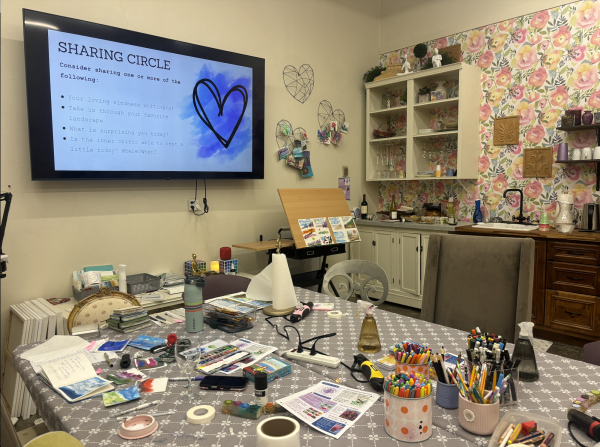
“I had a son at the time, and I knew I had to take care of myself for him. I did a lot of therapy, but I found that art was really the thing that helped me heal in a more significant way. If I needed a break, I would paint these cards and write messages on them about what I thought I needed to hear or what other people might need to hear. I would just give them to people, and their reaction was so touching that I was thinking about doing it once I retired,” Karow said.
While there is no list in the United States that identifies and protects endangered crafts, organizations like the ACC are preserving the craft legacy in their own way, telling stories, hosting events and offering programs for more people to enter the vivid world of craft.
“The ACC is over 80 years old. We’re often referred to as the mothership of craft. In a way, the history of the American Craft Council is the history of craft itself,” Johnson said.
The organization honors some of the most prominent up-and-coming artists throughout the nation, such as Lori Katz, who makes minimalistic modular wall squares; Rona Chang, who crafts reversible jackets and kanthas; and Yinglong Li, who is a practitioner of the ancient plique-à-jour enamel art. On the ACC website, these artists share the narratives and evolution of their creations.
“We are an organization of storytellers, and our members are a part of that storytelling. The ACC is the national connector and convener of craft organizations and people, so we point other people into the spaces of national craft. We are essentially creating spaces for people to live our mission and create a community,” Johnson said.
Besides national organizations like the ACC, there are also local organizations that people can interact with to dive into the splendor of the arts. Composed of 11 studios, each dedicated to a different craft and covering over 10,000 square feet of space, the University of California (UC), Davis Craft Center is an example of a prominent California makers space.
“You only benefit by keeping a beginner’s mind when you approach things. Craft is a good place for that because you have so many different options. There’s such a sense of safety going into the studio and closing the door, and it’s so rich being connected to traditions that come from so many people before you,” Johnson said.
According to Magnet ABA Therapy, now that a large portion of people’s lives have become digitized and nebulous, art serves as a reminder of the tangible world: the emotions to be felt, the objects to be touched, the sounds to be heard and the simple beauties to be experienced in their holistic nature. Many of the teenagers who spend over nine hours on the screen each day were once children who dreamed of becoming artists, authors, dancers, actors, singers, and such.
“When a person is working on a craft, they end up with a physical object, whether it’s a drawing, pottery, or an outfit. They can look at the object and say, ‘I made this,’” said Jared Tolla, the assistant director of the UC Davis Craft Center.
From weaving to welding, the creative space has so much to offer. Like a sunset stretched across a watercolor painting, sailing on and on, its limits are yet to be discovered.
“Everybody is a maker. Never tell yourself, ‘I’m not an artist,’ because there’s a space for everybody, but some people just haven’t found their space yet. There’s so much to find, and I really think that there is a place for everybody,” Johnson said.

