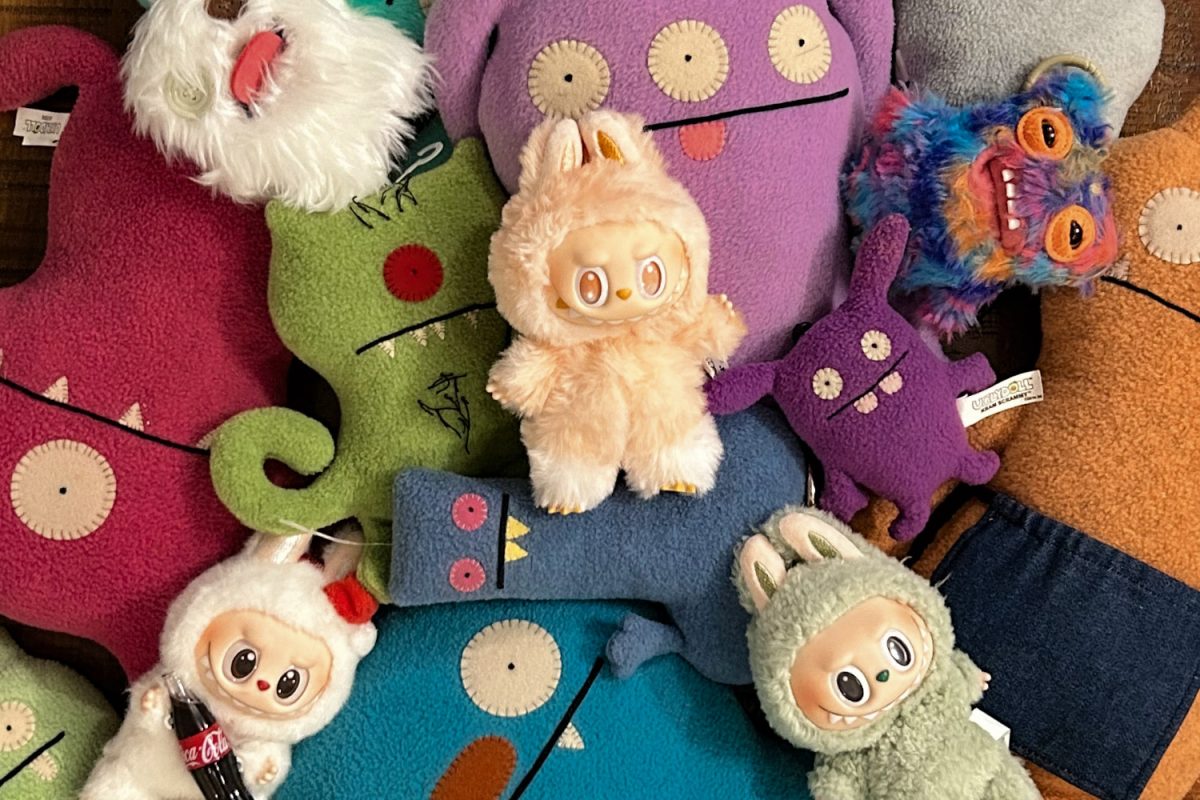
Over the past two decades, “ugly-cute” toys have gone from niche collectibles to mainstream cultural phenomena, connecting customers across all demographics.
From the launch of UglyDolls in 2001 to the creation of Fugglers in 2010, the “ugly-cute” trend has once again evolved with the globalization of Labubu, which gained popularity through blind boxes that captivated consumers across social media platforms worldwide.
“I’d seen Labubus briefly online, and I was definitely like, ‘Why are people buying these? They’re kinda ugly. It’s a waste of money.’ And then I kind of bought into the excitement of not knowing what you would get from the box,” said Emma Keenan-Grice, a Carlmont High School art teacher.
Although Labubu has taken the spotlight on social media platforms like TikTok and Instagram, it was not the first to spark interest in the “ugly-cute” trend. Similar success as Labubu’s in the toy-making industry can be seen from one of the first “ugly-cute” toys: UglyDolls.
UglyDolls
Starting as doodles in love letters sent by two college sweethearts, David Horvath and Sun-Min Kim, UglyDolls went from hand-sewn to factory-produced plush toys in less than two years.
After UglyDoll sales skyrocketed, making multimillions, the brand won the Toy Industry Association’s Specialty Toy of the Year Award in 2006.
The toy promoted its concept of “ugly” to mean unique and special, encouraging people of different age groups and genders to appreciate things for what they are, rather than conforming to society’s normalized beauty standards.
Today, there are over 200 different UglyDolls, each with its own name and story. Horvath further explained the concept of his and Kim’s brand in an interview with That’s It LA.
“Uglydolls have been unique in many ways to many different people for many different reasons, for some being the design, for some being the play on the word ‘ugly’ and what that means, or that some actually do consider the plush dolls to be ‘ugly’ whereas most others perhaps understand that they’re not ugly at all and that’s the whole point,” Horvath said.
Almost 10 years after UglyDolls came out, a new type of “ugly-cute” toy started to gain popularity: Fugglers.
Fugglers
Louise McGettrick, a children’s book author and the creator of Fugglers, got the idea from Christmas shopping online one year, only to find someone selling a plastic bag of false human teeth. At that moment, McGettrick conjured up a story about an old lady using the false teeth in her plush toys. McGettrick then gathered the materials to create these toys as a joke for people online to find and enjoy, acting more like props for the story rather than a toy to sell.
However, it soon became clear that Fugglers had become an online sensation due to their unconventional character.
“Some people identify with the outcast or outsider, and a toy that subverts all our expectations of what a cuddly plush should be is the perfect mascot for that,” McGettrick said.
Although the brand was launched over ten years ago, Fugglers remain a popular choice when selecting an “ugly-cute” toy.
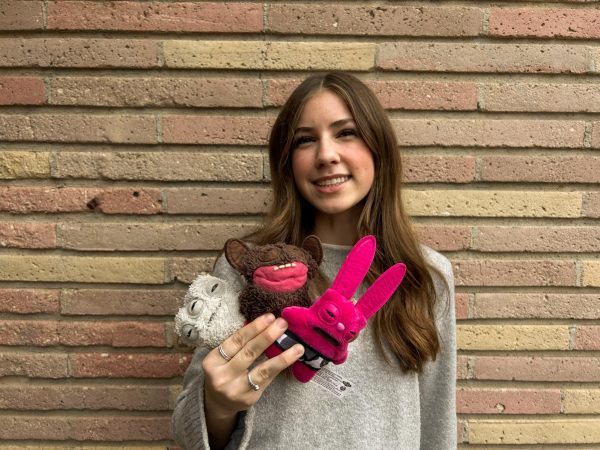
“I really like how they’re all different and unique in their own ways, like how their furs are different designs, or how they have teeth that look real and big eyes,”said Kaelin Kurt, a sophomore at Carlmont High School.
Kurt first learned about Fugglers through a friend who was also interested in the toy. Initially, she thought that Fugglers were ugly and weird, but soon, their charms grew on her.
“I was definitely weirded out by Fugglers at first, just because it kind of looked like there were certain parts that looked real. But now I just like the way they look,” Kurt said.
Similar to Kurt’s early views on Fugglers, many online viewers have also had mixed reactions to the most recent trending “ugly-cute” toy: Labubu.
Labubus
It all started in 2015 when Kasing Lung, an illustrator and toy designer, wrote his book series, “The Monsters.” Growing up in the Netherlands, Lung became fascinated by Nordic folklore, which heavily influenced the creation of Labubu, one of the characters in “The Monsters.”
“I think that because Labubus are ‘ugly-cute,’ it adds to their charm and that they’re not conventionally pretty. And so it takes a minute to get used to them and find the beauty in them. I mean, they come from Nordic fairy tales, right? Like troll dolls, or ‘Where the Wild Things Are.’ So when it was framed like that, I started to understand them more,” Keenan-Grice said.
Although Labubu is not widely recognized for its Nordic background, what truly sparked the media’s attention was when multiple celebrities featured Labubu as accessories in their outfits in 2024.
Currently, Labubu remains Pop Mart’s most popular product, following the release of the “Why So Serious” blind box series in October 2025.
With the numerous Labubu releases Pop Mart launched between 2024 and 2025, the brand’s revenue rose by 13.7%. According to Pop Mart’s 2025 Interim Report, Labubu has generated more than $670 million in revenue in the first half of 2025. With the increase in sales, Labubu gained a widespread audience, connecting buyers across the globe.
“I think it’s exciting that ‘ugly-cute’ dolls have become a resurfacing trend. I remember UglyDolls when I was growing up and buying them, and sometimes I see them on students’ backpacks from time to time. I think that Labubu is a cultural movement of blind boxes, Asian culture, and Nordic folklore coming together,” Keenan-Grice said.