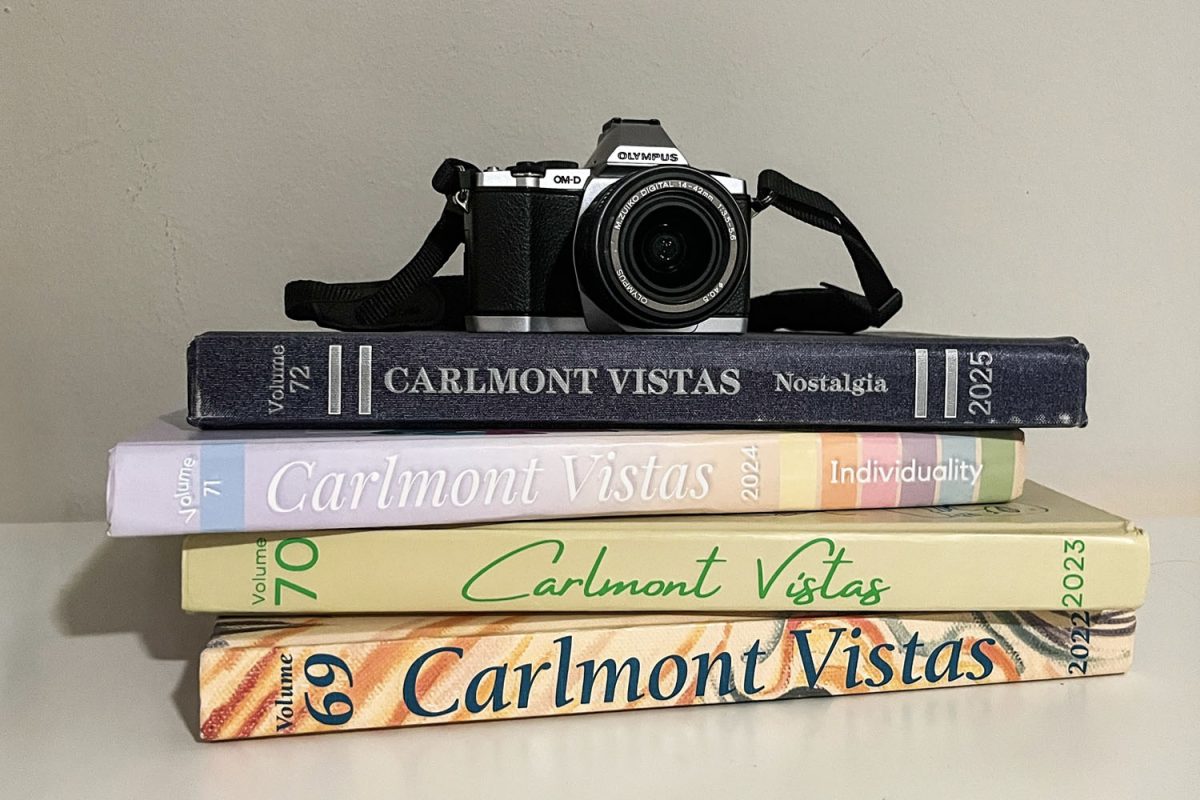
While most students are just starting their second semester, the Carlmont yearbook staff is already sprinting toward the finish line.
With a final purchase deadline set for Jan. 31 and a final submission due March 31, the staff is working against the clock to ensure the school year is fully documented before the book is set to print.
“It’s a pretty busy time,” said Reagan Simon, a sophomore on the yearbook staff. “You have the deadline coming up, and some pages need to get done while some are already done.”
Simon is currently working on a feature page for the freshman girls soccer team. During this time of year, she spends about five hours a week tagging students, organizing photos, and writing captions.
“I kind of just try to capture good moments. It can get pretty hard since it is a fast-moving game,” Simon said.
According to yearbook advisor Joseph Espinosa, this intensity is built into a schedule known as “the ladder,” which outlines when specific pages and tasks must be completed throughout the year.
While the pressure peaks in January, the process actually begins before the school year officially starts, as staff members photograph events such as freshman orientation and senior sunrise.
“There’s got to be kids out there with cameras recording all of this information even before school starts,” Espinosa said.
As production continues, veteran staff members train newer students like Simon to use the book’s digital design software, eDesign, and follow the publication’s style guidelines.
“We train our new kids so that by the time we get near the end of the first semester, these kids know what they’re doing,” Espinosa said.
By January, much of the book is already underway, but some of the most time-sensitive content is still unfinished.
“We have all the senior stuff, like senior quotes, senior ads, senior portraits, and all that needs to be done and dusted during the month of January,” Espinosa said.
The high cost of memories
While the yearbook serves as a record of the school year, its $100 price tag can be a barrier for some students.
Ella Needleman, a sophomore at Carlmont, did not purchase a yearbook this year or last year, as she did not think it was worth the cost. However, Needleman said she would consider buying one in her senior year.
“I think it’s a great way to look back at your high school years,” Needleman said.
For other students, the yearbook is worth the investment. Carlmont sophomore Sara Brittain purchased a copy this year to preserve the memories and trends from the school year.
According to Brittain, the price reflects the quality of the final product, though she acknowledged that the cost may deter some students.
“I would rather it be more expensive and last long enough for it to be a nice memory than cheap and quickly destroyed,” Brittain said. “But I also wish that the price didn’t make it so much of a luxury.”
According to Espinosa, the price reflects the complexity of the manufacturing process.
The process spans months, beginning with student designs, moving to professional technicians who verify the files, and finally heading to the offset press.
Unlike a simple home printing project, the yearbook is produced using offset lithography, a professional publishing method that requires metal printing plates, specific ink colors, and industrial binding.
“It costs thousands of dollars just to get it to the point where the books are being produced,” Espinosa said.
Because of this strict manufacturing schedule, the school cannot print additional copies after the order is finalized, making the Jan. 31 deadline firm.
The final payoff
Despite the stress of deadlines and the long production timeline, staff members say distribution day makes the work worthwhile.
“I’m going to take a lot of pride and joy in it because my partner and I have worked so hard on it,” Simon said.