Eight staff members at Carlmont High School owe their jobs to community donations, not state funding. With the Carlmont Academic Foundation (CAF) having raised $682,000 of its $1.48 million annual goal, GivingTuesday represents a critical push to secure the positions that distinguish Carlmont from a bare-bones public education.
Those eight positions — four teachers covering 21 class sections, and two counselors and two support staff in the wellness center and College and Career Center — directly impact the daily experience of every student on campus. Without them, Principal Gay Buckland-Murray said that the school would face “larger class sizes and fewer electives” alongside a “reduction in counseling and support services.”
“Carlmont would exist without the CAF funding,” Buckland-Murray said. “However, it would look different.”
According to CAF President Tim Hoffman, last year’s GivingTuesday total was just over $55,000. With this year’s event underway, the foundation aims to match or exceed that amount as it works toward its overall goal, with $800,000 remaining to raise by June 30, 2026. Hoffman believes every contribution matters to Carlmont’s staffing decisions for the next school year.
Behind the numbers
The foundation’s impact extends beyond mere headcounts. In cooperation with the Carlmont Parent Teacher Student Association, CAF distributed more than $49,000 in enrichment grants this year to 33 teachers and programs, with an average grant of nearly $1,500.
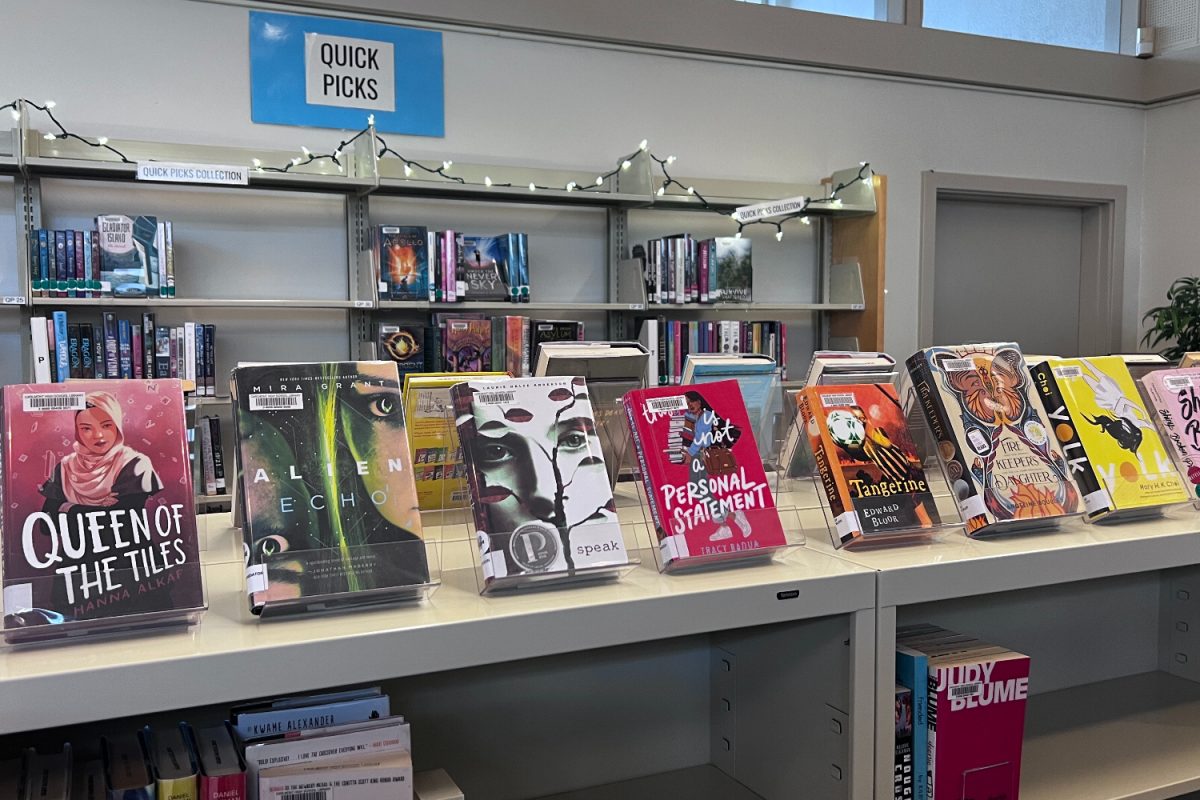
Alice Laine, Carlmont’s head librarian, uses those grants to create specialized collections that the standard library budget cannot sustain, including the Quick Picks selection of high-interest books connected to popular Netflix series and video games that students actually consume. “The foundation tends to pick projects that have the most benefit to the most students,” Laine said.
The 21 class sections funded by CAF span all academic departments, including math, science, English, social studies, and performing and visual arts. According to Hoffman, the specific sections vary from year to year as Buckland-Murray’s team collaborates with the Sequoia Union High School District to determine where the funding has the most impact.
“When donors contribute to CAF earlier in the school year, they provide the funding clarity that Carlmont administrators need in late winter and spring to hire and retain the best people to make Carlmont thrive,” Hoffman said.
Buckland-Murray cannot finalize the school’s employment contracts through the district’s financial department until CAF clears its fundraising target. She needs answers by spring — ideally February or March, finalized by June at the latest — to make staffing decisions for the next school year.
The alternative reality
The consequences of falling short would ripple across campus. Students would pack into larger classes with fewer elective options to explore their personal interests that go beyond the basic A-G requirements.
Well over 95% of CAF’s annual granting to Carlmont comes with no strings attached, leaving the decision to allocate funds to the school administrators. However, the CAF board has set aside reserve funds to fill small gaps if fundraising falls slightly short in a given year, according to Hoffman.
Buckland-Murray emphasized that CAF’s support creates “a more robust experience for our students” where school means more to students than just their academics. Counseling appointments would be stretched further apart, and the wellness center and College and Career Center would shrink their capacity to support struggling students.
“I would be very sad to lose that funding,” Buckland-Murray said. “Without local funding like what CAF provides, every student’s experience would suffer at Carlmont.”
Community investment
California’s public schools face significant underfunding from the state, making local funding from foundations and parcel taxes crucial for balancing district budgets. Carlmont is the largest school in the Sequoia Union High School District, with its enrollment holding steady while the local tax base lags.
“Every year, the individual schools in the Sequoia Union High School District rely upon the generosity of parents, businesses, and other community supporters to bridge the gap between what is needed to fund a quality education for all students and what is available from state funds alone,” Hoffman said. Other district high schools operate with similar foundations, all facing the challenge of insufficient state funding.
Buckland-Murray believes CAF distinguishes Carlmont by its commitment to serving all students, regardless of their academic program. The funding enables smaller classes, additional counseling, and support services that distinguish Carlmont from other high schools.
“Indirectly, all students are benefiting from CAF because of the intangible support that CAF offers to our staff. Knowing that they are valued and the community contributes money to support them adds a sense of pride,” Buckland-Murray said. “It redoubles our commitment to providing a quality public education that can transform a student’s life. Our staff feel supported, and therefore they’ve created an environment that helps support all students.”
Laine suggested that uncertain donors consider the broader impact of their contributions. “It’s a really great way to support our teachers at school,” Laine said.
Buckland-Murray acknowledged the holiday season, which can strain family budgets, but urged the community to recognize public education as one of our greatest assets in creating a positive community.
“An excellent public education has to be constantly worked on and added to,” Buckland-Murray said. “And I think we need to recognize the role of foundations in helping that happen.”