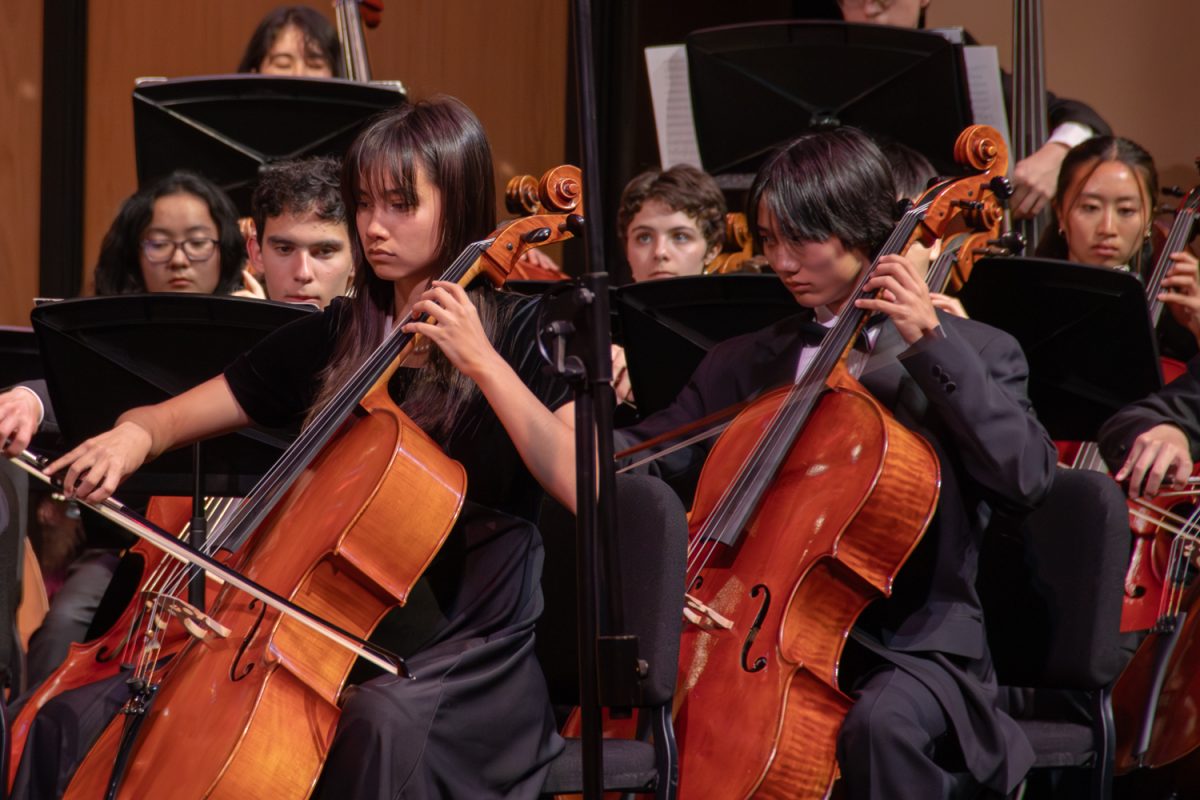
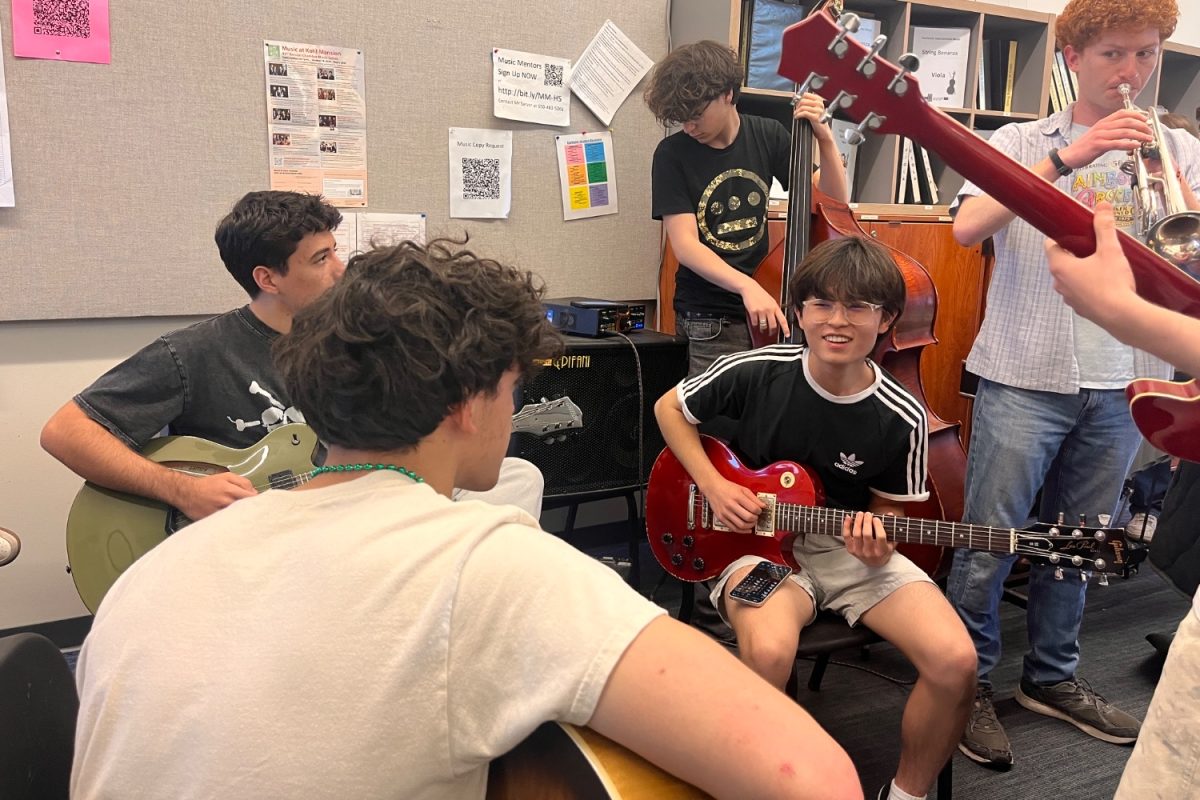
As Chamber Music Night approaches, the focus shifts from the full orchestral sound to smaller ensembles, where each musician takes on greater responsibility.
Unlike traditional concerts, where dozens of players blend into a unified performance, this event strips music down to its core, placing students in small, self-directed groups where every note carries weight. For many performers, that shift is what makes Chamber Music Night both challenging and meaningful.
“It represents a part of the program that gives students more initiative and leadership. In larger performances, everything is directed for you,” said Rocky Lee, a sophomore performing at Chamber Music Night. “Here, it’s more about individuality and what you bring to the group.”
That independence, however, comes with added pressure. Without the structure of a conductor or formal rehearsal schedule, students must organize their own practices, often sacrificing free time to meet.
Lee noted that coordinating an eight-person group required consistent effort, including rehearsals during lunch and flex periods. Still, the payoff made it worthwhile.
“There was one take where everything just clicked,” Lee said. “Hearing all the coordination come together showed that the work we put in was actually paying off.”
This structure demands a different level of discipline. In contrast to regular orchestra classes, where rehearsal is built into the school day, chamber groups require constant self-motivation.
“You have to be a lot more invested. There’s no teacher pushing you, so you really have to focus and make the most of your time,” said Athena Vernon, a senior performing at Chamber Music Night.
That focus extends beyond rehearsals. Because each musician plays a more exposed role, mistakes are far more noticeable.
“You can’t just get away with slacking off. You have to practice a lot more on your own,” Vernon said.
Despite the emphasis on precision, perfection is not the ultimate goal. Instead, Chamber Music Night allows students to explore creativity in ways that traditional performances do not.
“It’s not just about being perfect. It’s about having fun, being expressive, and showing your musicianship,” Vernon said.
For some, this year’s performance carries additional significance. As Chamber Music Night approaches, it represents both a culmination of students’ growth and a chance to challenge themselves in new ways.
“I’m playing the double bass. I’m not very familiar with the instrument, so I try to practice more so I can perform well,” said Seoha Kim, a senior performing at Chamber Music Night.
Beyond technical development, the experience also strengthens relationships between performers. Many groups are formed among friends, creating an environment that balances pressure with familiarity.
“You practice with people you’re close with, and it creates a stronger bond,” Kim said.
Ultimately, Chamber Music Night reveals a different side of the music program, one that prioritizes student initiative over formal structure. While traditional concerts showcase precision and unity, this event highlights individuality and collaboration on a smaller scale.
“There’s a more fun, student-led aspect to it. We have more to offer than just the formal side of music,” Lee said.