
The movie “Avatar: Fire and Ash” directly picks up from the previous movie “Avatar: Way of Water.” In the new movie, the characters learn to deal with the death of a cherished loved one, and they get into conflicts with their new rivals, the Ash people, along with the humans from the first two movies.
The science fiction movie franchise “Avatar” was written and directed by James Cameron, who has also directed many well-known movies like “Titanic” and “The Terminator.” When creating the movies, James Cameron’s goal was to create a visually immersive experience that would push the limits of technology by using photorealistic computer-generated imagery (CGI) and stereoscopic three-dimensional (3D) images, according to the New York Film Academy.
From the tops of rocky and intricate floating islands to the depths of the clear blue sea, the cutting-edge filmmaking technology is behind it all, allowing for immersive and extraordinary experiences.
The movie-making technology
When creating the movie itself, photorealistic CGI and stereoscopic 3D were crucial in the design since the CGI allowed for the scenes to look hyperrealistic and mesmerizing through the textures and lighting, and the stereoscopic 3D created the illusion of depth by using two 2D images that, when seen through a human’s binocular vision, appear to be 3D.
Another thing that was crucial to obtaining the otherworldly feeling that the designers intended to make people feel was the high frame rate at which some of the movie was created.
Callen Vandenberg, a content producer who focuses on cinematography, explained in Y.M. Cinema Magazine that about 40% of scenes were mastered at 48 frames per second to ensure that the film looked smoother and to allow the water scenes to look more realistic.
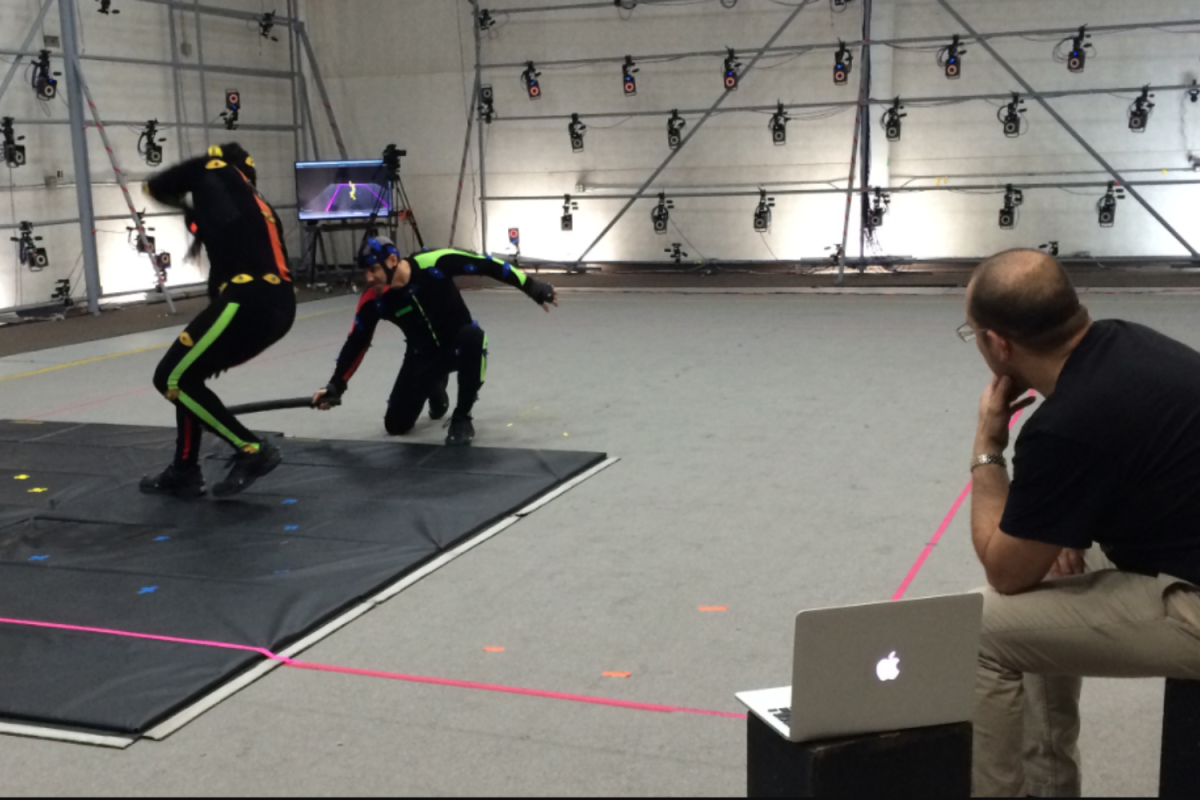
To actually capture the footage of the actors, they used motion capture by putting dot-like sensors all over the actors, and when the actors finished recording a scene, the crew handling the data would then map them onto the hyperrealistic digital characters. This ties together the use of new innovative technology that created many realistic features on a virtual world, while also using real actors and their movements to make the world feel actually alive.
Looking at all of the reviews that can be seen about the film, and the other movies in the series, what makes “Avatar” special is the use of advanced technology to create impressive experiences that are like no other, whether it be creating realistic movements for virtual characters or creating enchanting sceneries that change the way science fiction is viewed.
Audience and critic reactions
Looking specifically at the newest release, “Avatar: Fire and Ash,” online movie reviews have been mixed. The verified critic Leonard Maltin left a negative opinion of the movie on Rotten Tomatoes.
“Any filmmaker who asks a moviegoer to sit still for more than three hours had better have a really good reason. James Cameron does not. I lost an afternoon to the latest ‘Avatar’ movie, and I can’t get it back,” Maltin said.
Along with the reviews, the general consensus of the movies has been deteriorating in the critics’ eyes, but to the audience, the movies have remained consistent or better.
Adelyn Castelli, a junior at Carlmont High School, viewed the “Avatar” movie as very positive, since it is one of her favorite series.
“I really enjoy the ‘Avatar’ movies; my favorite is the first movie. I really love how they use CGI, computers, and technology to create characters. I feel like it’s super cool. I’ve never seen anything like it,” Castelli said.
When asked about the design of the movie, Castelli commented on her approval of the scenery in the movie and how it was one of her favorite parts, as it made it so much more interesting and immersive.
“I love the scenery in the movie. It always shocks me every time, like in the first movie when they’re in a helicopter, and they’re flying through the clouds, and then the floating mountains in the movie; it’s so pretty, and I love how the planet is designed,” Castelli said.
Ophelia Rymill, a sophomore at Carlmont, talks about her personal connection to the scenery in “Avatar” and what that means to her.
“I really like the underwater scenes since I have a fear of water, and it kind of helped me get over that in a way,” Rymill said.
Alice Richez, a sophomore at Carlmont, shares her opinion on the third movie, “Avatar: Fire and Ash,” which solidifies the general opinion that was made by critics and audience members.
“The plot was pretty nice, although I don’t think it’s the best out of the three. I think it was super good in general. It looks super realistic, and I watch the behind-the-scenes things, and it’s super cool how they switch it up,” Richez said.