Two longtime Carlmont math teachers are preparing to retire after decades of teaching students and shaping the school’s math program.
Math teacher Robert Tsuchiyama has taught at Carlmont for 37 years, while math teacher Michael Skrable has taught for 31 years, covering classes ranging from algebra to multivariable calculus. Together, they have taught generations of students across different grade levels.
Their retirements come as schools across the country face increasing teacher turnover, often driven by stress, financial planning, and changing classroom expectations. For both teachers, the decision to retire came after careful reflection on their careers and future goals.
“It’s hard for me because I still really enjoy what I do. However, I did tell myself a few years ago that when I get to that age, I need to retire,” Tsuchiyama said.
Although Tsuchiyama originally planned to become an engineer, he later returned to teaching, something he said had always been at the back of his mind. Over the years, he said, some of the most meaningful moments came from the impact he had on his students and seeing them grow academically and personally.
“It’s really rewarding when you work hard with a tough class, and they come back the next year to say hi,” Tsuchiyama said. “I thought they hated me for pushing them to be better students, but it turns out, they actually appreciated it.”
Skrable also shared a similar perspective about what made teaching rewarding.
“If I think of a hard conceptual question for students to consider and they get it right, I would say that’s probably the most satisfying part of teaching for me,” Skrable said.
The decision to retire didn’t come lightly. However, after years of lesson planning, teaching, and grading, retirement represented an opportunity to slow down and focus on other parts of life.
“When you think of retirement, you get to decide what you want to do and when you want to do it, which is nice as opposed to being on the demands of what the job tells you,” Skrable said. “As a teacher with high energy, I’ve noticed that I’m starting to tire out a little faster than before.”
Tsuchiyama reflected a similar sentiment.
“My wife and I didn’t do a whole lot of traveling because we always worried about expenses, being stressed out, or didn’t have the time,” Tsuchiyama said. “But, after retirement, we want to spend that time together and travel to all these places that we have talked about.”
While Skrable said he will miss lecturing and interacting with students during discussions, he is ready to let go of certain aspects of his profession.
“I definitely won’t miss the stress of trying to cram everything I need to do into one class period,” Skrable said. “The grading is also not especially fun.”
For many public school teachers in California, including both Tsuchiyama and Skrable, understanding how pension benefits are calculated is also critical.
“Many teachers approaching retirement should use a retirement calculator to see how much they’ll receive,” Tsuchiyama said. “Some teachers consider leaving before the premium retirement age without realizing how big the difference can be. Retiring at 55 rather than 62 can significantly reduce pension benefits.”
Retirement planning also involves several logistical steps, including coordination with the school district and the California State Teachers’ Retirement System.
“You need to meet with the company in charge of retirements to go over finances, and after that, the school district to complete the retirement process,” Tsuchiyama said. “I have a checklist of things I should do before retiring.”
The impact of their retirement extends beyond schedules and course assignments. For many students, teachers Tsuchiyama and Skrable helped shape how they view math and learning.
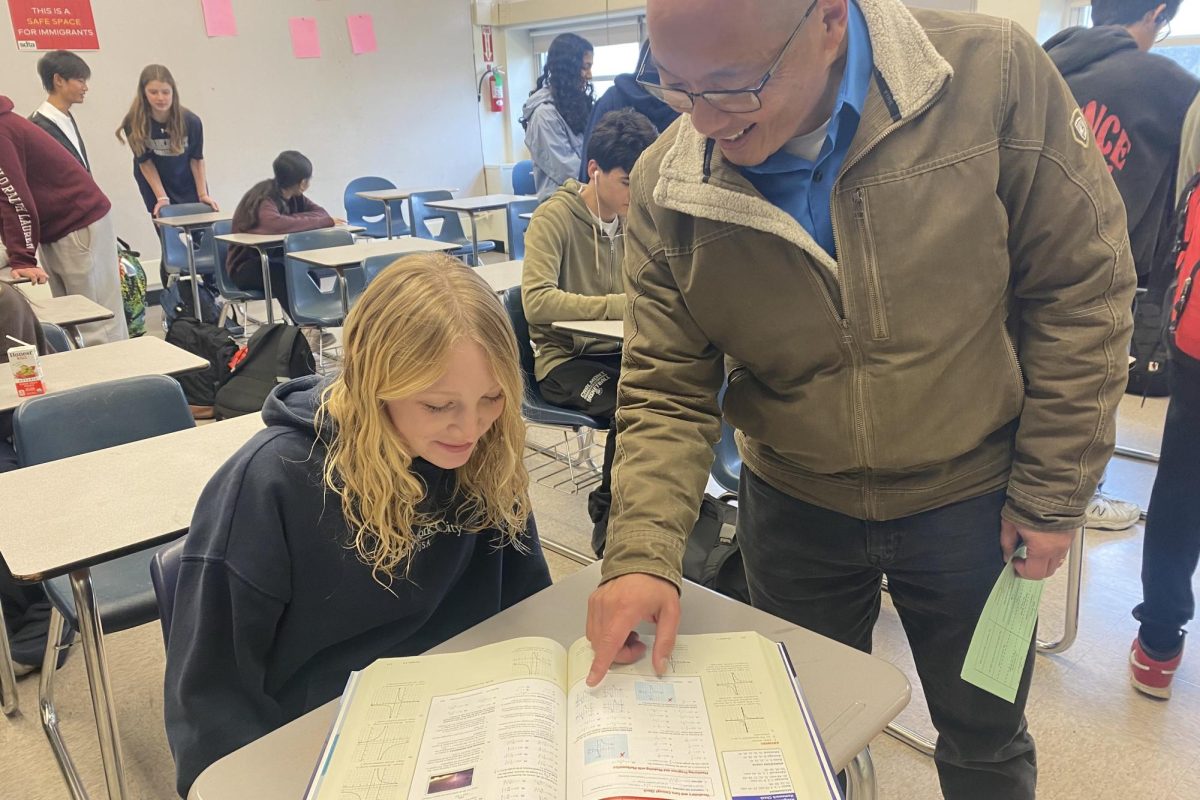
“Normally, we spend the beginning of class going over homework questions, which is really helpful because he explains them in a way that helps us understand how to do them in the future,” said Josephine Anderson, a sophomore in Tsuchiyama’s class. “Whenever anyone asks a question, he never treats us like we should just know the information.”
Beyond academics, students said that the classroom stood out for its welcoming atmosphere.
“He has made math a class I genuinely look forward to,” Anderson said. “Every time I’m in his classroom, it feels like a safe space to ask questions, and he really cares about his students and wants us all to succeed.”
Although the news of retirement was difficult to hear for some students, like Anderson, she acknowledged how Tsuchiyama’s teaching will continue to influence her future.
“I was really sad because it meant I’d never get to have him as my math teacher again,” Anderson said. “I feel bad for future Carlmont students who won’t have a chance to have him. I think my next few years of math at Carlmont will be easier because I now have such a great base to build off of.”
As Tsuchiyama prepares to leave the classroom at the end of this school year, and Skrable prepares to retire within the next one to two years, they said they will miss their relationships with students and colleagues the most.
“I’ve had a job I just absolutely love because of the students,” Tsuchiyama said. “It’s because of the people I work with. I have been at such a great school where the students are so respectful, and the teachers are so passionate.”