
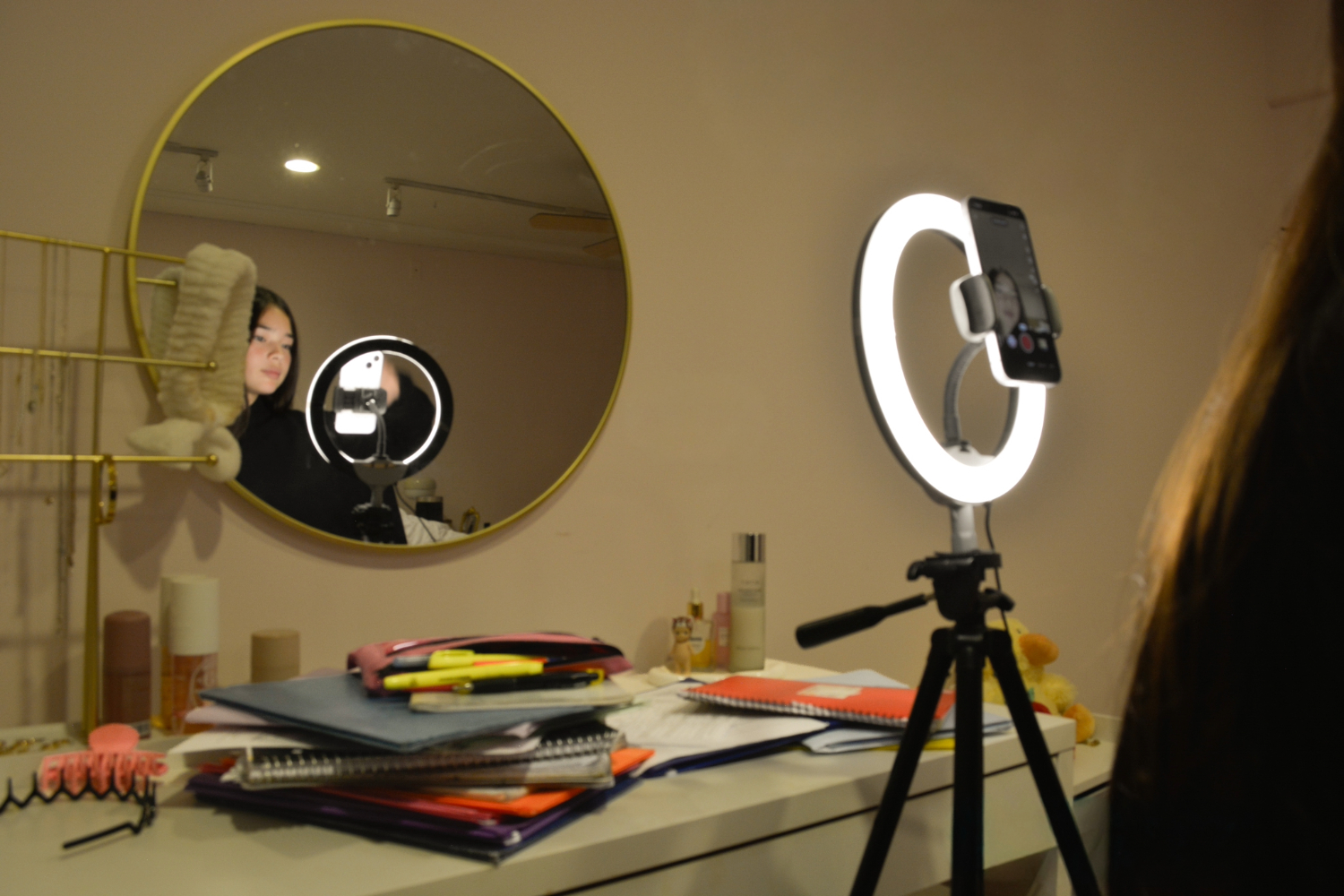
Monday, three videos. Tuesday, four videos. Wednesday, two videos and a brand deal. Thursday and Friday, three more.
For influencers like 16-year-old Elizabeth Goldberg, this isn’t a hectic week; it’s normal. Many teen influencers adhere to a similar weekly posting schedule to stay relevant and attract their fan base.
Over time, this cycle becomes familiar to both the creator and the audience watching from behind a screen.
For many teen viewers, it begins with a single video and evolves into a feed filled with influencer events, dancing videos, and romanticized “day in the life” vlogs. Little by little, social media is not only being used for entertainment but also influencing how young people imagine their careers.
As teens start thinking about careers, social media is offering new possibilities that didn’t exist a decade ago. From posting videos to building personal brands, many are exposed to new viewpoints on careers through social media.
The real life example
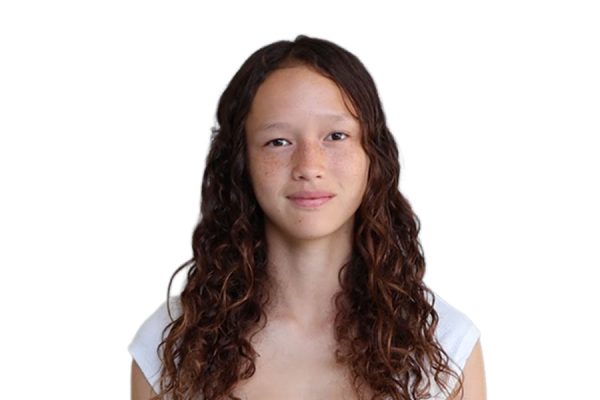
Goldberg, also known as @lifewith.ellibelle on TikTok and Instagram, is a 16-year-old high school influencer. She started posting videos on Instagram during the summer of 2024.
During this time, social media influence was beginning to gain traction, and many teens were starting to establish online presences.
“Originally, my mom created an account called ‘Life with Five Kids’ probably around five years ago, and she was just posting our life on there so we could go back to it when we are older. She had some videos that went viral, and after that, I wanted to start posting videos because I saw a lot of other teenagers becoming influencers,” Goldberg said.
After attending a Pink Palm Puff influencer event in August of 2025, Goldberg said she met many of her mutual connections and gained more opportunities to work with other brands and attend their events.
Due to the long commute she would have to make from Hawaii to California for these events, her family ultimately decided to move to California in the hopes of a future full of opportunities for Goldberg and her siblings.
A study conducted by Ubiquitous Influence reveals that states such as California, New York, Florida, and Texas are home to the most social influencers today, with 31% reporting living in California.
In areas with a higher concentration of influencers, there are better chances for success and recognition. This includes connections and opportunities such as brand partnerships and networking events.
Goldberg has also recently switched to online school. Not only to focus on her social media career, but also to focus on developing products for her recently established brand, Tan and Beach.
Although there are many benefits to being present on social media, there are drawbacks as well.
“When I lived in Hawaii, I was made fun of a lot for being on social media. When we moved to California, I really wanted to go to school for the experience, but I felt it would be dangerous to go to in-person school because of how many people would know me. In the end, my mom and I decided together, and now I get to focus on social media and my business when I’m home,” Goldberg said.
Goldberg said that when she first started posting videos online, she received a lot of hate both online and offline, which was initially hard to manage.
“When I first started social media, I was getting a lot of hate. It was really difficult for me, and I didn’t know how to handle it. My mom told me not to look at the comments, and I realized that these people saying hateful things are just saying it behind the screen, and they can’t say it to your face,” Goldberg said.
Springer Nature surveyed influencers, and the results showed that over 70% had experienced online harassment or toxic criticism.
Despite the downsides, Goldberg enjoys many fun aspects of becoming an influencer. These include meeting her role models, participating in brand deals, and meeting new friends in the industry.
According to a Pew Research Center study, 24% of teens believe that the effects of social media are, for the most part, positive for people their age.
“I always saw other influencers doing brand deals, which is something I have always wanted to experience. And now when I go to events, I meet people that I watched when I was younger, and I freak out because I would have never imagined I would be at an event with them,” Goldberg said.
The impacts
As the internet’s presence has grown over time, role models have evolved in response to the increasing number of various influencers on social media.
A Pew Research Center study reports that 85% of parents say their child watches YouTube, and 51% report that their child uses it daily. With fewer restrictions, there are more opportunities for children to encounter different people online.
“Social media influencers are the new athletes and pop stars. Adolescents are starting to dream of having a job like them, making a lot of money, and having glamour and prestige, without realizing how rare it is to happen,” said Drew Cingel, an associate professor and graduate advisor for the Department of Communication at the University of California, Davis.
Not only that, but many media jobs are in high demand due to the rise of social media and the internet. In fact, media and communications-related jobs are predicted to grow 6% from now to 2031, according to Powerful Geography. This includes jobs like sports announcers, film and video editors, lifestyle influencers, and journalists.
However, many adolescents don’t often see the real sides of jobs through social media. Many creators that youth look up to only share the positive aspects of their lives, and frequently hide the hardships of their careers and the journey that brought them to where they are today.
“Social media shows a certain type of life that does not necessarily match with reality — it shows people in good jobs, with lots of friends and income. I think that’s what shapes adolescents’ sense of the person that they want to grow up to be, and not necessarily in a helpful or adaptive way,” Cingel said.
Additionally, with the changing role models of the past few years and the rapid advances in technology, many elementary- and middle-school-aged children are beginning to aspire to other jobs.
As a result, instead of dream jobs being firefighters, doctors, or singers, many are beginning to aspire to be social media influencers, streamers, or actors.
Takeaway: Realistic or ambitious?
Many online users who look up to influencers don’t realize the work required to become one.
“There are heavy user amounts on social media, and because of this, many are very familiar with the influencer economy. For them, there is a lot of status associated with the particular role in our culture now, and these influencers are the role models they see,” said Craig Watkins, a professor at the University of Texas at Austin.
A study conducted by Morning Consult reveals that approximately 57% of Gen Z aspire to become influencers, yet only 3-9% of them actually identify as such.
For many, the dream of becoming an influencer is incredibly appealing, even if it’s challenging to achieve. Additionally, the increasing presence of social media influencers is altering the way young people perceive success.
“There is a range of influencers via social media. Some are at the top who get a lot of brand recognition and attention, and then on the other hand, there are people who rarely get seen and virtually make no money. It’s a difficult ladder to climb to get to that top level, and it might be perceived as easy to grasp because many influencers only show the highlights of their lives,” Watkins said.
According to the National Library of Medicine, access to social media can lead to changes in adolescents’ behavior, as it interacts heavily with the education and entertainment worlds.
Online influencers often showcase a luxury lifestyle, prioritizing wealth, appearance, and instant fame over traditional notions of success, such as stable careers and education.
“Social media shows certain portrayals of others’ lives, which influences adolescents’ sense of what is normal and the type of person they should aspire to be,” Cingel said.
While becoming an influencer may seem glamorous, it requires hard work and resilience, just like any other job. For teens like Goldberg, success means not just going viral, but also learning how to balance ambition with reality.
“The key point to influencing is to be yourself and not try to hide who you are. In the end, everything is public, so don’t be scared, and everyone can truly be an influencer if they really try,” Goldberg said.