
Several cases of pertussis, commonly known as whooping cough, have been reported at Carlmont High School, prompting school officials to notify students and families about possible exposure to the contagious respiratory infection.
The school first became aware of the cases in late February, according to the Carlmont health office. The cases reported have centered around freshmen classes and classes attended by infected students.
“It is spread by droplets that are airborne, which is very contagious in an enclosed environment,” said Erika Quintana, the health aide at Carlmont. “A cough that does not abate, respiratory difficulty, and fatigue are common symptoms.”
According to the Centers for Disease Control and Prevention, pertussis is a contagious respiratory illness caused by a bacterial infection that releases toxins, leading to airway swelling.
Students typically receive protection against pertussis through the diphtheria, tetanus, and acellular pertussis booster vaccine at an early age. Although pertussis is commonly associated with children who aren’t vaccinated, teenagers and adults can also become infected as immunity from vaccinations fades over time.
Despite Carlmont’s high vaccination rates, most of the reported cases have occurred among vaccinated students.
“Most of the cases are occurring in vaccinated individuals,” Quintana said. “Many people travel during breaks, which exposes them to areas with lower vaccination rates that have evolving strains of pertussis, causing the climate for infection.”
To limit further spread, the health office has been working with county officials to report confirmed cases and send notifications to affected classes so individuals can monitor symptoms and seek testing if necessary. In fact, on March 4, an email went out to the community, advising them on the spread of pertussis.
“We report new cases to the county in order to get a timeline of the infectious period. Since the outbreak reached a number, we informed the general population as a precaution to get tested if symptoms occur,” Quintana said. “People are testing more frequently, and households are taking antibiotics as prophylaxis if they have an infected individual.”
The illness has also affected daily classroom routines, as some teachers report increased student absences.
“There have been several students coughing, and very few wearing masks,” said Madhukar Sodlapur, a Carlmont math teacher. “Several of these students have been absent in the following days.”
While classrooms can make respiratory illnesses easier to spread, teachers have been taking steps to minimize the risk.
“It can make it easier to spread because they’re in a confined space, but since we all have good heating, ventilation, and air conditioning, and air filters, it’s not the worst place to be,” Sodlapur said.
Teachers like Sodlapur also encourage students to stay home if they are sick to prevent the illness from spreading to others. When students do miss class, teachers often help them catch up during extra support periods.
“There are just fewer people in class, and I have to spend more time in flex or lunch helping students catch up,” Sodlapur said.
Many students say the illness has been noticeable in some classes, particularly through absences and increased caution around classmates who appear sick.
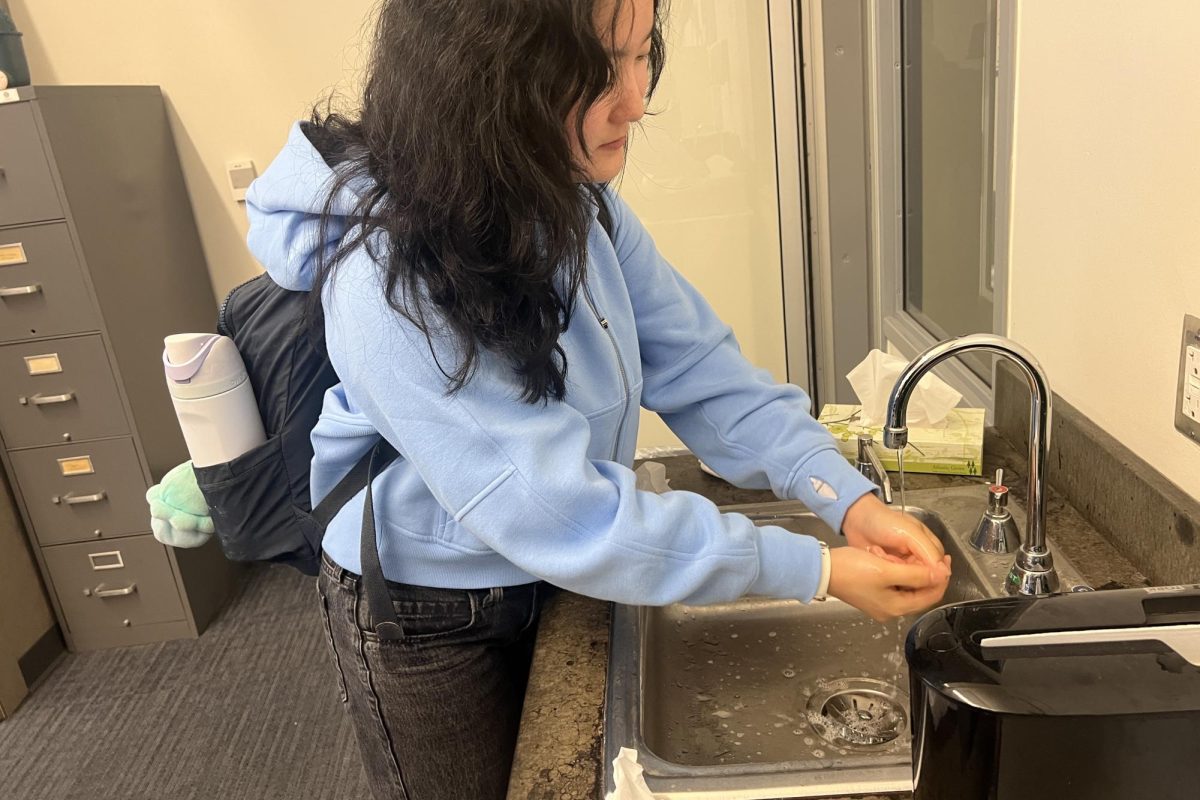
“I learned about it from my friend who got an email saying we were exposed to the whooping cough, with someone in our class being infected,” said Gregory Choong, a Carlmont freshman. “I started washing my hands more and avoiding people who were coughing a lot.”
While Choong said that he took some precautions after hearing about the exposure, he also noted that many students do not appear overly concerned about the situation.
“I’ve seen some people make jokes about it, but others are genuinely worried,” Choong said. “It was surprising to find out someone close to you was sick, though.”
Similarly, other students have also noticed the impact of the illness more directly in their own classes. Alice Richez, a Carlmont sophomore, said absences and caution around classmates have affected her day-to-day learning.
“When I’m sick, I tend to miss a lot of assignments and important information that I need to do well academically. I’m sure it’s the same for other people,” Richez said. “Especially since I’m in classes that are participation-heavy, it can be hard to keep up.”
She also expressed concern about the illness’s contagiousness, emphasizing the importance of taking precautions.
“It’s kind of scary that it’s so contagious,” Richez said. “Students should be more careful because it can really spread quickly. I’ve noticed more absences because of sickness.”
As the outbreak continues, students and staff are reminded to remain vigilant and take extra steps to protect themselves and others from further spread.
“Students should stay home if sick, get tested, wash their hands frequently, and follow proper precautions,” Quintana said. “This helps us to reduce further spread of the illness and keep everyone safe.”