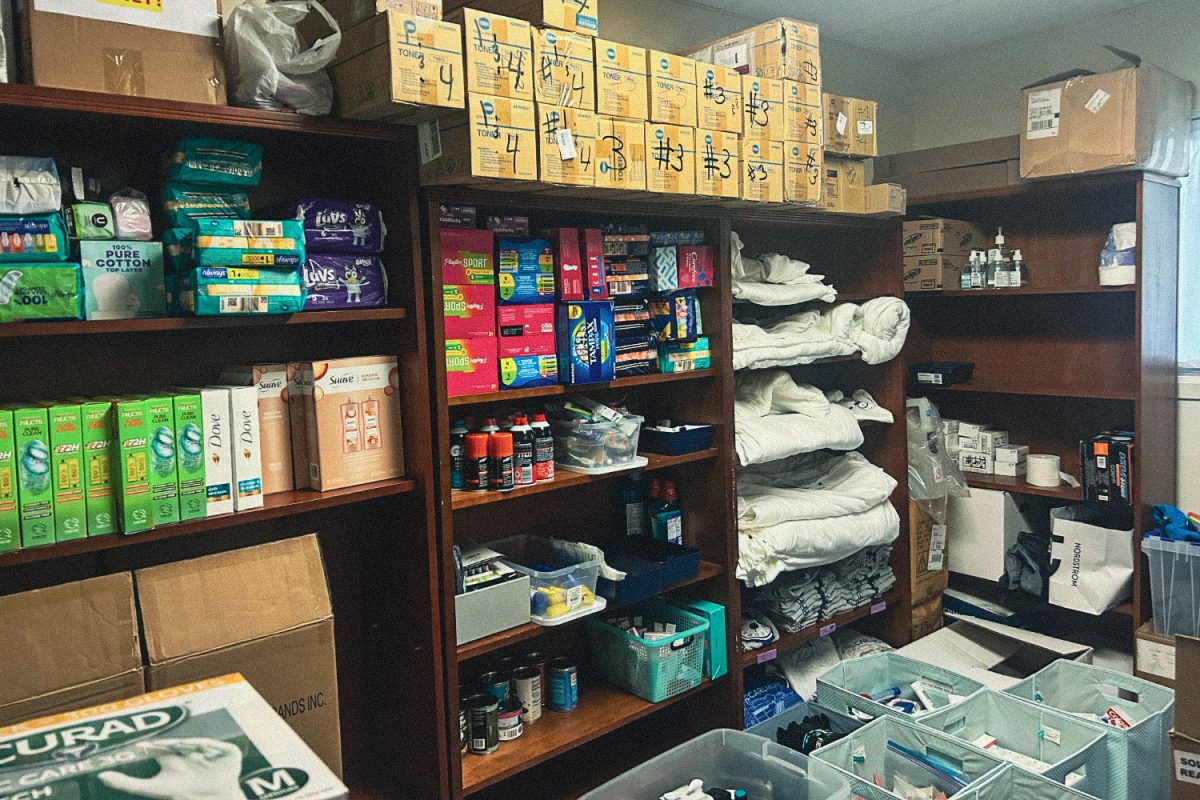
Tucked inside Carlmont High School’s main office, a food pantry has become a vital resource for students by offering snacks, hygiene items, and a welcoming space for anyone in need.
Approximately 870,000 people in the Bay Area are experiencing food insecurity, which accounts for around 12% of all Bay Area residents who must choose between paying for food, prescriptions, or rent, according to the Koret Foundation. This affects students, according to an article by the National Library of Medicine, which reports that hunger prevents students from meeting higher-level learning needs as it is linked to reduced focus, lower participation, and decreased academic performance.
Carlmont addresses this issue by providing assistance to students who face food insecurity. According to Irma Abelt, an assistant to the Carlmont vice principal, the Carlmont food pantry was established over ten years ago, initially offering snacks to students who could not afford breakfast and lunch. Since then, the food pantry has expanded its services, supported by funding from Carlmont’s Parent-Teacher Student Association (PTSA) and parent volunteers.
“Kids get hungry,” Abelt said. “There was no free breakfast or free lunch for everybody, so we had just a snack or two for those kids that did not have the money to buy something.”
As the need increased, the pantry expanded to include not only food but also hygiene products, clothing, and shoes for students, according to Abelt.
“They know that there is a safe place to come and ask where they are not going to be judged,” Abelt said. “The pantry has grown into meeting much bigger needs.”
According to Abelt, community support, such as from the Associated Student Body (ASB), plays a crucial role in keeping the pantry running.
“Everybody wants to pitch in to make sure the kids have something,” Abelt said. “ASB is amazing, coming together and creating community and clubs in order to get more service for the students.”
Abelt explains that while the PTSA and parent volunteers consistently stock the pantry, a rise in demand has created challenges for staff managing the pantry.
“We run out of food sometimes, and we’ve noticed that more students are in need,” Abelt said.
The pantry’s impact extends to classrooms as well. Biotechnology teacher Leslie Burndon notes that she has started keeping snacks on hand to support students who arrive hungry.
“I know that it’s hard to focus when you’re hungry,” Burndon said. “I don’t ever want a student to not be able to focus in class because they’re hungry.”
According to Carlmont sophomore Sara Saheb, being hungry negatively impacts her ability to learn.
“I can’t learn well because I’m focused on wanting food,” Saheb said.
Saheb has never heard of the food pantry and suggests the school do a better job of advertising it to students.
“During announcements before lunch, they could advertise for it, and they could put up posters around school,” Saheb said.
Abelt notes that with more donations, snack access can spread to more locations on campus, such as the Wellness Center and Counseling Office.
“It would be great if those areas could also have snacks so students in crisis have other spaces to get food,” Abelt said.