
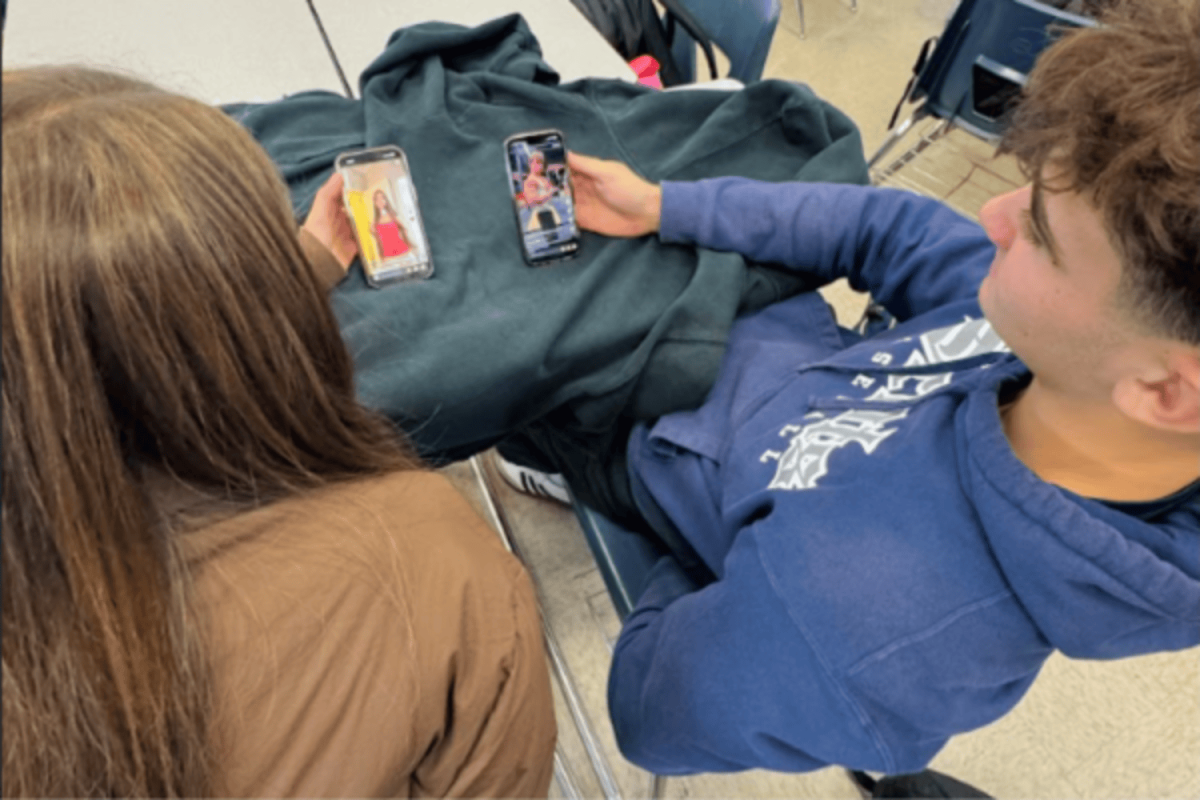
Every day, teenagers scroll through social media, liking and sharing posts that spread worldwide. They use the same apps and see the same videos, but their experiences can be very different.
According to a PubMed Central study, “the nature of body dissatisfaction experienced by girls and by boys tends to differ in that concerns expressed by girls typically focus on attaining a thin appearance ideal, whereas boys’ appearance ideal tends to be lean and muscular.”
Social media plays a significant role in teenagers’ lives. It helps them stay connected and find support when needed, but it can also harm their body image, along with their mental health. A 2025 Pew Research Center study found that 25% of teen girls and 14% of teen boys said social media negatively affects their mental health. In particular, 33% of girls and 20% of boys said social media makes them feel worse about their appearance.
“Social media messes with our self-concept. It affects the way we see ourselves and creates a disconnect,” said Rom Brafman, a psychologist and co-author of the bestseller “Sway and Click.”
Additionally, 44% of parents say that social media is what most affects teenagers’ mental health.
Boys’ self-image
Body image issues are also a major concern connected to social media use. Girls often feel pressure to be thin, while boys feel pressure to be muscular.
Research indicates that boys experience body dissatisfaction linked to social media, especially when they internalize the muscular ideal. Those who follow fitness or sports accounts are more likely to compare themselves to unrealistic body standards that they see online. PubMed Central reports, “For adolescent boys with high muscular-ideal internalization, social media use is significantly associated with greater body dissatisfaction.”
Zachary Brier, a student at Carlmont High School, also feels these pressures.
“Social media definitely pushes an ideal. Sometimes it makes me want to work out more just to feel stronger. Pretty often, I see fitness stuff, but I don’t take it too seriously since the filters and fake edits make everything unrealistic,” Brier said.
Girls’ self-image
Girls face a different, yet equally harmful, type of pressure.
“Looks become more important than they should be. Teen girls hyper-focus on certain areas and feel bad about themselves unnecessarily,” Brafman said.
Kaelin Kurt, a student at Carlmont, describes facing similar challenges, explaining that she often compares herself to girls her own age rather than to older ones.
“Seeing a lot of girls on my For You page makes me compare myself to them. It definitely can affect you,” Kurt said.
She also mentioned the lifestyle pressure she sees online.
“People who are really out there traveling, going to the gym a lot, make me rethink what I’m doing. That stresses me out,” Kurt said.
Like many girls, she feels the weight of beauty expectations.
“TikTok shows girls who seem perfect and sets a standard for how people think they should look, or how I should look at this age,” Kurt said.
Perspective from a psychologist
Brafman describes why these feelings are so common.
“People tend to post great things, not average ones. This skews our vision of reality. Girls face pressures to look a certain way. Society tells them they need to look put together,” Brafman said.
Both boys and girls are influenced by social media, which sets certain standards for physical appearance. Teens who spend significant time posting or scrolling through selfies or beauty content often feel worse about their bodies and overall well-being.
PubMed states that the more teens compare themselves to others online, specifically peers in their age group, the more insecure they feel.
“Social media creates a competitive, comparison-based environment. You compare yourself to others and think, ‘I don’t have what they have. I’m not good enough,’ and that creates anxiety,” Brafman said.
Outside perspectives
Parents share similar concerns, especially for girls. Many worry about bullying, body image pressure, and excessive screen time.
“When you’re young, your sense of self is still forming, so bullying is very damagin. I see adults who still feel affected by comments made about them when they were younger,” Brafman said.
Leslie Schneider, a Carlmont parent, sees these pressures affecting all kids.
“I’ve seen many of my friends’ sons dealing with body shaming, not just girls,” Schneider said.
“Where girls might worry about a perfect, slender image, boys face a different pressure. They want to be muscular and fit. It sets a completely unrealistic standard that kids are trying to achieve, regardless of whether they’re boys or girls,” Schneider said.
While social media helps teens connect with friends and family online, it can also make them feel insecure and unhappy about their bodies and overall lifestyle.
“I remind myself that most of it is edited or staged, so it’s not worth stressing about,” Brier said.