
Last winter, for the first time since 2019, the $1.50 boba tea and lantern-speckled lampposts of urban China found their way to me again.
The lanterns, for one, aren’t to be underestimated. There are so many of them that they could be mistaken for little, burning, orange stars, wrestling with the Sun to assert their prominence. It’s too bad that the light pollution in urban China is so severe that it obscures the actual stars. But the lanterns, pooling at the lip of the skies in their brilliant fever, make for a half-decent substitute.
After more than seven years of video calling my uncles through WeChat, I finally got to see their faces again as I stepped out of the Guangzhou Baiyun International Airport and into a flurry of crackling Mandarin. I had to reach out and feel them for myself to make sure that I wasn’t just dreaming some kind of wistful dream.
Our years of shipping packages across the Pacific Ocean during holidays, weddings, birthdays, and graduations had finally amounted to something real. Having time-traveled 12 hours into the future, I had forgotten how invigorating it was to truly immerse yourself in a foreign culture.
At American school, I tend to shy away from speaking about my Chinese heritage for the fear of sounding “too Asian,” a phrase used as an insult more often than not, pointed at kids who are math geeks and try-hards and goody-two-shoes. Rather, America loves to coin slang terms like “Asian Baby Girls” (ABGs) and “Asian Baby Boys” (ABBs), which are nothing but glorified labels for whitewashed Asian American adolescents.
To me, it is as simple as propaganda in plain sight: encouraging us to walk the historical path of assimilation that the Chinese railroad workers first treaded upon, followed by our very own mothers and fathers. Sure, acculturation has transformed us into a “model minority” for the whites to gaze and gawk at, but at what cost?
I don’t blame my Chinese American friends who don’t feel as close to their heritage. We all sat through the same Chinese classes, outlined the same 13 dynasties, and memorized the same poems from the famous Tang poet Li Bai, but not everyone got the opportunity to experience the culture firsthand. Reading from a textbook about how the Four Treasures of Study are the brush, ink, paper, and the inkstone — no matter how detailed — can never compare to the tangible act of flicking your wrist across ink-tinged red couplets during the Spring Festival.
Some of my fondest memories growing up were wrapping tender Zongzi during the Dragon Boat Festival, picking the egg yolk out of mooncakes during the Mid-Autumn Festival, watching the California Dragon Boat Association coast across the Foster City lagoon, and exchanging red envelopes for the Chinese New Year.
While other children watched “Paw Patrol,” I watched “Big Ear Tutu,” “Balala the Fairies,” and “Boonie Bears.” Those are the moments that bestow children with their love for a specific culture. For me, that precious childhood curiosity and early eagerness belonged to China.
Still, having lived in America for so long, going back each time still gives me a cultural shock. I’ve come to appreciate that element of surprise. It’s like being a child again, experiencing new things for the first time and not taking them for granted — the simple art of being mesmerized.
Last winter, we went back to Guangdong to visit my mom’s side of the family. My aunt took me to a flea market, and I learned for the first time, wondrously, how to haggle like a native and how to curse.
It turned out, my grandma’s secret plan was to appease me with a shopping trip before bringing me to see a Chinese medicine doctor. He read my palms enthusiastically and told me that I was going to find a respectable husband before diagnosing me with 20 different conditions and deficiencies that I frankly do not remember the names of. It had something to do with the feng shui, I think.
“The direction of your bed is inauspicious,” he apprised. “Young women need to sleep in the northwest direction.”
I admired his confidence and nodded with covert skepticism. He then wrote me prescriptions for about 30 different traditional Chinese remedies, including alcohol-infused snake flesh. That’s when I realized that I was still an American after all — I’ll stick to beef, chicken, and pork, thank you very much.
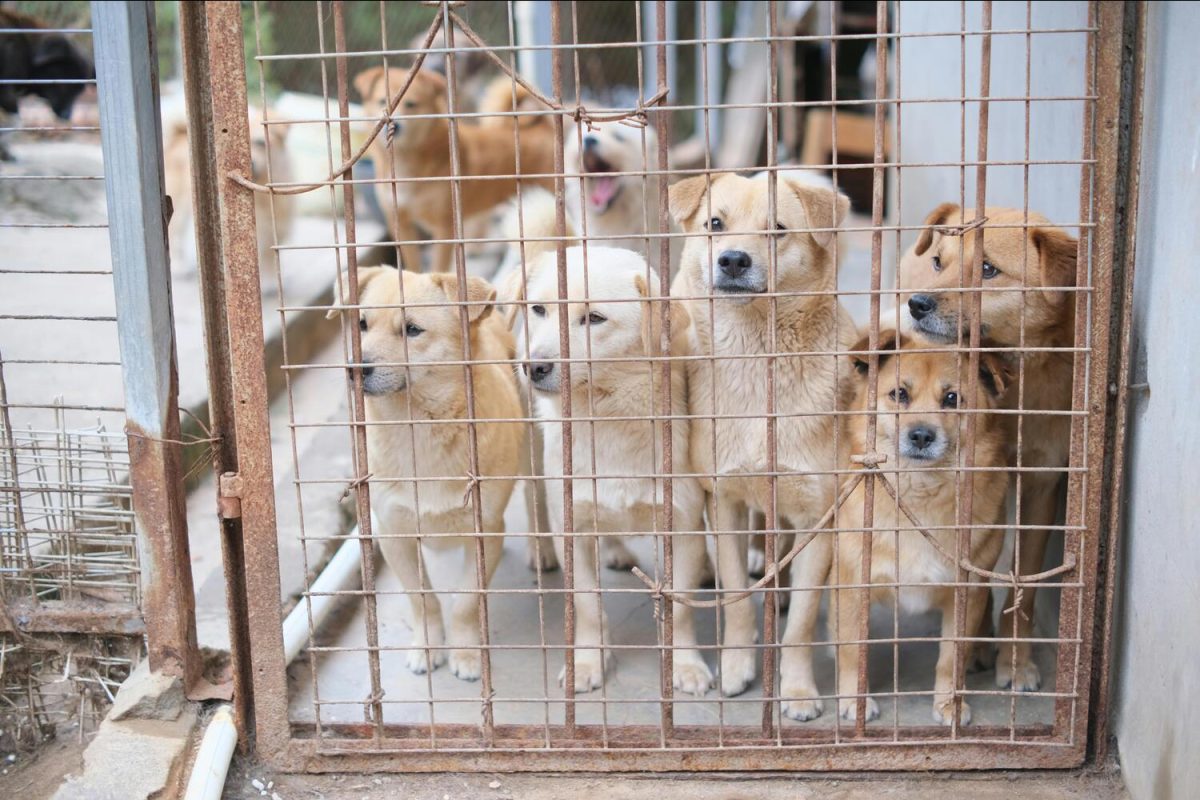
When I went back to China in the summer, I visited Hebei for a cultural immersion camp. It was interesting to see the difference between rural and urban China. I’ll let you in on a secret: the difference is in the dogs. The dogs in rural China are far more free-spirited; they’re much too pampered in the city. But I digress.
In Hebei, I got to wear this beautiful traditional silk Hanfu at the Grand View Garden in Beijing, where the famous Chinese movie “The Dream of the Red Chamber” was filmed. We also attended a Peking opera house, where my face was painted and patted into the image of a Xiao Hua Dan, the Chinese archetype for a spirited and witty young woman.
The performances reminded me of the dragon dances I would take part in back in America during the Spring Festival — one of my family’s many tokens of home. Some years, I was the leader in the front, waving a red and gold baton to guide the dragon’s path. Other times, I marched behind the tail with a red drum strapped to my waist, thumping-a-thumping along. Occasionally, I even got to wear the dragon’s head, raising my arms to roar into the crowd.
It’s moments like these that make me stop and think: “Wow, I really do have the best of both worlds.”
My mom and dad always tell me how fortunate California is to have such a vibrant Chinese American community, and I think I’m finally starting to understand. According to AAPI Data, California is home to the largest share of Chinese Americans out of all states. Funny enough, there’s a Chinatown just 30 minutes away from me in San Francisco.
As I said before, “You’re so Asian” is often used as an insult when it should be a compliment. As a Chinese American, I get to slurp glutinous rice balls in October during the Mid-Autumn festival and then scarf down Thanksgiving dinner the month after. I can eat dim sum for breakfast and hot dogs for lunch. Want to learn Mahjong and Texas Hold’em? Well, who said you can’t do both? It’s double the food and double the fun.
I wish more Chinese American children wouldn’t be so reluctant to embrace their culture. Growing up bicultural is a innate privilege that most people never get to experience, and I am so grateful to be able to call two countries “home.”