
With Starbucks releasing its new ube toasted coconut drinks for spring, many influencers online have been raving about its flavor and color.
However, again, someone else’s culture has been used without credit for a trend. Influencers’ posts left and right about this “oob” flavor, without actually knowing what it is or where it comes from.
So what is ube exactly? It’s pronounced “ooh-beh,” and it’s not just purple food dye; it’s Filipino purple yam. Ube has a mild, earthy, and sweet flavor profile – almost vanilla tasting. It’s not entirely the consumer’s fault for not knowing the origins of ube, though. Big corporations like Trader Joe’s and Starbucks use it for marketing and disregard its larger cultural impact for a trend.
Jazie Deere, or @hairbyjazie on TikTok, posted a video talking about the Starbucks drink, and when she pronounced ube as “oob,” the internet reacted. Creators like Filipinta Beauty, a Filipina-owned makeup brand, have spoken out.
“As a Filipino, I am proud and excited that ube is becoming celebrated on an international level in food, makeup, skincare, and everywhere else. But apart from its trendy purple color, ube symbolizes Filipino cuisine and culture,” said Filipinta Beauty in an Instagram reel.
This spring, instead of getting watered-down “ube” drinks from Starbucks, I will offer a few of my own recipes, honoring my culture and hopefully allowing you to enjoy its flavors as well.
As usual, I will offer two recipes you can try, whichever is easier for you.
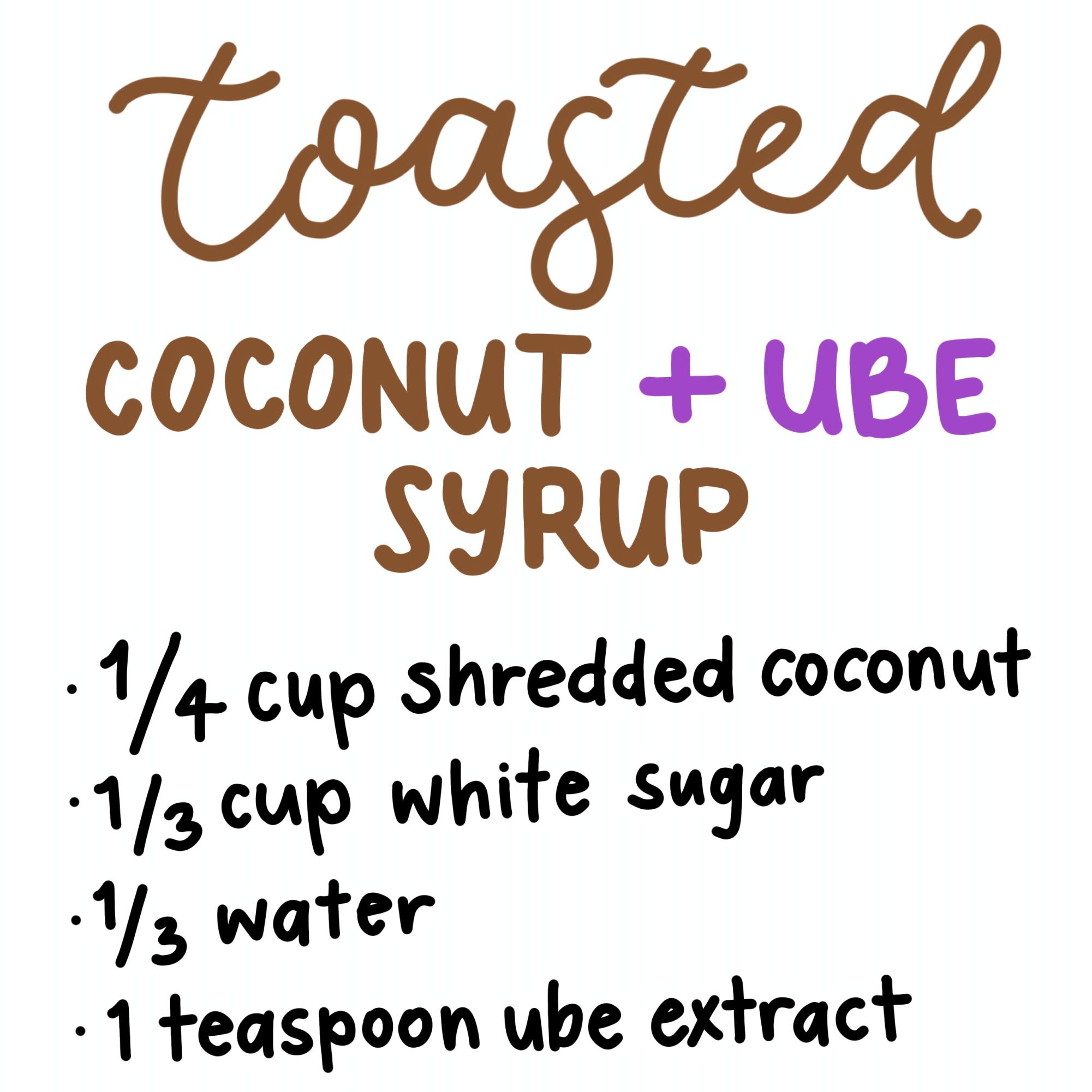
In a pan, toast shredded coconut on medium heat until golden brown. It doesn’t matter if it’s sweetened or unsweetened; the only thing that matters is making sure the coconut doesn’t burn. So, keep a close eye on it and stir constantly.
Once the coconut is toasted, lower the heat to medium-low, then pour in the sugar and let it melt. When the sugar has a slight caramel color, add the water. It’s okay if the water rapidly bubbles; just keep stirring.
To avoid the bubbling, you can heat the water over the stove top or in the microwave before incorporating it with the sugar and coconut.
Let the syrup cool for about 10 minutes, then transfer it to a heat-safe container. This is when you can add the ube extract.
Another method I’ve experimented with is making the toasted coconut syrup without the ube extract and then adding ube condensed milk. Ube condensed milk can be found at your local Asian supermarket or on Amazon.
The method for making the syrup is the same, but the ube condensed milk is added to the hot espresso so it dissolves properly.
Unlike those viral videos of making drinks at home, pouring each ingredient over ice, there’s actually a correct way to make a latte so that you don’t affect its flavor.
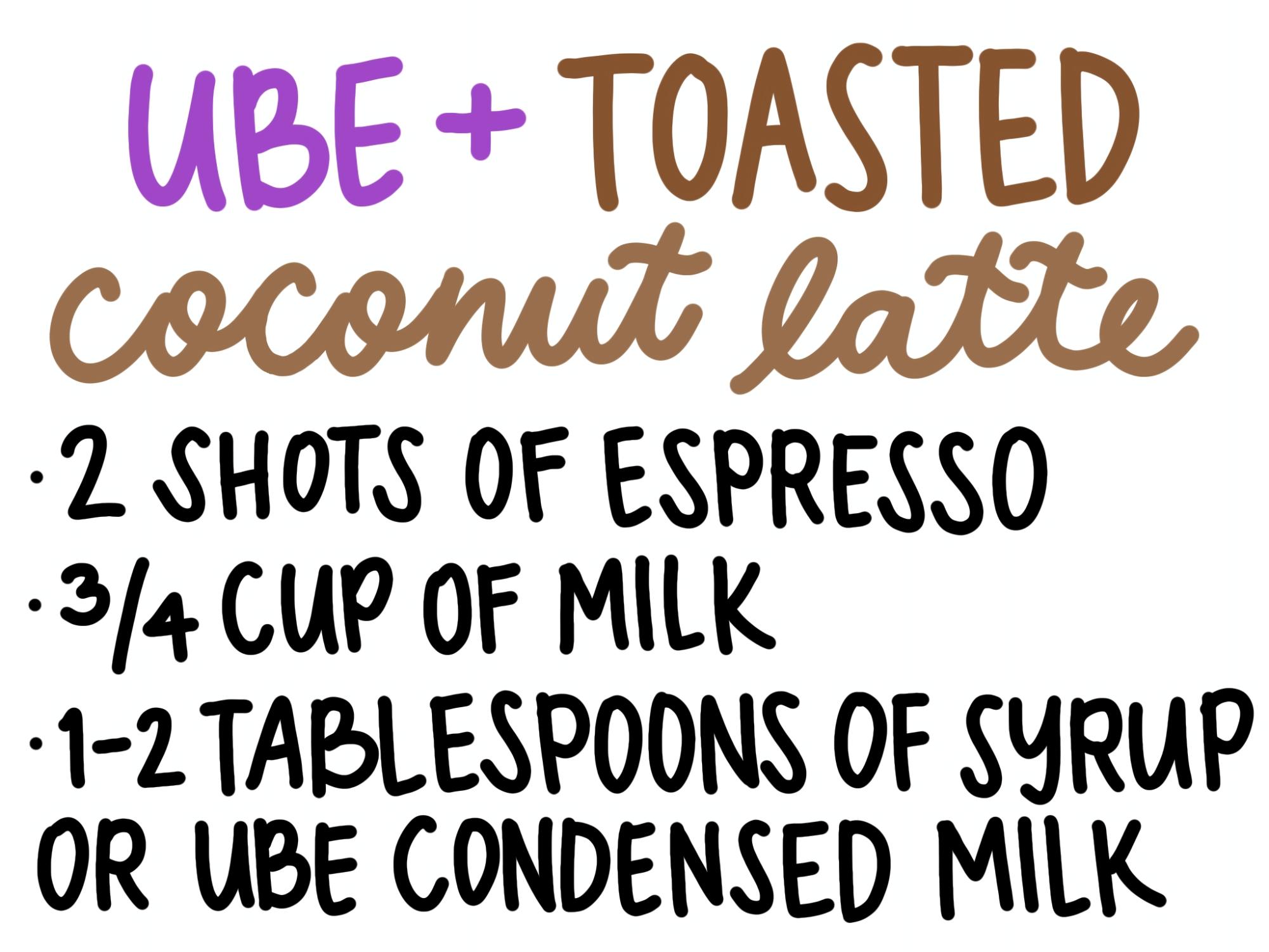
If you are using ube condensed milk, put it in the cup you will brew your espresso. Once the espresso is brewed over the condensed milk, add about one to two teaspoons of the toasted coconut syrup. If you are using syrup, then brew the espresso in a cup and add the syrup after.
Next, add 6 ounces of your choice of milk to the espresso and give everything a good mix. Finally, fill a separate cup with ice, then pour the latte over it.
Influencers often record overly exaggerated reactions, calling quite literally everything their “new obsession.” However, it doesn’t take too much time to research a pronunciation or an ingredient’s origin before reviewing something online.
Ube may be a trend now, but for Filipinos, it was never just a trend. I hope you can enjoy a piece of my culture, and I hope to see more cultural ingredients get their time in the spotlight with the proper credit they deserve.