There are five love languages, according to Gary Chapman. However, displays of love and affection in my house felt deeper when it came in the form of what I believe to be the sixth love language – food.
I felt it in the way my grandma would cut up fruit while I studied, in the way my dad taught me how to hold a knife, and in the way my mom would surprise me with my favorite cupcake after being picked up from school.
When I was younger, my dad tried to get me into sports — ice skating classes, basketball camp, and a few other attempts.
While I played volleyball for a brief moment – yes, he was excited to take me to buy a pair of kneepads and a practice ball – food was our real bond.
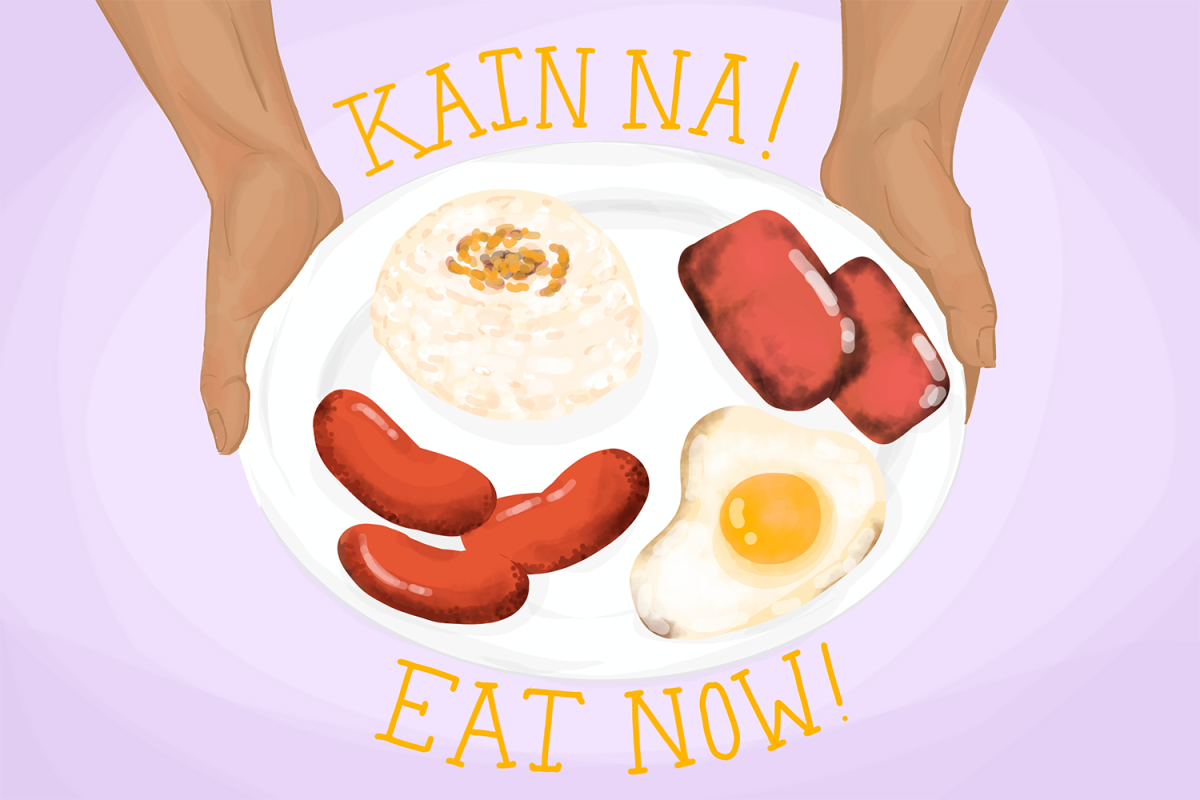
On Saturday mornings, my sister and mom would be sleeping, but I would crawl out of bed to watch him cook breakfast — the classic Filipino comfort meal: garlic fried rice, sunny-side-up eggs, and perfectly cooked spam.
He would play Food Network at night, and we’d stay up debating if a chef could really beat Bobby Flay.
As I got older – and wasn’t afraid of the stove anymore – I was faced with a new challenge: getting my dad’s seal of approval on whatever dish I’m attempting.
I would save a bowl or plate for him, waiting with anticipation to hear a “That tastes good.” That was the highest compliment I could receive from him. Any dish I wanted, he would recreate. Any craving my mom, sister, or I had, he would go out of his way to get. He taught me that love didn’t have to be explicit to be meaningful.
I’ve always wanted to give the same feeling through the food I make. This love language transformed into cookies I baked for my friends at school, into the matcha and coffee I brought, into seeing the satisfied look on their faces.
It doesn’t matter that it takes a long time or that I sometimes ignore my homework to cook, bake, and occasionally take on the role of cooking dinner for my whole family. I want to show my appreciation and love, and it’s because of my family that I consider food to be the sixth love language.
The relationship between food and love is so deeply rooted in Filipino culture that it has influenced me to think this way as well. Some of my most treasured memories came from exchanging stories and bursts of laughter over a shared meal.
Before the “Look how big you’ve gotten” or the “I missed you” at family gatherings, Filipino aunties – titas – would shove paper plates as soon as you walked through the door.
They would exclaim, “Kain na!” Even though I didn’t grow up speaking Tagalog, I knew exactly what they were telling me. “Eat now” was more than just an expression encouraging us to get the food they prepared. It was an “I love you,” and it was a way for us to enjoy each other’s company.
Although I couldn’t understand some of their jokes and just laughed when my mom laughed, food was universal. It was a language I could comprehend, whether my family was speaking English or Tagalog.
The connection between food, family, and Filipino culture is unique and built through shared experiences with our loved ones.
“It was here that food meant taking time to be with each other, and it was here that we found ourselves learning more about what love means within our family,” writes Jasmine Nicole Itliong. Her piece – which I recommend reading as well – conveys the complexities of the simple act of sharing food well and also credits sharing food as another love language, alongside the five recognized.
I’m incredibly grateful that food was such an important part of my upbringing. One of the things I know I’ll miss will be my family’s cooking. While I know that their love can be shown in different ways, every time I’m away from home, I’m glad that something is waiting for me when I return. I’m glad that I can look forward to my favorite dish and an endearing “kain na.”