In elementary school, my favorite part of the day was a sacred hour called “D.E.A.R.” time: drop everything and read. For 60 minutes, the cacophony of voices would dim as my peers and I pulled out our current reads and silently entered a new universe within the pages.
Even at 8-years-old, reading was my escape into a world different from my own. From the comfort of my classroom or bed, I could soar on broomsticks alongside wizards and witches or embark on quests with demigods, fueling my creativity and imagination.
But as is the case with many young bookworms, my relationship with reading has taken a hit. I read profusely in my free time until freshman year, when school became demanding in every imaginable way. Between endless homework assignments, new social events, extracurriculars to attend, and the general shock of adjusting to a 2,400-person high school, I found little time to read, saved for the required texts in English class.
Unfortunately, those required readings became a source of stress that further eroded my love for reading. While I appreciate the thematic values of texts like “Great Expectations,” “Romeo and Juliet,” and “Of Mice and Men,” appreciation becomes difficult when the underlying motivation to read them is success-oriented rather than intrinsic.
A part of me always felt guilty when I skimmed over chapters in acclaimed novels like “To Kill A Mockingbird.” I knew the content and messaging of the book itself were poignant and relevant, yet coupled with the huge workload I was balancing with my English classes, I simply could not afford to spare an ounce of extra time deciphering a reading.
Perhaps most embarrassingly, I stopped reading as a hobby because digital entertainment occupies my free time. Like most high school students, I spent every brain cell I had on keeping up with multiple Advanced Placement (AP) classes and front-loading my resume with what I prayed would get me into my dream college, leaving any free time to be spent on activities of minimal effort, which ultimately revealed themselves to be sleeping and scrolling mindlessly on social media. Fittingly, the “D.E.A.R.” hour of my childhood has converted itself to “D.E.A.D.” — drop everything and doomscroll.
My dilemma of reading for pleasure versus for school highlights a frustrating issue many observe as a product of high-pressure school settings: when pressure is piled on students to “succeed” by earning good grades and attending a stellar college, the joy of learning is lost to stress.
Yet once I reached my metaphorical “finish line,” aka submitting my final college application and later being accepted to my top school, I found myself with more time than I could have dreamed of on my hands. With the prospect of college acceptance no longer at the very forefront of my attention, my primary motivation had faded, and I was left with a desire to reconnect with my past interests — at the top of my list was reading.
So for the first time in probably a year, I picked up a book that wasn’t checked out from the Carlmont Library: R.F. Kuang’s “Yellowface.”
I could rave about “Yellowface,” but I’ll share just one aspect of how it stuck with me. “Yellowface” is the kind of book that anyone could read. There are twists and turns, parts that make you laugh out loud or make your jaw fall open in shock. The prose isn’t so flowery that it suffocates or elicits eye-rolls from the non-literature aficionado, and the messaging is just vague enough that you can take away your own interpretation while still understanding Kuang’s purpose in writing it.
Most importantly, I enjoyed reading and interpreting it, a feeling that had lain dormant during my years of English homework and essays. Once I took the academic pressure off reading, it suddenly became one of my favorite things to do.
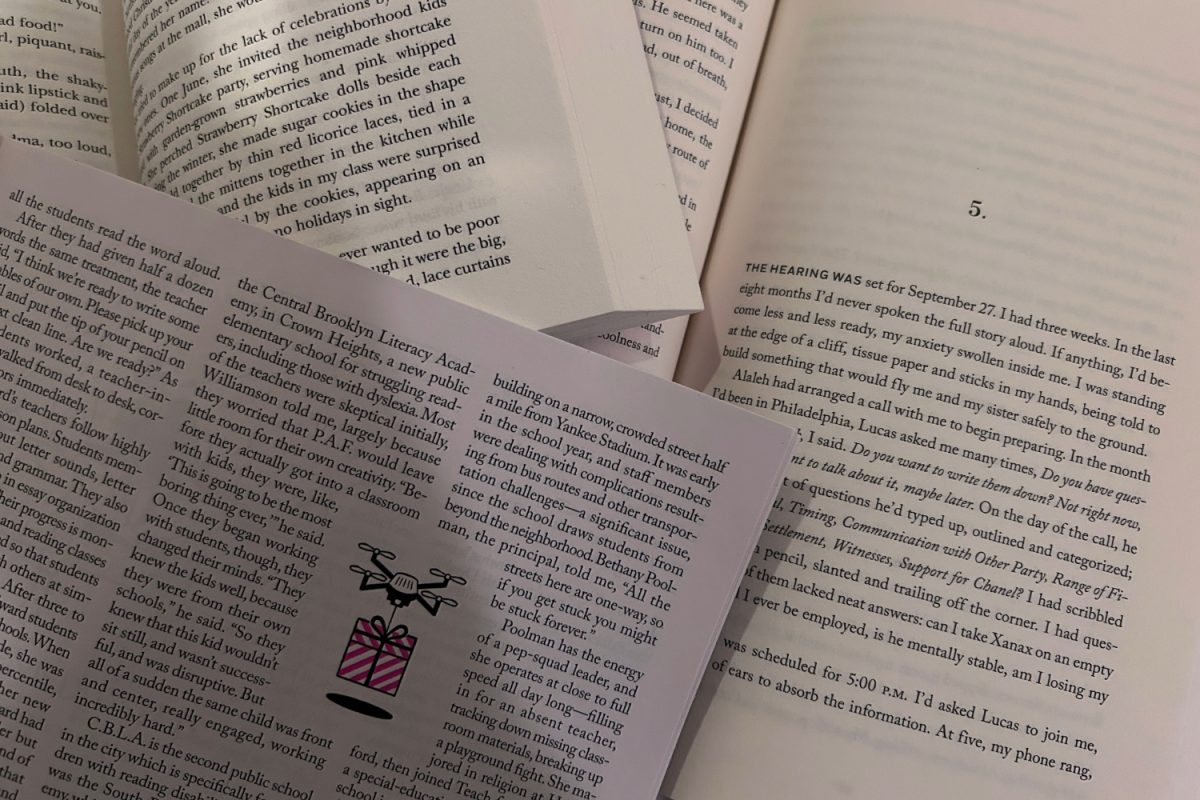
Since reading “Yellowface,” I’ve read two more books: “The Opposite of Loneliness” by Marina Keegan and “Cultish” by Amanda Montell.
Both are books vastly different than anything I would have picked up in the past, but with age, I’ve discovered that my tastes have changed.
One is a collection of short stories and essays by a late Yale graduate, and the other is an examination of how language and group dynamics intersect in real-world situations. Yet both have contributed to how I interact with and interpret my experiences.
Keegan’s book was a masterclass in creative writing and served as an excellent representation of a young writer’s mind. Montell’s has fundamentally changed how I think about social dynamics.
Reading has also helped me bond with other like-minded seniors emerging from reading retirement. With a friend from my AP Literature and Composition class, I formed a book club, where we vote on books to read and meet to discuss them. Not only is it a way to stay accountable for finishing books, but I’ve carved out a seminar-like community where we’re free to talk about interpretations of texts, without a teacher grading our responses or moderating discourse.
So student, senior, and graduate alike, try picking up a book the next time you have a free hour or two. It could be a romance, mystery, or even a magazine article. No matter what you read, there’s value in taking time to indulge in a world other than your own and simply letting yourself enjoy it.