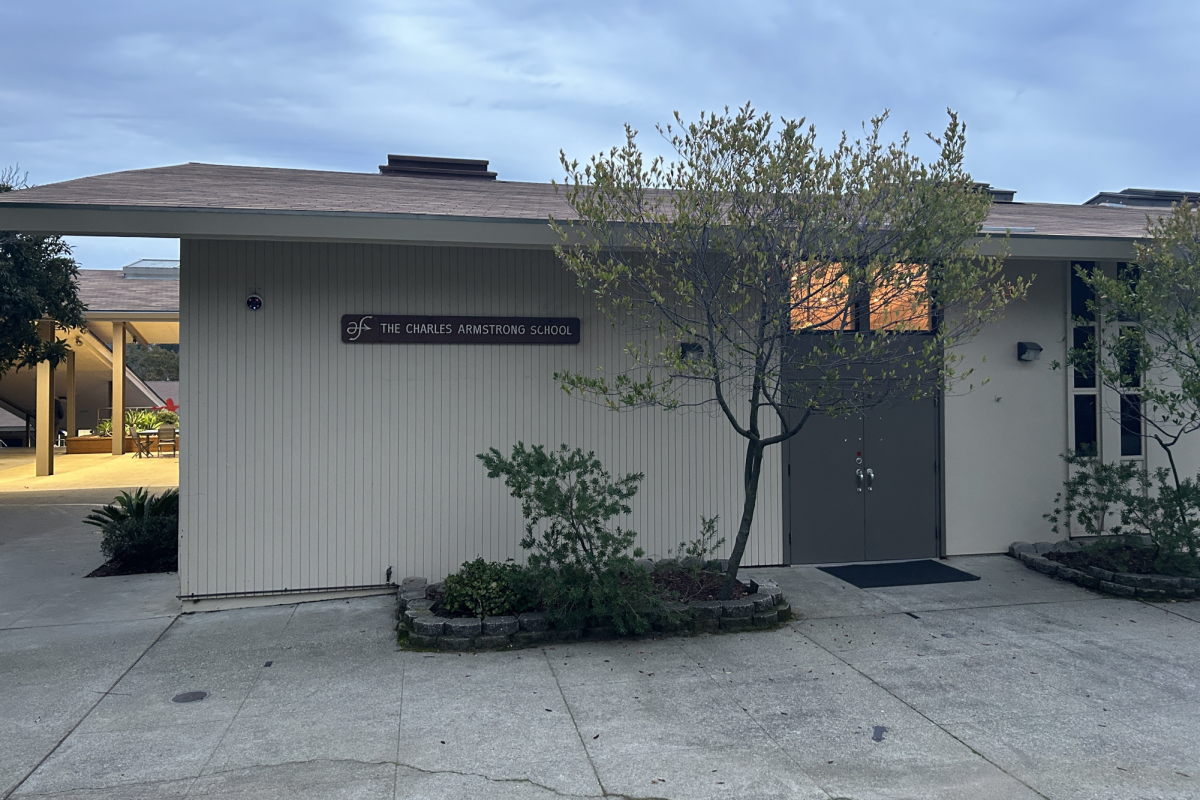
Charles Armstrong School, which supports students with dyslexia, requested a permit from the City of Belmont to expand its campus, drawing both support and criticism.
According to the Charles Armstrong School’s website, the school is the largest school of its kind in the Bay Area, but they have reached the limit of the current facilities. Each year, the school is forced to turn away families.
Before construction can begin, the project needs to be approved by the city, according to Carlos de Melo, the City of Belmont’s Community Development Director.
The project includes modifications that would increase enrollment from the current cap of 260 students to a cap of 290 students. Site improvements also include a new landscaped plaza connecting the buildings, stormwater management systems, utility infrastructure, and slope stabilization, according to the City of Belmont’s project description.
“Both Charles Armstrong School and the City of Belmont facilitate a community outreach process to allow the community to voice their opinions and perspectives about the project,” de Melo said.
During Belmont’s Planning Commission meeting on Jan. 6, local residents took the podium to voice their opinions on the proposed expansion.
A resident who has lived on Dartmouth Avenue since 1998 mentioned that the gym would be located within 20 feet of a single-family residence. Another longtime resident, who has lived in the area for 58 years, said that the traffic already makes it difficult to leave their house during peak hours and that both lanes down on Ralston Avenue are backed up.
Warren Gibson, the former chair of the Planning Commission and a 48-year resident of Belmont, supported the project.
“I believe the sound of children at play within limits is a joyful thing, not a nuisance. We sorely need some of their vitality and optimism to rub off on the rest of us in these trying times,” Gibson said.
Students with dyslexia often have difficulty reading because of disruptions in how their brains process writing, according to the Cleveland Clinic.
The Armstrong School Program Overview states that its approach involves small-group and data-informed instruction, highly trained faculty, a multisensory learning environment, and technology integration.
Richard Wagner is the associate director of the Florida Center for Reading Research and a faculty member at Florida State University who has been studying reading problems for about 30 years.
“People used to think it was a problem with vision, like you’re seeing things backwards. That turned out to be a myth. It’s really a problem with a kind of language we call phonological processing, like speech processing,” Wagner said.
Many people can notice patterns and connections between words, which makes reading easier, according to Wagner. However, dyslexia stops students from comprehending language in this way.
“You just have to memorise the spellings of all the words. It’s a much tougher task, right?” Wagner said.
Norarifah Ali, a senior lecturer at the Faculty of Art and Design at the Universiti Teknologi Mara, has conducted research regarding the development of teaching aids to support reading among dyslexic children. She developed the EDUxic Guidelines to provide guidance for creating these aids.
“These guidelines emphasize multisensory interaction, clear structure, simplicity, and learner engagement,” Ali said.
According to Wagner, text-to-speech accommodations may be a helpful type of technology for dyslexic readers.
“They are much better at comprehension, something they hear, than something they are trying to read themselves,” Wagner said.
Designers followed the EDUxic Guidelines to create an aid called jomBACA, according to Ali. This aid is intended to improve engagement, reduce learning frustration, and build confidence among dyslexic children reading at the intermediate level.
These educational accommodations can follow students throughout their lives. Wagner cites an emergency room employee who got into medical school with test accommodations.
“He is someone who is functioning successfully as an emergency room physician who has severe dyslexia. That wouldn’t be possible without the text-to-speech technology that he has available to him,” Wagner said.