The U.S. National Park Service (NPS) recently removed exhibits on history and climate change, following a directive from the federal government.
The alterations came as a result of President Donald Trump’s executive order titled “Restoring Truth and Sanity to American History,” issued in March of last year. It aimed to refocus public sites on American accomplishments over historical and environmental critiques.
“It called for a review of all American institutions that were putting out ‘un-American,’ disparaging information that the administration didn’t agree with,” said Dennis Arguelles, the Southern California director of the National Parks Conservation Association (NPCA).
In the past, the NPS has been fundamental in representing and spreading history.
“History tells us that the same issues that we’re facing today are reflections of what we’ve already experienced as a country,” said Supriti Bhopale, a Carlmont senior and president of the History Club. “National parks really connect Americans in the present day with the history that is usually only seen in textbooks.”
However, the federal government’s actions marked a shift in its focus. NPS employees were given a deadline of September 2025 to report non-compliant materials to be altered or deleted, according to The New York Times. Parks that reported no information were told that they may receive visits from Department of the Interior officials.
One of the earliest changes was to Maine’s Acadia National Park, where signs about Native American history were withdrawn in September. Since then, at least 17 additional parks — including ones in Arizona, Colorado, Montana, Texas, Utah, and Wyoming — have been affected by the order, according to The Washington Post.
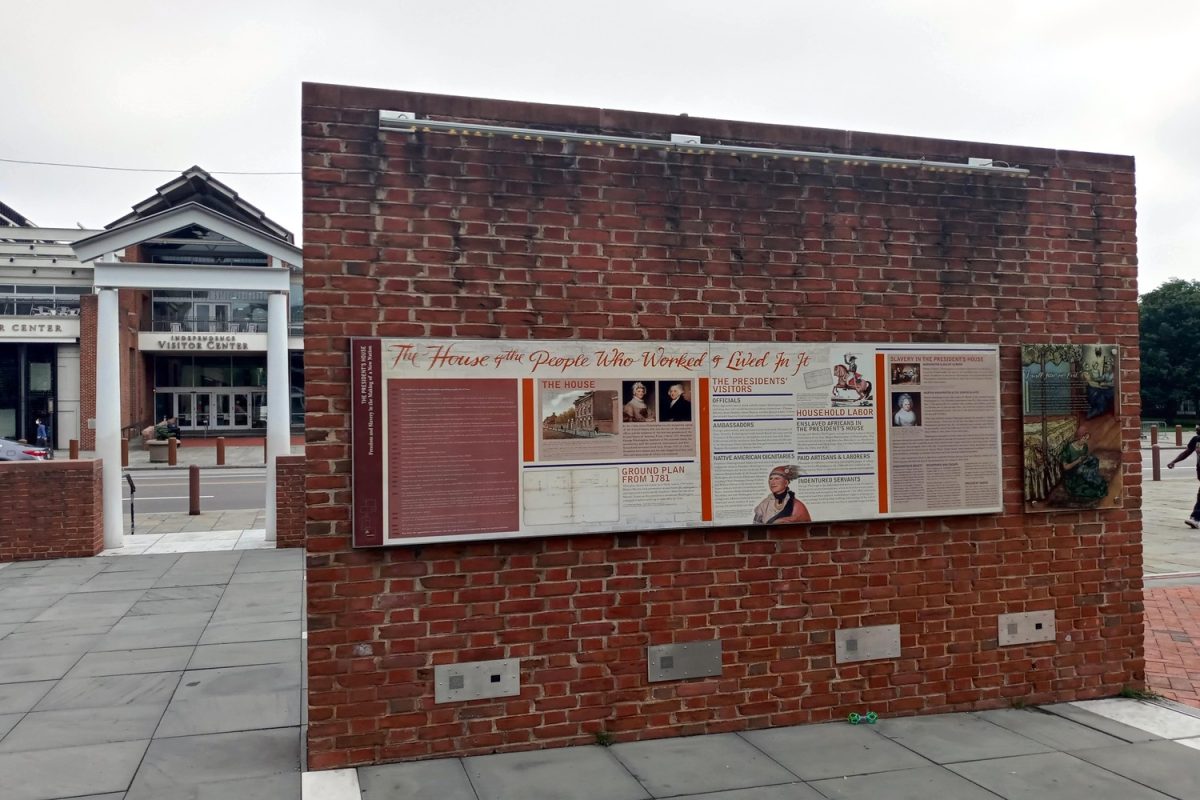
More recently, an exhibit was removed from the Independence National Historical Park in Philadelphia. The panels, entitled “Freedom and Slavery in the Making of a New Nation,” discussed George Washington’s ownership of enslaved people, the slave trade, and the slave economy. Its erasure sparked public backlash.
“It’s basically an attempt to whitewash the past and provide a narrow perspective of what they believe is American heritage,” Arguelles said. “To suggest that we’re inherently great without understanding the past is just dangerous. Ultimately, what you’re doing is dehumanizing people. You’re removing their history. You’re saying they’re not as important.”
Many also have concerns that taking down national park signage represents an inaccurate portrayal of history.
“The founding fathers can be incredible figures who made really difficult choices at the beginning of a nation, but they can also have owned slaves,” Bhopale said. “That was part of who they were as a person, and trying to hide either part is not being reflective of the true history.”
In addition to historical education, the NPS also plays a role in providing information on the environment.
“The most important thing about national parks is that they preserve places of incredible beauty for future generations. There’s a lot of environmental education in national parks, but that changes depending on the administration,” said junior Miranda Wacker, who runs Carlmont’s Green Team.
The Climate Change Inventory and Monitoring website previously highlighted issues such as extreme weather events, ecosystem loss, and rising temperatures.
However, the webpage was recently altered, along with other physical signs at park sites. In Muir Woods National Monument in California, signs explaining the park’s coastal redwood trees and their role in storing carbon dioxide were removed.
Critics say this could have widespread impacts on public understanding of science.
“When the administration is denying things that are basic facts, you have a very different precedent set for what the nation is going to believe,” Wacker said. “If they’re going to outright remove history and change it to fit their vision, it’s really impactful, not just for climate change, but for denying science.”
Some have proposed ways to counter the federal government’s recent actions, such as staying connected with local national parks.
“It’s difficult to counter these nationwide changes, but engaging in conversations about parks or exhibits that are important to you can be beneficial,” Bhopale said.
Additionally, the City of Philadelphia filed a lawsuit against the Trump administration following the removal of signage in Independence Mall. Legal organizations are also seeking ways to preserve the cultural and natural history of national parks.
“The Center for Biological Diversity is an entity that is often at the forefront of taking legal action. The Environmental Defense Fund is out there as well,” Arguelles said.
Still, the implications of recent NPS removals for historical understanding and climate change awareness are significant.
“If we look at history through rose-colored glasses or try to only focus on the parts that make us feel comfortable, then I think we’re doing ourselves a great disservice. By not seeing all the various perspectives that can play into a certain event, we run the risk of repeating the exact same mistakes that we made previously,” Bhopale said.