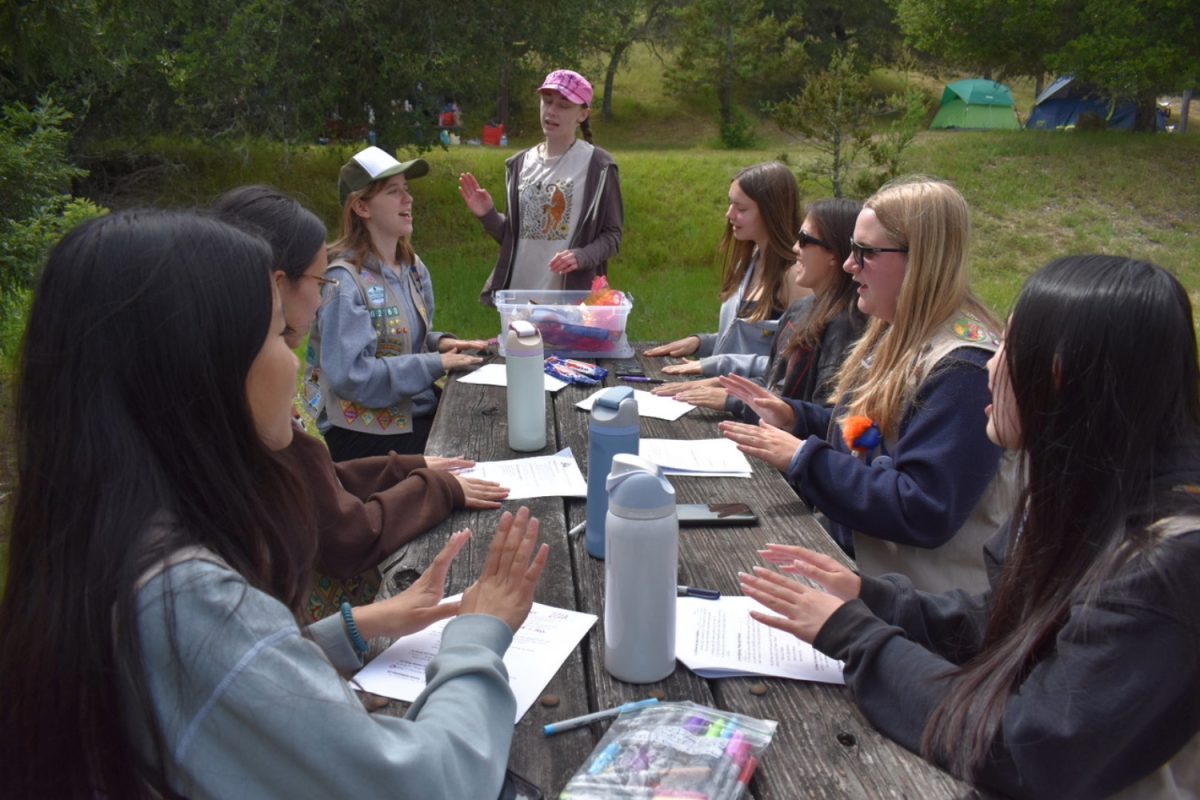

The promise of air rockets, leopard sharks, and a robot zoo overruled warnings of pouring rain on Oct. 25, as thousands of people flooded the lawn for the 12th annual Bay Area Science Festival (BASF), a highly anticipated day of STEM exploration and showcase after its two-year hiatus.
By bringing science, technology, engineering, and math (STEM) to all, in the hopes of raising awareness and inspiring a future generation of scientists, BASF is considered Northern California’s largest free celebration of science.
“It’s to connect the scientific community with the public, to have a community celebration of science and STEM, and to spark that wonder and that curiosity in kids,” said Katherine Nielsen, a BASF co-founder and director of the University of California, San Francisco (UCSF) Science and Health Education Partnership (SEP). “When you’re young and you’re thinking about what you want to do, school is an incredible influence, and your teachers are amazing. But all these other things — going to a museum or coming to a science festival — can bring up something you’ve never thought of. Even me, though I’m not young, I see things around here that I didn’t know were something you could do.”
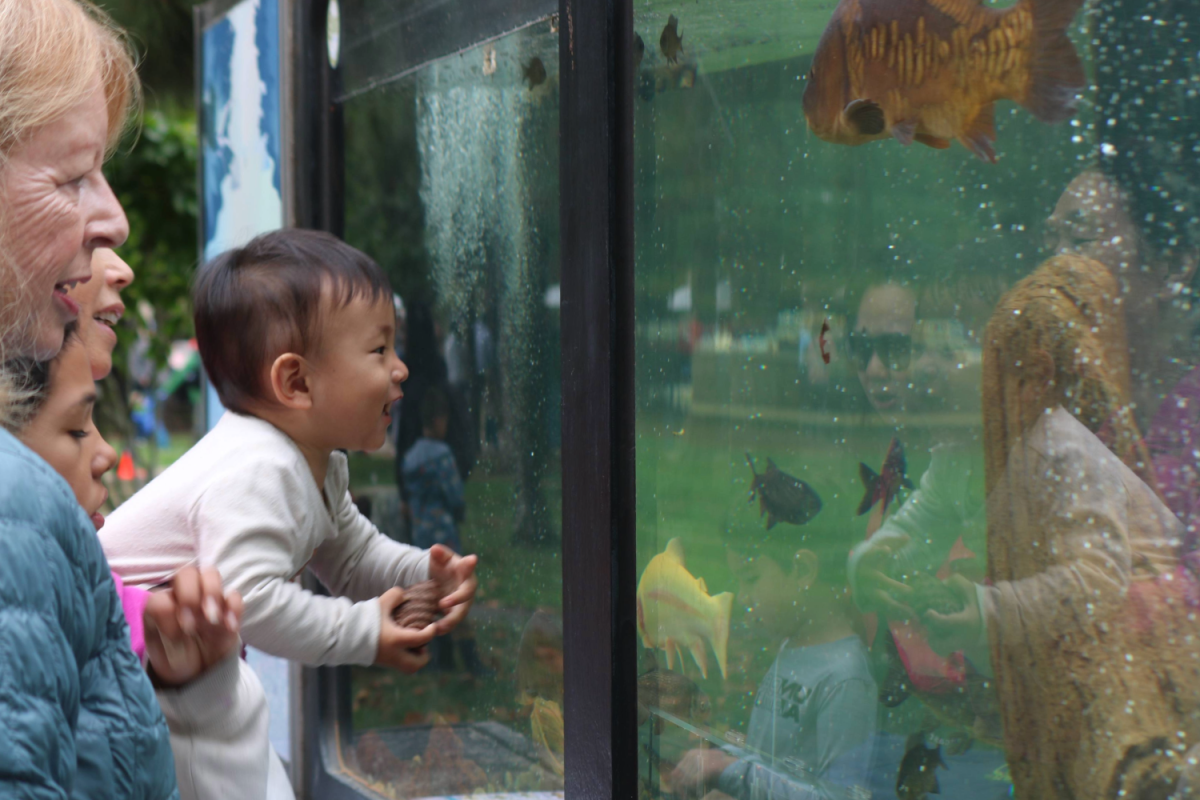
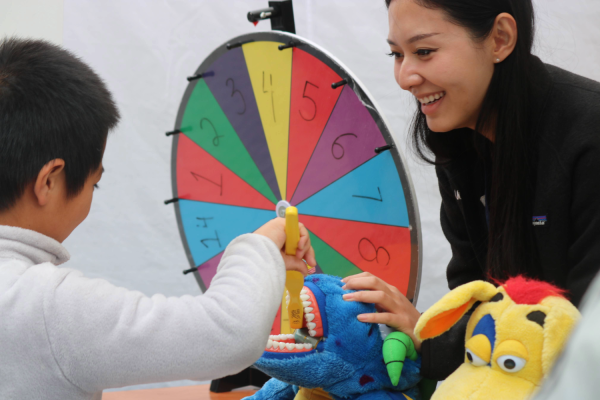
As the festival got underway, that sense of discovery spread quickly across the rain-soaked quad. Laughter, cheers, and gasps from hands-on experiments and eye-catching displays filled the air as visitors explored the rows of white tents.
“This is a really great event because it gets the general public excited about science,” said Lauren Adams, a senior scientist at Merck, a pharmaceutical company known for developing vaccines and cancer therapeutics that sponsored the event. “I think a lot of times people feel science might be inaccessible to them, but really it’s in our daily lives. So it’s cool for them to get to see all the different aspects of science with this really diverse area where we show off all different kinds of STEM activities.”
Yet this area was a little different from usual. While the event is held annually, this year brought a major change in scenery. For the first time, the festival was hosted at UCSF’s Mission Bay Campus — the same place that launched and continues to lead the festival each year through SEP, a program dedicated to supporting science teaching and learning in San Francisco.
“Every other festival has been held at Oracle Park, so this is the first time we’re holding it on our home campus,” Nielsen said. “We’re really excited about that evolution. It feels great to be welcoming the public to this campus.”
For five hours, the Koret Quad and other nearby buildings transformed into a science playground. Attendees of all ages were wowed by over 100 demonstrations, experiments, tours, talks, and games, including the long-anticipated 30-foot-long whale skeleton, real-time brainwave displays, and the chance to sit in a real military airplane cockpit.
Each exhibit aimed to illuminate how Bay Area STEM resources are already shaping daily lives, fostering much excitement and community spirit.
“The main thing that we hear from attendees is just how much fun they’re having with their families and the breadth of activities: you could dissect an owl pellet or learn about robots. There’s something for everyone,” Nielsen said. “On the flip side, the exhibitors and the volunteers love getting to share their passion for science, and we hear that from them. It’s rejuvenating that people were so excited to learn about what they do.”
With so many different live demonstrations, displays, and discoveries, the turnout is always huge, and guests’ determination was evident in their willingness to brave the weather for the sake of science.
“In 2011, the first time we did it, we were like, ‘Is anyone going to come?’ We had no idea that they would all come,” Nielsen said. “Every year, there’s still a little bit of that feeling, and especially this year, when we’re doing it at a new place. Also, since it was raining all morning, and there are a lot of things going on with politics right now, we were wondering what the turnout was going to be today, but we’re incredibly thrilled with the result. People came and people are having a great time.”
For Galateia Kazakla, a festival attendee and parent, coming to the festival was never in doubt.
“This is how the kids get excited about what science is, imagine themselves as scientists and engineers, and then go pursue that at school,” Kazakla said.