
In response to declining enrollment, the Belmont-Redwood Shores School District (BRSSD) is considering closing the middle school programs at either Sandpiper School or Nesbit School beginning in the 2026-2027 school year.
Both middle school campuses are currently operating below capacity, and the district is weighing the resource allocation against the community’s desire to keep the smaller middle schools open as an option for students. The BRSSD school board has held three special meetings for the community to comment on the BRSSD Middle School Alignment proposals so far, and hopes to reach a decision in late February.
Multiple factors may lead to the closure of a middle school campus; the district’s primary concern is under enrollment and declining birth rates in the Bay Area, which are already affecting elementary school class sizes.
The board has four proposals on the table at the moment: the option to keep three middle schools open for BRSSD students (Ralston Middle School, Nesbit Middle School, and Sandpiper Middle School), the possibility of closing one of the smaller campuses, or an alternative that involves opening two comprehensive middle school programs.
According to Superintendent Dan Deguara, the last option will require far more planning and resources than simply closing one campus, while the other solutions could be implemented at the start of the coming school year.
The community has had an active role at this stage of the board’s consideration. All three of the open board meetings have had parents, staff, and students alike attend to make their voices heard.
This includes former students of Nesbit and Sandpiper’s middle school programs, such as Supriti Bhopale and Sweekriti Ratnam. Bhopale and Ratnam are both seniors at Carlmont High School who attended Sandpiper Middle School and chose to speak before the BRSSD school board in early January about their experiences and opinions.
“My family lives in the community, and we all campaigned for Measure C and other measures that actually paid for the middle school,” Ratnam said. “This was definitely a very community-oriented project, and it was clear that the taxpayers wanted to see a middle school and understood how the school would enrich the culture of Redwood Shores.”
Speakers such as Ratnam have made it clear that both schools provide significant benefits to their respective communities, and the eventual solution must take all factors into account.
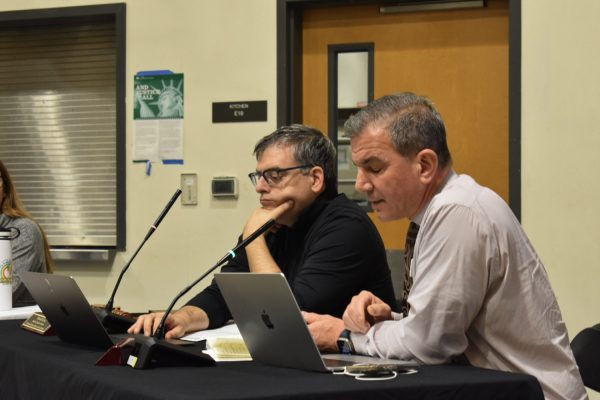
Both smaller campuses offer unique learning opportunities. In March of 2025, Nesbit adopted the International Baccalaureate (IB) Middle Years Programme (MYP), a standardized curriculum that emphasizes student-centered learning. Similarly, Sandpiper is built on a design thinking model that encourages project-based learning and a collaborative environment for students.
“I am very appreciative that our community realizes that this is a difficult challenge for us, especially when we have three great middle school programs,” Deguara said. “It’s been very clear that Nesbit is well-loved by their community, that Sandpiper is loved by their community, and that our families want the choice to be able to attend Ralston.”
According to BRSSD enrollment data, approximately 30% of fifth-grade students at Nesbit and Sandpiper who remained in the district attended those schools for middle school. The school board collaborated with a demographer to analyze the area’s projected population before considering a possible school closure. The data revealed that, although new housing developments are currently underway, district enrollment will likely continue to decline.
The board began distributing surveys and reviewing enrollment data in September and hopes to implement a solution by the spring of the current school year. During the recent community feedback sessions, some citizens have expressed concern about the timeline for the middle school alignment proposals.
“I think the board needs to realize that both schools serve diverse populations with diverse needs, and this process has felt so incredibly rushed with very little transparency from the school board,” Ratnam said.
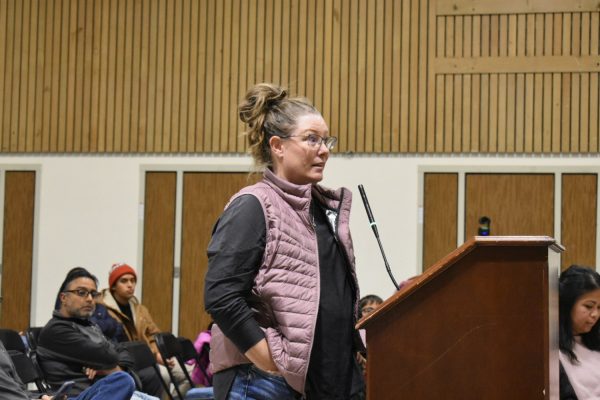
Former students such as Ratnam and Bhopale share the concern that if Sandpiper or Nesbit were to close, students would lose access to unique opportunities, such as theater, STEM, sports, and specialized learning programs offered at these campuses.
“There was a really wide variety of opportunities, and there were very few limitations to those opportunities since we were a smaller school,” Bhopale said. “I really appreciated that because it made me such a well-rounded student and gave me access to things that I didn’t necessarily have the time to do in high school.”
As the board prepares to make its decision, the BRSSD community will continue to make its voice heard in order to reach a conclusion that benefits as many students as possible.
“At the end of the day, we want to strike that balance between programs that are optimized and fully enrolled and providing our community the choice that they desire,” Deguara said.