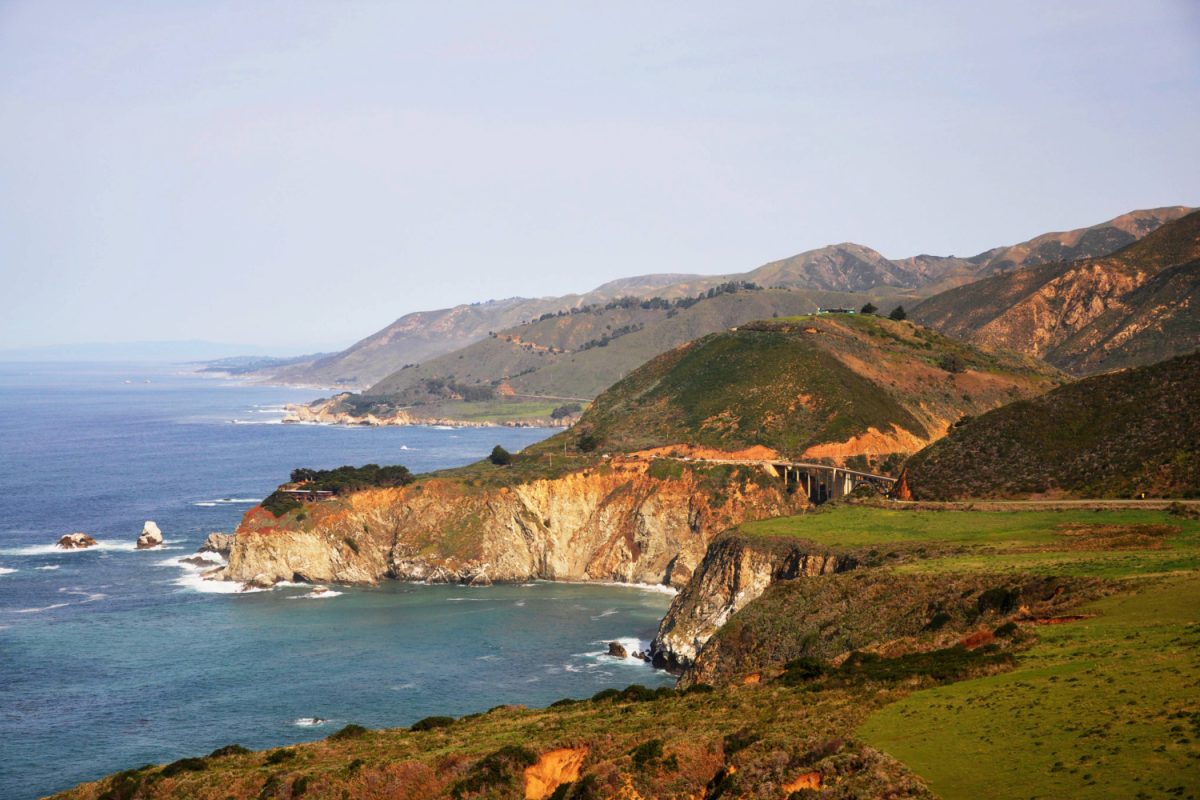
For the first time in three years, motorcycle engines and songs blasting from car radios echo through Big Sur, California, as thousands of tourists flock to California’s Highway 1 to catch an adventure and support local businesses along the Pacific coast.
Before its early reopening on Jan. 14, 2026, Highway 1 had been closed for multiple years due to two major landslides. Paul’s Slide and Regent’s Slide, which are located 6 miles away from each other, happened consecutively and effectively doubled the restoration process.
“Regent’s Slide occurred on Feb. 9, 2024, and overlapped with Paul’s Slide, 6 miles to the south, which closed the highway from Jan. 14, 2023, to June 23, 2024,” said Kevin Drabinski, the public information chief legislative affairs manager for Caltrans.
Despite doubling its original restoration timeline from 1 1/2 years to three years, Caltrans still managed to shave off two months, ending the project in January instead of March, a feat Drabinski associates with their seven-day workweeks and innovative construction methods.
“Repairs at Regent’s Slide required advanced engineering techniques to ensure the safety of crews working atop one of California’s most challenging slopes. Crews worked seven days a week as site conditions allowed, performing excavation and slope reinforcement utilizing cutting-edge equipment,” Drabinski said.
This innovative equipment includes remote-controlled excavators, spider excavators, and drone flights. With over 75 miles of the Big Sur coastline considered the most active landslide region in the western United States by the U.S. Geological Survey, this equipment ensured that crews remained safe while navigating complex terrain and harsh weather.

Although this equipment was primarily used for excavation in areas where traditional equipment could not operate, it was also used for slope reinforcement; over the course of three years, thousands of steel rods were drilled into the coastline.
“Over 4,600 steel bars, up to 60 feet long, were drilled and grouted into the slopes in a 10-by-10-foot grid to tie layers of the hillside together and reduce the risk of future slides,” Drabinski said.
Although the possibility of a future slide is significantly less, it is not out of the question. With each slide posing a different set of challenges, the restoration process will always be slightly different; however, according to Drabinski, the methods used at the Regent’s Slide have the potential to aid future operations.
Another aspect of each slide that differs slightly is its impact on the Big Sur community, specifically small businesses. With three years of interrupted access between the north and south parts of Big Sur, the community had been split into two.
“I miss all my friends on the south coast of Big Sur that I haven’t been able to visit. There’s a great restaurant down on the south coast that I love. The Treebones is one of my favorite places to visit, but it’s a long way around,” Peterson said.
Ultimately, the reopening of the highway has attracted many visitors from across California, inspiring many with a passion for photography, nature, the coast, and all the hidden gems Highway 1 has to offer.
“I love the scenery and the calmness. Everybody who seems to be here is here for the same cause. We all like nature; we all like scenery; we all like photography,” said Meg Milani, a Redwood City resident and frequent Big Sur visitor.