Starbucks baristas are striking against alleged unfair labor practices while the company stonewalls progress towards a fair contract.
According to Starbucks Workers United, a union representing Starbucks employees in the United States, over 1,000 employees from 65 U.S. Starbucks stores went on an open-ended strike on Thursday, Nov. 13, on one of the busiest days of the year for Starbucks, Red Cup Day. They are demanding a fair contract, a resolution to hundreds of reported claims of alleged unfair labor practices, and better pay, as well as increased staffing and hours.
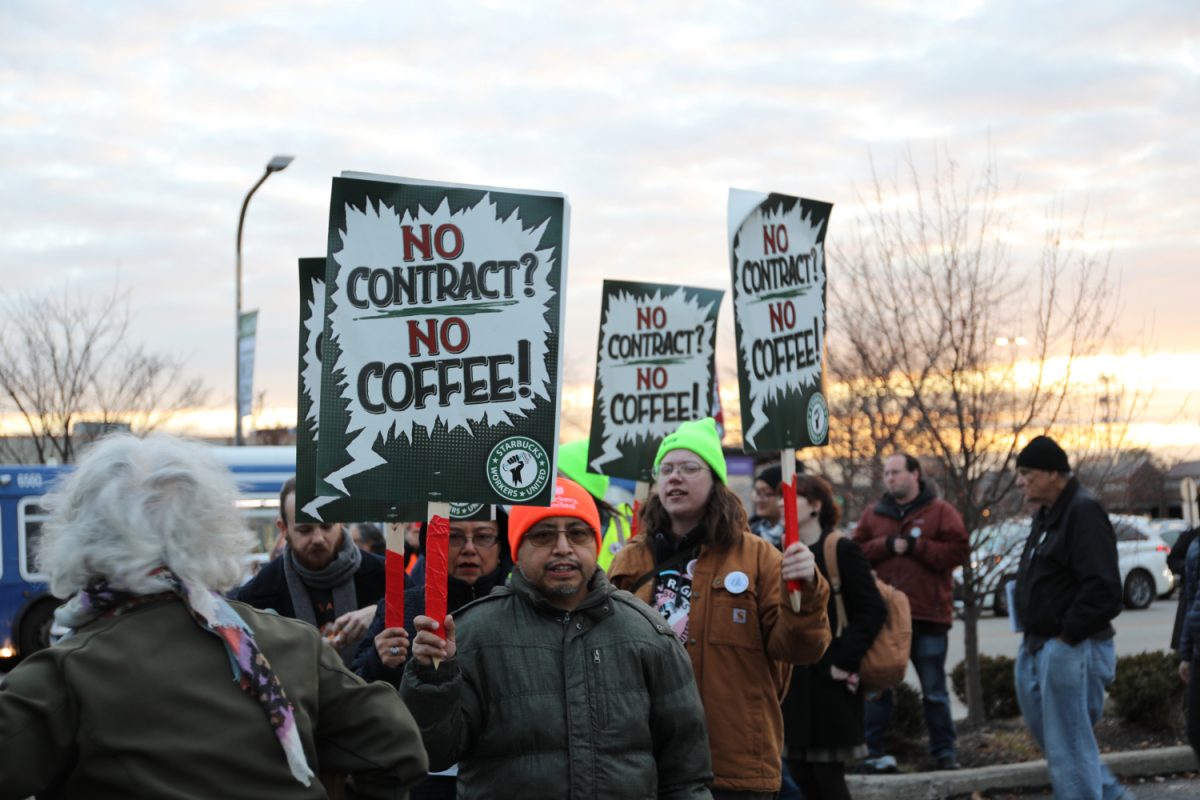
After months of frustration inside stores and rising concerns among customers, tensions finally spilled onto the streets. Starbucks Workers United reported that many picket rallies took place in over 40 cities, where baristas and their supporters marched in protest, holding signs that advocated for their rights. They were shouting things such as “What do we want? A contract! When do we want it? Now!” and “No contract? No coffee!”
The Red Cup Day strike highlights the role of unions in holding large companies accountable and protecting workers’ rights.
“Worker unions and strikes are great because people shouldn’t have to face this type of treatment,” said Urvi Kulkarni, a sophomore at the University of California, Berkeley and former Starbucks barista. “They have a right to make it known that they’re not being treated correctly. Especially with these big corporate companies, they treat their employees as very disposable.”
Starbucks Workers United stated that in April 2024, national framework bargaining began, and over the following nine months, executives and baristas met for hundreds of hours, notching 33 tentative agreements to improve their workplace. In September 2024, baristas proposed new economic negotiations for increased wages and benefits, which Starbucks rejected.
Recently, Starbucks has been willing to restart negotiations, which the Starbucks Workers Union found pointless without Starbucks’ full commitment to address pay, hours, staffing, and labor disputes. As a result, baristas are going on strike until Starbucks agrees to a fair contract.
One of the biggest problems that Starbucks baristas are advocating for is understaffing. Eli Block, a Carlmont High School junior who has only been working as a barista at Starbucks for a month, has already noticed that understaffing is a major issue.
“When staffing is tight, shifts feel heavier because there is less room to spread out tasks,” Block said. “As someone who is still learning, it can feel like there is a lot happening at once. There are moments when the pace picks up fast, and if the team is already stretched thin, it makes those busy times more stressful.”
This is just one of the issues that the Starbucks Workers Union is addressing. Not all Starbucks stores have a union, however, so some are not participating in the strike. Block said that stores without a union should have one, as it would be extremely beneficial for addressing the similar issues they face.
“It could give workers a stronger voice when it comes to pushing for more consistent staffing levels or clearer expectations,” Block said. “I am honestly surprised there isn’t already one at my store, considering how common union discussions are in other locations.”
Starbucks has a long history of labor disputes. Customers like Hailey Zhao, a Carlmont sophomore who frequently gets Starbucks, have noticed how common these disputes seem.
“I feel like Starbucks and its employees are often striking at Starbucks,” Zhao said. “I’ve heard so many things about their work environment being bad.”
As workers prepare to continue the strike until Starbucks commits to meaningful economic proposals, their actions reflect a broader trend of labor activism. Trends show a resurgence in organizing, strikes, and public support despite historically low union membership rates, according to the Society for Human Resource Management.
“It’s important that people are paid fairly for the work that they do and that they’re treated well, are encouraged, and treated like real human beings and not just valued for the work that they do or how fast they push the drinks out,” Kulkarni said.