
The California Department of Public Health issued a warning Jan. 14 against foraging for wild mushrooms in light of a recent spike in death cap mushroom poisonings across the state.
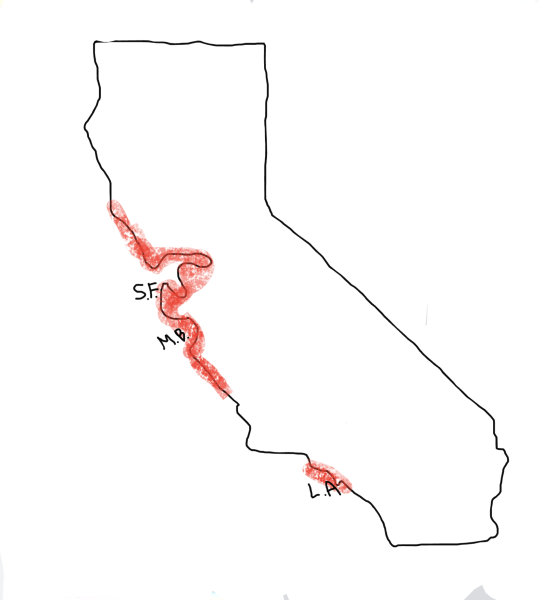
State health officials have reported four deaths, including a man from San Mateo County, and 39 hospitalizations since Nov. 18, 2025.
“The California Poison Control System (CPCS) has been tracking the largest outbreak of poisonings from ingestion of Amanita phalloides mushrooms, otherwise known as the death cap,” said Craig Smollin, the CPCS medical director, at a Jan. 14 press conference.
On a typical year, only five incidents of poisoning from accidental consumption of toxic mushrooms occur in California, according to the County of San Mateo. However, this year the cases are already at a record high.
“It’s almost historic how many people have been affected this year since November,” said Rais Vohra, M.D., a medical director of the CPCS Fresno-Madera division. “Since Thanksgiving, we’ve had 39 total cases. Out of those, from my best recollection, we’ve had four deaths and three people that required liver transplants, meaning they would’ve died if they didn’t get their liver transplanted.”
Early rains and warm fall temperatures have triggered a “super bloom” of death cap mushrooms, increasing the risk of accidental poisonings, according to KQED.
“The mushroom is not the main organism. The main organism is the network of mycelia. The fungus is just the fruiting body,” said Michael O’Neall, a Carlmont Advanced Placement (AP) Environmental Science teacher. “When the conditions are just right, so right when it rains, they want to sprout, then spread spores, continue reproducing.”
Additionally, many of the cases come from an error of judgment when foraging for mushrooms, with many instances of poisonings coming from those who are unfamiliar with local mushrooms and mistake poisonous varieties for ones that are safe to eat.
“If you look at a lot of the people who get poisoned by these mushrooms, a lot of them are people who aren’t native to the area. If you go to Europe or Central America, the safe mushrooms there aren’t the mushrooms that are safe here,” O’Neall said.
This mistake has been the reason for at least one of the death cap mushroom poisonings that happened in Watsonville.
“They seemed to think that they were just picking a mushroom that they had recognized back in the homeland in Mexico, and they cooked it up and served it to the group, thinking it was an edible mushroom,” said Fabian Garza, a pharmacist and certified specialist in poison information.
Death cap mushrooms are identified by their yellowish-green cap. The cap starts as a dome, then flattens, and has a streaky appearance. Underneath, the gills are white, smooth, broad, and free, according to the Woodland Trust.
When ingested, symptoms may arise several hours later and include gastrointestinal complications such as vomiting, diarrhea, and abdominal pain. If gone unchecked, symptoms may develop into kidney and liver failure, coma, or even death, according to the Idaho Department of Health & Welfare.
However, there are many treatments for exposure to death cap mushroom poisonings.
“We will start by giving charcoal if the patient can drink it,” Garza said.
When ingested, activated charcoal helps absorb dissolved toxins, according to the National Library of Medicine. The charcoal reduces the likelihood that the body will absorb the toxins and lessens the toxic effects on the patient.
If the poisoning is bad enough, patients may require a liver transplant.
“That changes their life forever. Now that they’ve had a liver transplant, they’re going to be on multiple medications that they have to take every day, and they’re at risk for infection. They’re at risk for other organ diseases,” Vohra said.
One of the victims affected by the death cap mushroom poisoning was a 19-month-old toddler.
“I feel like it’s important to be aware, especially in nature, of the dangers of the natural world. Obviously, not everything is going to be edible, especially with young kids; you have to be really aware of what they’re putting in their mouths,” said Sara Brittain, a sophomore at Carlmont.
Experts are taking measures to mitigate damage caused by the outbreak.
“We’re working with the parks folks and the California Department of Public Health to put up signs, flyers, definitely using social media and even TV news shows, etc., and getting the word out that mushroom poisoning is happening and foraging is the common denominator,” Vohra said.
Vohra urges people to save the Poison Control number on their phones so that victims may have access to a potentially life-changing step if they do get poisoned by calling the hotline. The Poison Control number is 800-222-1222.