
After KitKat, a beloved cat from San Francisco, died after being run over by a Waymo car in late October, local politicians, advocates, and residents spoke out against the spread of self-driving vehicles.
KitKat, who lived in the Mission District, was nicknamed the “Mayor of 16th Street.” In 2020, he was included in a list of the best San Francisco shop cats.
Much of the outrage over his death stems from this strongly held affection for him. However, a great portion also comes from existing anti-automation sentiment.
“We are absolutely coming for your bottom dollar,” said San Francisco Supervisor Jackie Fielder in a press conference, addressing Waymo and other autonomous vehicle companies.
Fielder and other politicians have called for reform in the regulation of self-driving vehicles.
The accident occurred because, as the Waymo taxi pulled into the road, it was unable to detect KitKat darting underneath it, according to the company’s statement. Eyewitness reports, including a 311 complaint, contradict the statement, recalling that the cat was stationary in front of the car for a brief moment before moving under it, which a human would have processed.
This follows a 2024 instance wherein a separate autonomous taxi company was under fire for one of its cars dragging a woman across the pavement. That company, Cruise, ultimately paid the woman $8 million in damages, and its license to operate in San Francisco was suspended indefinitely.
However, since their initial rollout in the mid-2010s, robotaxis — another name for autonomous taxis — have had few major safety incidents. Fewer still are attributable to their software and mechanisms, rather than irresponsible human drivers.
“I feel like it’s a relatively complicated issue, and there are points you can make for both sides. But I can understand the people who are saying that a human driver could have done this as well. In fact, human drivers tend to do this way more. If Waymo cars were killing cats every single day, then I’d get worried,” said Carlmont junior Sophia Redkey.
In the U.S., human drivers kill millions of animals and thousands of humans each year, according to the R Street Institute.
Others agreed that the issue is not black and white and doesn’t prove that all autonomous vehicles are unsafe, while raising alternative concerns about the technology.
“From an analytical standpoint, a data point of one is very hard to use,” said Aarti Kumar, a San Carlos resident who works in technology. “That said, I am also seeing a huge rise in unemployment, and I feel like Waymo is taking away jobs through full automation. I’m sure it has created new jobs in technology, but it has taken away jobs from the folks who would be taxi drivers, Uber drivers, or Lyft drivers.”
Uber and Lyft themselves faced criticism during their rise for taking jobs from taxi drivers. Now, as robotaxi companies further minimize blue-collar workers in their value chains, the question of job loss is even more significant.
Closer to home, the increased prevalence of Waymo in San Mateo County raises questions about safety, especially in the aftermath of KitKat’s killing.
“I actually have seen quite a few Waymo cars in this area. Honestly, I was surprised they were all the way out here, especially because some of the roads are really twisty and turny,” Redkey said, referring to San Carlos and Belmont.
Redkey noted that many deer and other animals reside on the Peninsula and use the roads, creating an additional hazard to their safety as well as that of robotaxi passengers. Redkey herself has a pet dog, adding to her concern about animal safety.
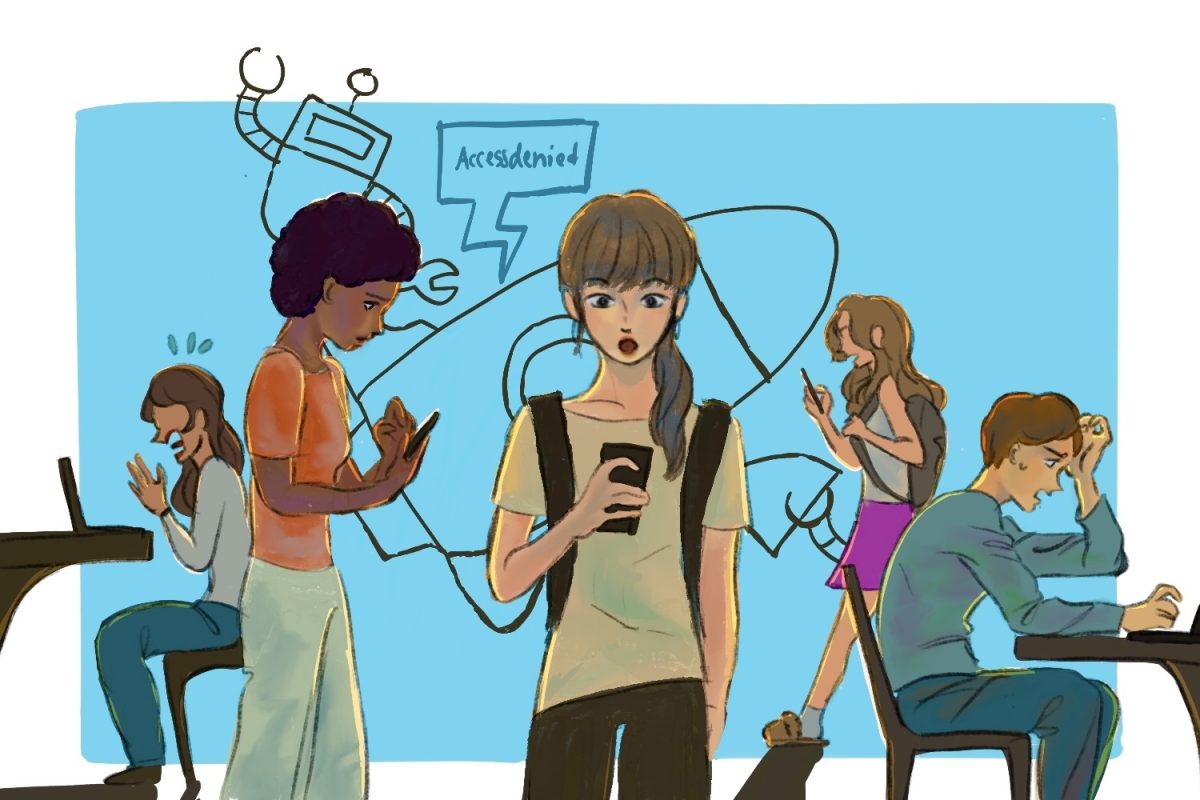
For those who have witnessed the rise of technologies like Waymo transform their city’s landscape and raise concerns, including job loss, gentrification, and mass surveillance, KitKat’s death represents just one piece of a broader trend toward prioritizing technological advancement and convenience over lives and communities.
Vidhya Iyer, who rode in a Waymo for around half an hour while visiting San Francisco, was very impressed with her journey and foresees the cars as an inevitable part of the future.
“It was so smooth to order and ride, seamless and user-friendly,” Iyer said. “Some of these technologies, however much you resist them, they’re bound to happen, so it’s good to just accept it.”