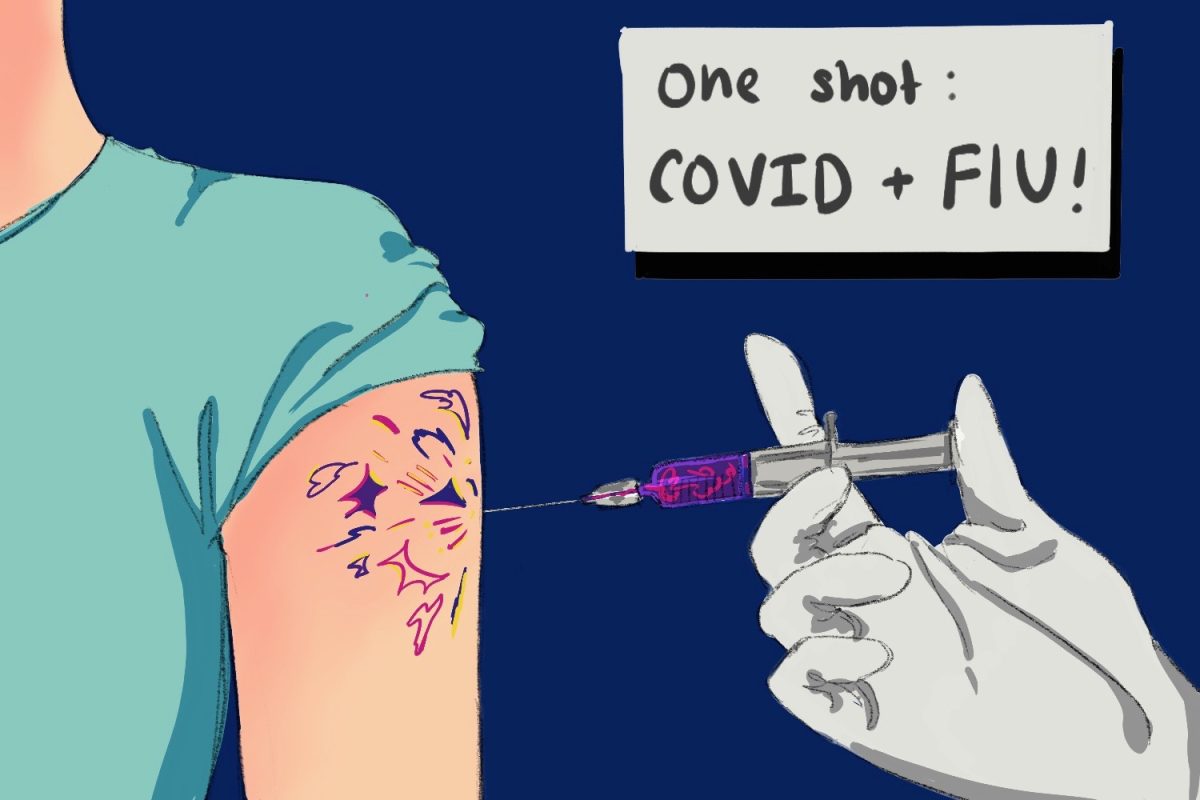
As the United States emerges from one of the most severe flu seasons it’s seen in nearly three decades, the medical community is already racing to strengthen protection for the upcoming year with Moderna’s new combined flu and COVID-19 vaccine, the first of its kind.
“There have been other combined vaccines for other things. For a lot of the childhood vaccines, they are combined to minimize the number of shots, and that also helps with compliance. But this is the first combining of COVID-19 and the flu,” said Angela Lim, a family medicine physician assistant at Sutter Health.
Yet many patients don’t find this new combination unexpected.
“Since COVID-19 is not dominating the landscape of deaths and other things, people feel a lot less concern about it. It almost feels like a part of the flu now, which is why it makes sense they’re combining it as one vaccine, but I think there are still a lot of fears entwined with it,” said Chris Antilla, who regularly gets vaccinated for the flu.
While still undergoing testing, the shot has shown promising results. In a small clinical trial of U.S. adults ages 18 to 75, the experimental 2-in-1 mRNA vaccine generated immune responses lasting at least six months for each patient, with no serious safety concerns reported by the pharmaceutical company.
If authorized, the combined vaccine would also mark a turning point for flu vaccines as the first to use the same mRNA technology that powered Moderna’s original COVID-19 shots, which the company became known for after developing it in two days. This method delivers genetic instructions for the body’s cells to produce viral proteins that trigger immunity rather than injecting the proteins themselves as traditional flu vaccines do. In turn, this allows drug development and production to occur more quickly, an advantage when fighting a virus that mutates as quickly as the flu.
“Technology-wise, they are pretty promising. Of course, they still have to do further studies, but I think the studies they’ve conducted so far show it’s very effective,” Lim said. “Safety-wise, they have to go through multiple rounds of clinical trials before it’s approved, but I would say that if it’s approved, I would feel pretty confident in giving it to the patients and everyone.”
The vaccine’s regulatory path, however, has been complicated. With the U.S. under Health and Human Services Secretary Robert F. Kennedy Jr., who has established himself as an anti-vaccine advocate, federal support for mRNA vaccine development has diminished.
“Previously, they were halting their research, but just recently, within this last month, they restarted it. Hopefully that’ll help move things forward a little bit more because I think, targeting-wise, with all of these strains, it should be more effective,” Lim said.
Last year, the federal government ended a $500 million contract with Moderna tied to vaccine development, including research aimed at preventing bird flu in humans. Additionally, the Food and Drug Administration initially declined to review the company’s proposed 2-in-1 shot before suddenly reversing course only a week later. A decision is now expected by Aug. 5, allowing enough time for potential distribution ahead of the fall respiratory virus season.
“It’s exciting to see the changes in the technology of everything. Vaccines were done in a certain way for so long, so it’s good to see if this new technology will make any difference, and hopefully the funding for that continues,” Lim said. “We want people to be as healthy as they can be. If you’ve seen the people getting sick, and you’ve experienced the flu yourself, you know how miserable it is.”
Still, many questions remain. As the vaccine was designed before the emergence of the subclade K variant, now well-known as the “super flu” strain after the estimated millions of cases it caused this year, it may not be a perfect match for some newer variants.
But Lim says an imperfect match is not completely ineffective.
“It helps, for sure, for it to be exact, but even if it’s not an exact match, you will still be getting some benefits. For example, your symptoms will probably be mild versus maybe not getting any symptoms at all,” Lim said. “But I think with the mRNA vaccines, the point is that they have more exact strain matching, which is always the hard part with the flu and why we have new vaccines for it every year, because the flu just mutates so quickly.”
Beyond its biological impact, the combined vaccine could also influence behavior. By consolidating two annual immunizations into a single appointment, convenience may also improve compliance.
At a time when vaccination rates are being pushed into decline by growing political skepticism, this simplified format could lower one practical barrier. For patients already planning to receive one shot, the added protection may feel like a logical choice rather than an additional burden.
“I hope more people take it. I think people are more willing to take the COVID-19 shot sometimes, and a lot of times I’ve seen with combined shots that if they’re open to one and see that it’s with another, then they’ll just get both because they feel they might as well,” Lim said. “And if the patient isn’t strongly opposed to getting the flu vaccine, then they’ll probably lean even more towards saying yes.”
However, for those who already plan to receive both vaccines annually, the combined format doesn’t necessarily change their decision.
“Having a 2-in-1 wouldn’t change my opinion on getting vaccinated because I think it’s important regardless of whether it’s together or not, but I do think that it could be more practical — you don’t have to get multiple shots. So, if that makes other people want to get vaccinated, I think it’s a great idea,” said Carlmont junior Mia Marcos. “It goes to show that COVID-19 is more normalized nowadays because they’re treating it like the flu and the common cold.”
Even so, providers emphasize the importance of caution. Before administering any new vaccine, clinicians must carefully review and inform themselves of a series of risk factors as a final safeguard before the shot ever reaches a patient’s arm.
“We have to look at the contraindications, if there are any. We have to make sure we are aware of what the common side effects are, especially the serious ones like Guillain-Barre syndrome, and if there are any co-vaccination issues, especially timing-wise, because a lot of times when patients come in, they want to get multiple vaccines. And then if there are also any common allergenic ingredients in the vaccine itself,” Lim said.
Still, some patients may hesitate, particularly those who’ve experienced stronger reactions to earlier COVID-19 shots, according to Lim. She tries to ease that worry, acknowledging concerns but explaining, as she has seen, the importance of getting these injections.
“I think some people might be wary of the side effects because a lot of people have had more serious ones with the COVID-19 vaccine, so they may be concerned about having more from getting them both together. But even now, with them separate, it is pretty common and totally safe to get both together. I always remind that if you have some mild side effects, it tends to only be a few days and will lessen or prevent those symptoms later,” Lim said.
With flu-related hospitalizations surging this past season and the evolving virus continuing to circulate, doctors and patients alike are weighing whether an easier vaccination option like the 2-in-1 could make a meaningful difference. Whether the combined shot ultimately reshapes vaccination habits remains to be seen, but for providers on the front lines, the objective is consistent.
“Everybody has someone in their life most of the time who is immunocompromised or at a higher risk. They have parents or grandparents that they want to look out for. And even then, there’s the general public — the little old lady at the grocery store that you want to keep safe, too,” Lim said. “The stronger everybody’s immunity is, the better for everybody, so vaccines like these are so important.”