As people age, a stronger desire to look young emerges. But it may not be necessary for people who are already young to prolong their youthful looks through anti-aging products. This obsession can harm the skin more and can produce unwanted results.
Social media has influenced people to become more fearful of wrinkles and try to stay youthful by persuading a broader audience to buy more products like these. However, this has attracted adolescents, who are heavily influenced by trends.
According to Yale Medicine, social media platforms like TikTok and Instagram are filled with teenage influencers who review beauty products and showcase multistep routines to their peers. It can lead to viewers of the same age becoming insecure about skin imperfections and wanting to conform to the trend.
There is nothing wrong with multistep routines, as they can enforce good hygiene habits and improve one’s appearance. However, those middle-aged and up are the ones who may need anti-aging products. To prevent wrinkles and other age-related side effects, it is essential to treat them effectively.
Anti-aging products typically include peptides, which help prevent wrinkles, fine lines, and loss of skin firmness, according to the National Institutes of Health (NIH). Additionally, according to the University of Utah, retinoids are another ingredient that can be beneficial for wrinkles and dark spots, making them a key ingredient in anti-aging products.
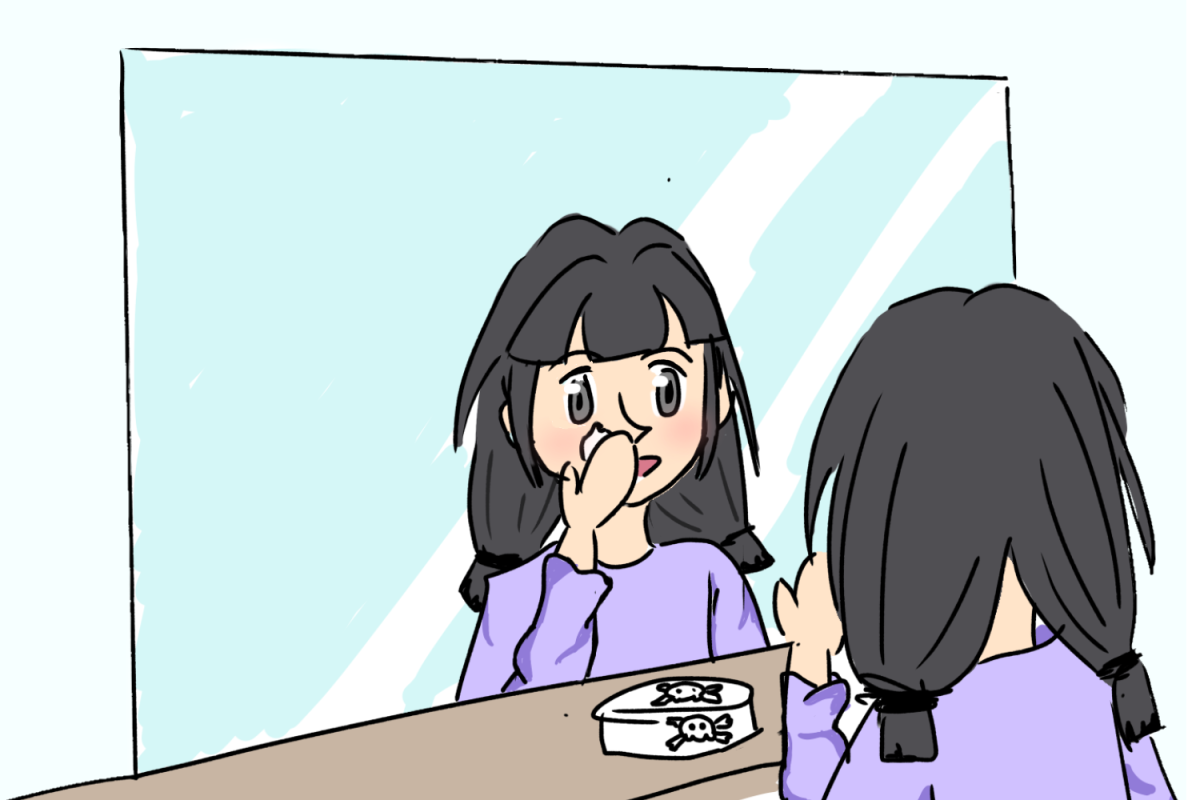
Products that contain retinol pose a threat to adolescents, especially children who are easily influenced by trends and beauty. According to Connecticut’s Children, children’s skin is more sensitive than adult skin. Using adult skincare products at a young age can result in irritation, redness, breakouts, and other long-term effects, which is the opposite of the intended effect people want when using anti-aging products.
Furthermore, it is not suitable for younger people because the active ingredients can harm their skin rather than help it. The best way for younger people to take care of their skin is by keeping routines simple and not following every trend.
While some children and teenagers start puberty earlier and get acne at an earlier stage, it is not an excuse for children to use anti-aging products, since that does not cure pimples.
Aging is a natural process that cannot be prevented. Teaching teenagers or even those in their early to late 20s that aging is a threat to appearance before reaching adulthood creates unnecessary fear. To treat any bumps, dark spots, pimples, or dryness on the face, the solution is not anti-aging products, as they can be dangerous if brought to the wrong target audience.