When the sun is out on a clear summer day, it is vital to wear sunscreen. However, it is just as essential to protect the skin with sunscreen in any weather or season, whether it is cloudy or rainy.
According to Johns Hopkins Medicine, wearing sunscreen is one of the easiest ways to protect one’s skin at any age. They can protect against ultraviolet (UV) rays, specifically UVB rays, which are a portion of UV light that causes sunburns and skin cancer, and UVA rays, which contribute to skin cancer and skin aging.
Additionally, a Sun Protection Factor (SPF) on sunscreen products measures how much time sunscreen will protect the skin from UV rays, according to Britannica. As the number on the label increases, so does protection from UV rays.
However, not applying sunscreen consistently and more exposure to UV rays can lead to an increased chance of dark spots, skin aging, and a higher risk of getting cancer, according to Stanford Medicine. According to Yale Medicine, skin cancer is the most common form of cancer in America, as one out of five adults is affected by it.
In fact, according to Johns Hopkins Medicine, even a short period, such as a brief stroll at lunch, can put the skin at risk if sunscreen is not applied and the skin is not protected with shade or protective clothing, including hats, sunglasses, and long sleeves.
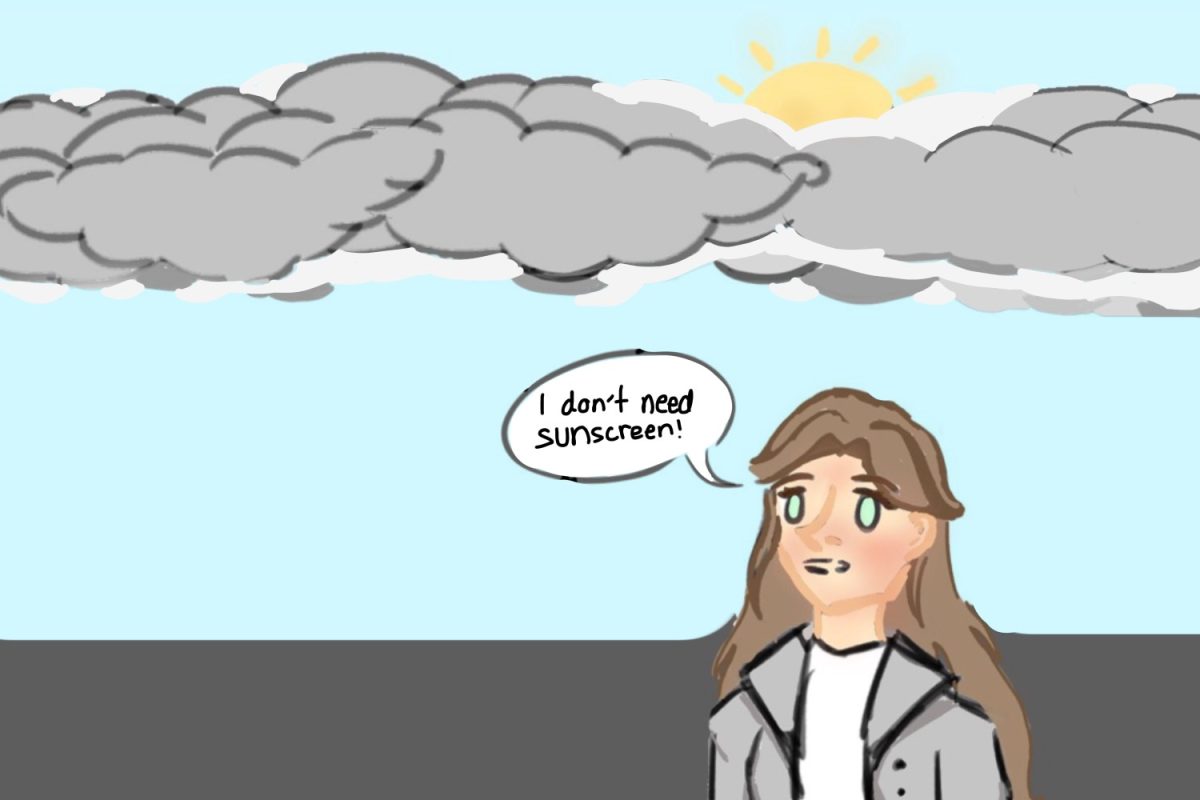
Furthermore, UV rays can still penetrate clouds and cause damage even after being exposed to UV rays for 15 minutes, according to Yale Medicine. Even if one is not exposed to the sun too often due to the weather, it does not take long for the damage to be done.
Similarly, according to the National Institutes of Health (NIH), clouds only reduce UV levels by 50%, making it more imperative to wear sunscreen when the sun is not visible. Additionally, snow reflects UV rays, allowing more people to get skin damage and even eye damage in the winter.
Such high risks for skin damage illustrate why consistency remains key. To further protect the skin, it is recommended to reapply every two hours to create a protective barrier on the skin, according to Cleveland Clinic Health Essentials. However, if skin begins to feel or look drier, starts to redden, or feels prickly or burning, those are also signs to reapply accordingly.
Some may underestimate the damage the sun can cause, which is why it is essential to protect the skin continuously, not just through exfoliation and removal of dirt with other skincare products, but also through protection from environmental factors and exposure to UV rays.