
Every year, people all across the Bay Area gather to celebrate the Northern California Cherry Blossom Festival.
In this celebration of Japanese American culture and heritage, individuals explore Japantown, watch the parade, and enjoy cultural performances. This year, the festival took place over two weekends, April 11 and April 18. The second weekend also featured a parade, traveling down Post Street from the Civic Center to Japantown.
“There’s a lot of variety of food, and everyone seems happy to be here,” said Alisa Yeang, a participant in the festival.
Seen at the festival
The festival featured a lively mix of booths selling traditional Japanese foods and goods, activities highlighting traditional Japanese practices, and a Grand Parade showcasing Japanese culture.
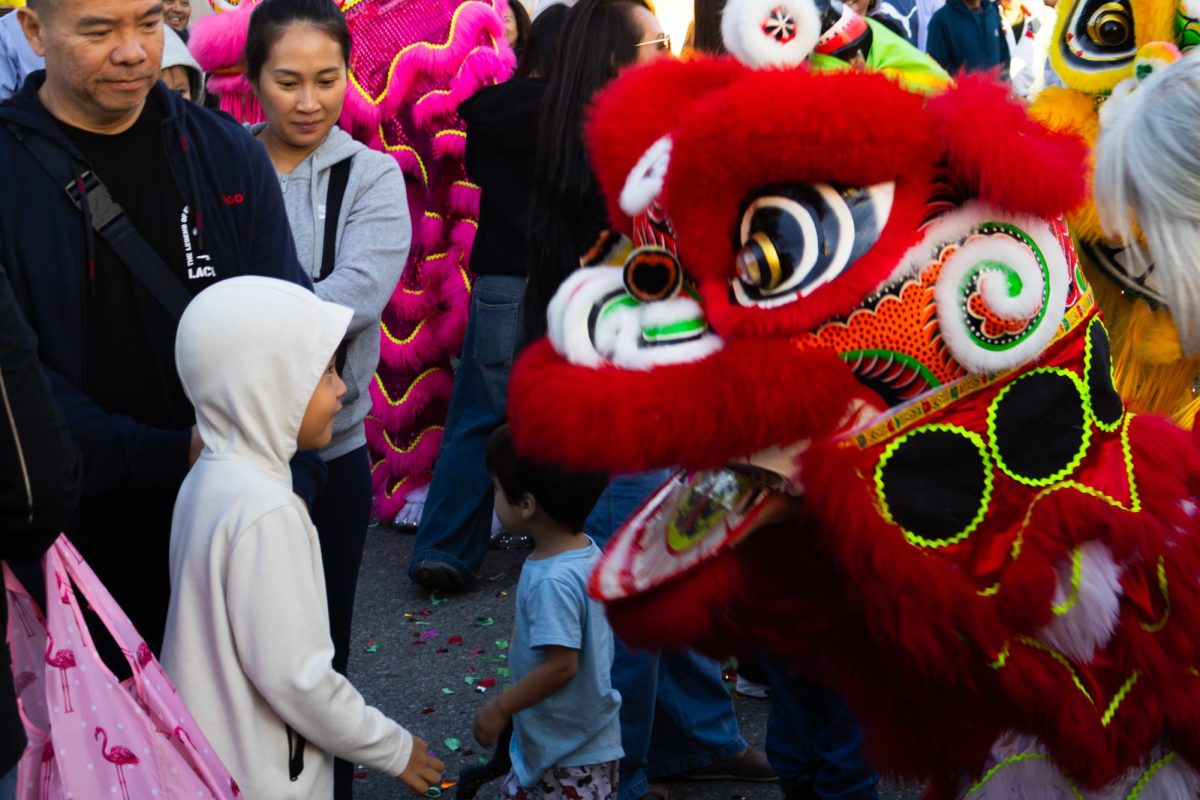
The parade featured a variety of performances and floats, each representing a group or aspect of Japanese culture.
One such float featured Taiko drumming, a Japanese form characterized by loud, powerful beats. In Japanese, “taiko” literally means “drum,” but it has come to mean the art of Japanese drumming, according to the Stanford Taiko.
Other participants included groups of individuals and organizations sponsoring the event, promoting Japanese culture, or expressing themselves through Japanese culture.
In addition to the parade, people participated in the festival through participating in traditional Japanese activities and practices.
The festival featured a bonsai and suiseki exhibit, designed to capture the beauty of nature on a small scale, according to the festival website.
“One aspect of Japanese culture I feel really connected to is the harmony with nature,” said Rika Onizuka, a Japanese mother of a Carlmont student.
Bonsai tree cultivation is a traditional Japanese art form in which the goal is to create a miniature but realistic representation of nature through trees. Suiseki is similar; it is an art form dedicated to the appreciation of naturally formed stones, involving the collection and preparation of small stones.
“We haven’t been this year, but I really like going to see the bonsai,” said Heather Merrick, a participant in the festival.
The festival also featured various forms of traditional Japanese art, including doll making, tea making, and dance.
“Jewelry making is also very popular,” said Nicki Townsend, a participant at the festival. “I always end up getting new earrings when I’m here.”
Traditional Japanese tea making, known as chanoyu, is a founding aspect of Japanese cultural expression, including architecture and ceramics. Intricate paper dolls, known as washi-ningyo, have been popular among Japanese girls for centuries.
In addition to artistic expression, the festival offered a variety of Japanese food and drink for participants and spectators to enjoy.
Many of the booths selling food and drink were fundraising for charitable causes and organizations.
“My son graduated from Rosa Parks Elementary school last year, but we came back to help sell popcorn because the community that helps the school is so important,” said Sarah Shectman, a volunteer at the festival.
Shectman was not alone in this, as other schools participated in selling Japanese food at the event to raise funds.
“I volunteer as an alum of my school, Clarendon Elementary,” said Isis Kis, another volunteer at the festival.
History of Cherry Blossom Festivals
Cherry blossom trees, known in Japan as sakura, are an important symbol in Japanese culture. The tradition of celebrating the bloom of these flowers can be traced back to ancient times, when viewing them was said to bring bountiful harvests.
Symbolism is a common theme throughout Japanese culture; not just in cherry blossoms, but also in other aspects of the culture.
“A lot of Japanese food has symbolism,” said Sayuri Stock, a Japanese American sophomore. “There’s this traditional mochi dish where a white one represents the sky, a green one represents nature, and a pink one represents life.”
The tradition of viewing the flowers has evolved over time, from picnicking under the trees to the festivals and celebrations seen today.
In Northern California, the first cherry blossom festival was held in San Francisco in 1968. Since then, the Northern California Cherry Blossom Festival has taken place almost every year.
“We’ve been coming every year since my son started kindergarten, except for the pandemic year,” Shectman said.
Beyond a festival: Japanese American expression
San Francisco’s Japantown is one of the three recognized Japantowns in the United States. After the earthquake of 1906 devastated previous Japanese enclaves, Japanese immigrants founded Japantown to raise the next generation of Japanese Americans.
Today, San Francisco’s Japantown has grown to be both the oldest and largest Japantown in the United States.
“Many Japanese citizens viewed the United States as a country where greater financial success and economic stability were achievable; this viewpoint led a large group of Japanese immigrants to locate themselves within the western half of the U.S. and more specifically within the Bay Area,” said Ami Dong, a Japanese American junior at Carlmont studying Japanese internment.
Before World War II, Japanese ethnic enclaves were much more prevalent. Japanese internment, however, eliminated many Japantowns.
Despite this, Japanese American cultural expression remains present in the Bay Area through both San Francisco and San Jose’s Japantowns.
“The Japanese American community makes up a substantial portion of the demographic, allowing higher demand of opportunity to bring forth events and locations where cultural expression can occur,” Dong said.
The Northern California Cherry Blossom Festival is just one way for the Japanese Americans in the Bay Area to celebrate their Japanese heritage and culture.
The Bay Area is home to over 50 schools that offer Japanese language instruction, as well as numerous schools that offer cultural immersion programs, such as Clarendon Alternative Elementary School and Springbridge International School.
Through these programs, along with cultural celebrations and fairs, such as cherry blossom festivals, individuals of Japanese descent in the Bay Area can learn more about and connect to their culture.
“Japanese cultural expression takes many different forms, especially with the recent rise of anime and more popular forms of culture,” Dong said. “I think that through these newer mediums, Japanese culture is being expressed more in everyday life.”