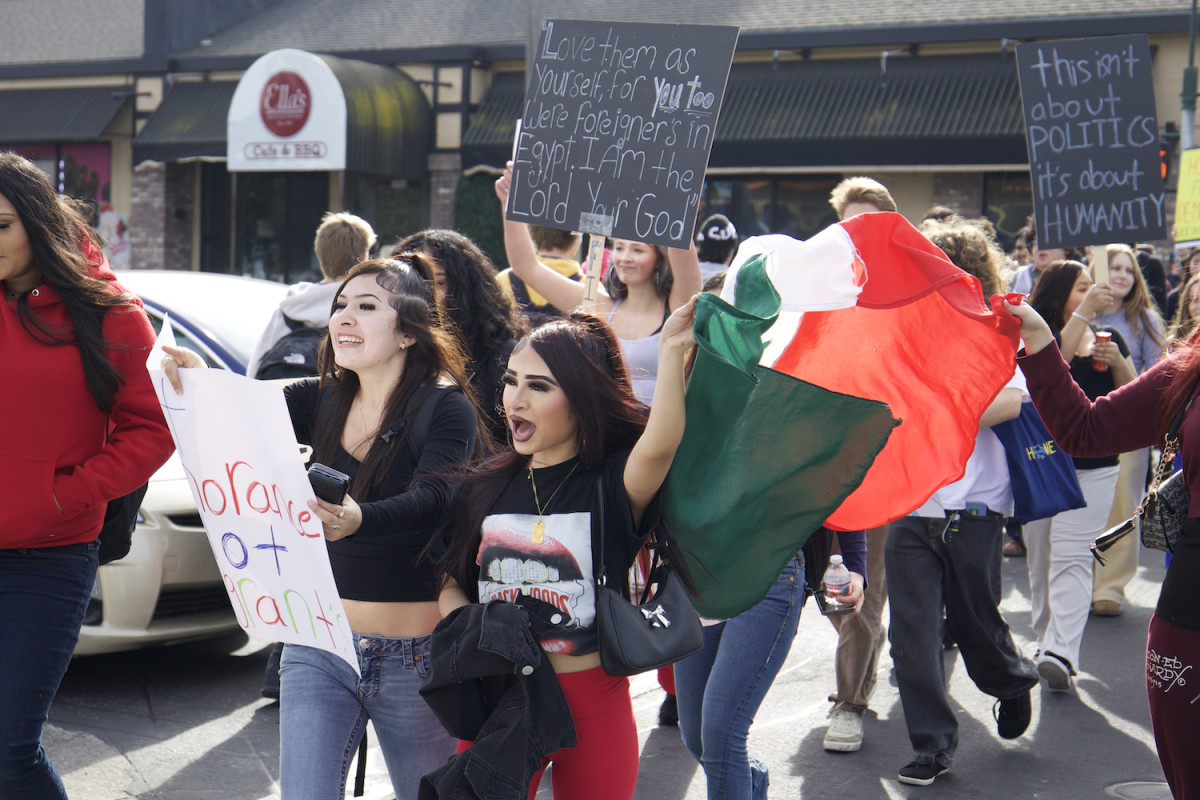
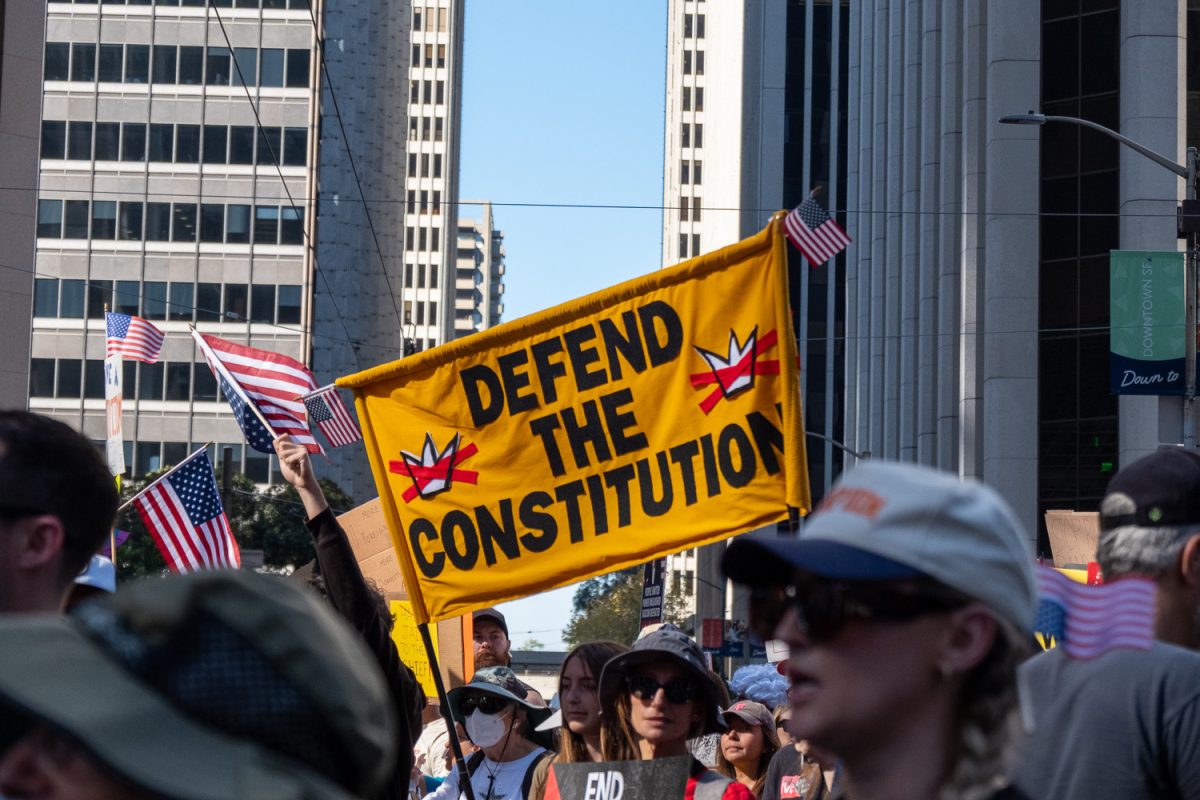
In light of ongoing nationwide protests, students at Carlmont High School are gearing up to lead and participate in an anti-Immigration and Customs Enforcement (ICE) walkout on Jan. 30.
Public outcry against ICE’s imposition in cities, and most recently against the killings in Minneapolis, has sparked political movements across the country, rallying against the government.
Students across California are coming together to voice their concerns and be heard, just as past impactful movements have. Still, many students have expressed worry about safety and First Amendment limitations.
“Student protest is a long American tradition rooted in the understanding that progress doesn’t come from staying quiet or staying seated,” said Greer Stone, an Advanced Placement (AP) Government teacher and the vice mayor of Palo Alto. “Sometimes, it means sacrificing your personal safety and acknowledging the consequences that come with doing that.”
Student civic engagement
Over the weekend, various student-led social media accounts began spreading information about the protest. In response to students’ concerns over missed classes, students have flooded these accounts with information on how to participate safely and legally.
Information has spanned students’ First Amendment rights, specific school policies and regulations, and the context surrounding recent anti-ICE protests across the nation.
“We created our Instagram account to market it to everybody. So we just went around, we followed as many accounts as we could, and we posted around nine posts in the span of three hours,” said Lara Hasan, one of the walkout coordinators.
In addition to social media activity, word of mouth and student advocacy have helped spread the growing movement, which is estimated to have hundreds of participants, according to the Carlmont Walkout Instagram account.
“A lot of students are scared of showing up and being alone. So we’re trying to say, ‘Hey, if you go out and you walk out with us, there’s gonna be a bunch of students there with you. You’re not gonna be alone in this endeavor,'” Hasan said.
Administration has also been actively involved in informing students of their rights. On Jan. 28, Carlmont’s Principal Gay Buckland-Murray sent a schoolwide email via ParentSquare, outlining the school’s plan for responding to the walkout and how students could safely protest.
“We’ve worked really hard to make sure that there are protocols in place so that students can exercise their rights, but we work to make it safe and possible for them to do so,” Buckland-Murray said.
First Amendment student rights
Students have a constitutional right to participate in non-disruptive protests during the school day. School officials aren’t allowed to prevent students from participating in civic or political events unless the protest’s cause is reasonably expected to disrupt school events or prevent school staff from maintaining order.
While the First Amendment doesn’t end at schoolhouse gates, its protections aren’t unlimited. According to Tinker v. Des Moines, school officials, acting on a legitimate interest in school order, should have “broad authority to maintain a productive learning environment.”
For example, schools can impose consequences for students who engage in walkouts, as long as those consequences are no harsher than those for a non-political walkout.
“Threatening or imposing suspension or expulsion, however, is likely not allowed in most circumstances where a student is simply walking out of class, as missing a class is not usually grounds for suspension or expulsion,” said Lila Rhodes*, a Berkeley Law School graduate and attorney.
Since the protest takes place during the school day, some students are concerned about the unexcused absences it will result in. Under the Sequoia Union High School District (SUHSD) Administrative Regulation 5113, students may be excused from school for civic or political events, provided the parent or guardian notifies the school in advance, in compliance with California Education Code 48205. However, unless designated by the Superintendent, students are limited to one excused absence for political activity.
However, the First Amendment has its limits. For example, cities can impose time, place, and manner restrictions on protests. Schools also have the authority to limit student expression, such as restricting speech promoting illegal activities or prohibiting students from distributing flyers during class. This precedent was established in Morse v. Frederick.
“So, maybe stay away from carrying signs advocating for illegal activity, for example, signs calling for violence against ICE officers would probably fall into this category,” Rhodes said.
Although it’s crucial to exercise constitutional rights, students must remember to behave responsibly and safely when participating in political demonstrations, such as walkouts.
“Part of the power in protesting is the sacrifice that people make in those protests,” Stone said. “Every major expansion of rights in this country, from the Civil Rights Movement to today, has been driven by young people willing to be uncomfortable, make sacrifices, and demand better.”
*This source’s name has been changed to protect their privacy in accordance with Carlmont Media’s Scot Scoop Anonymous Sourcing Policy